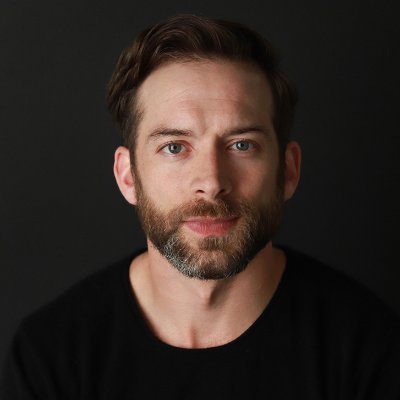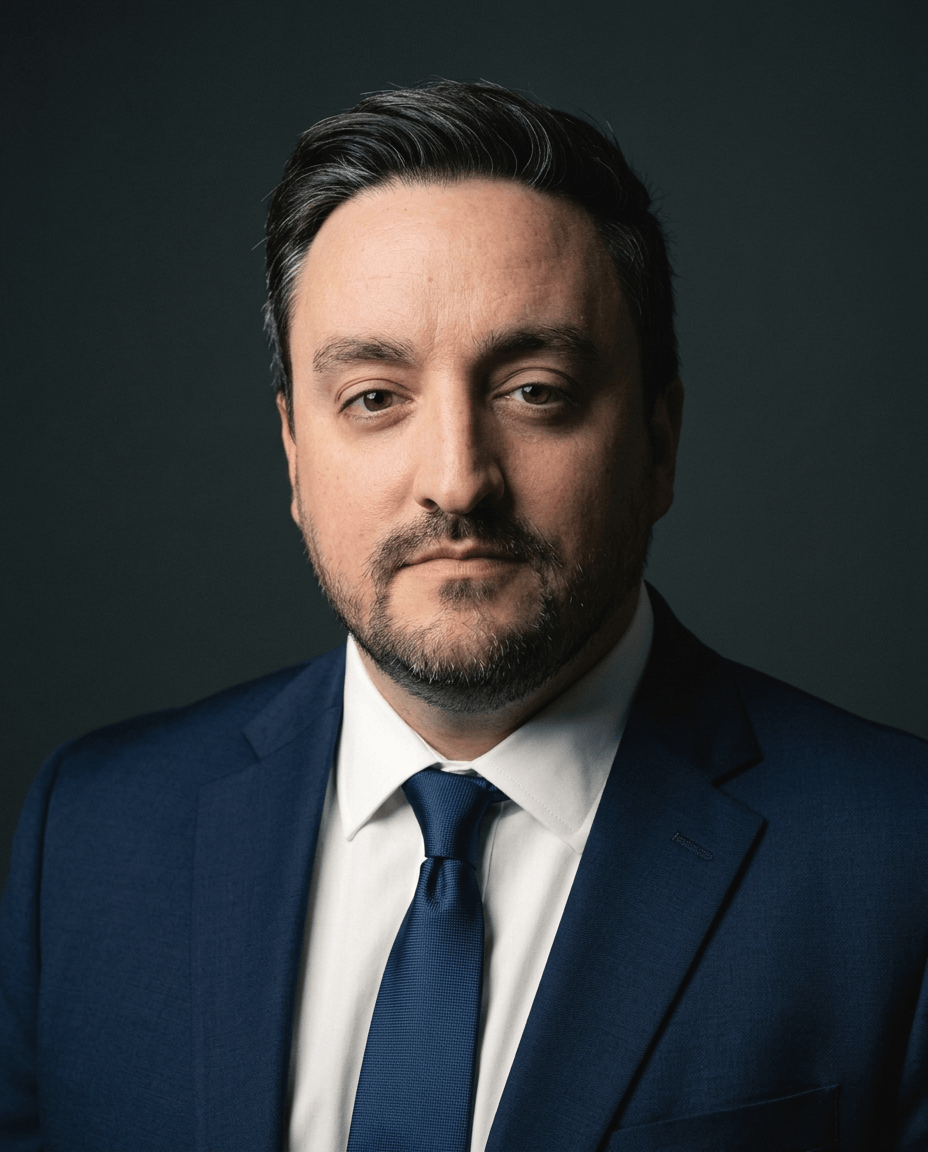
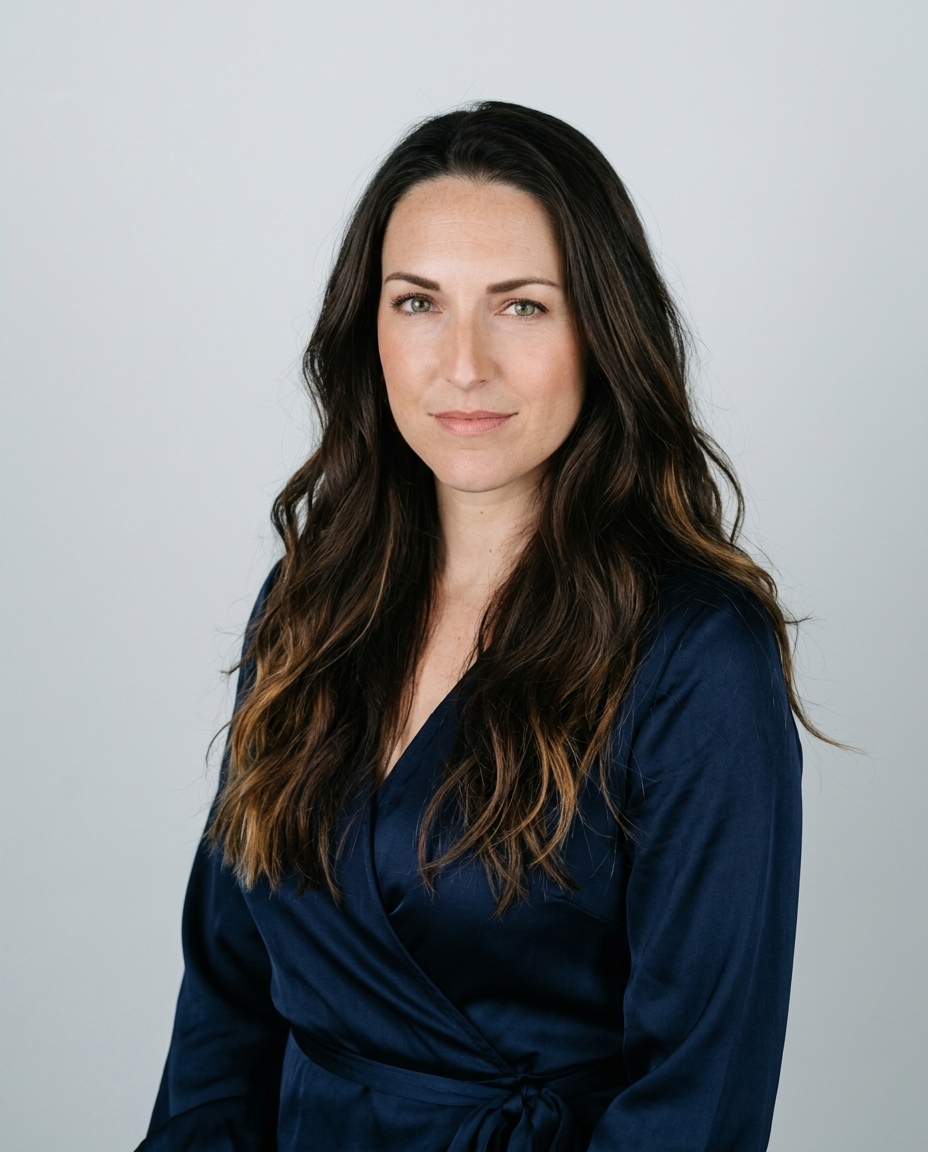
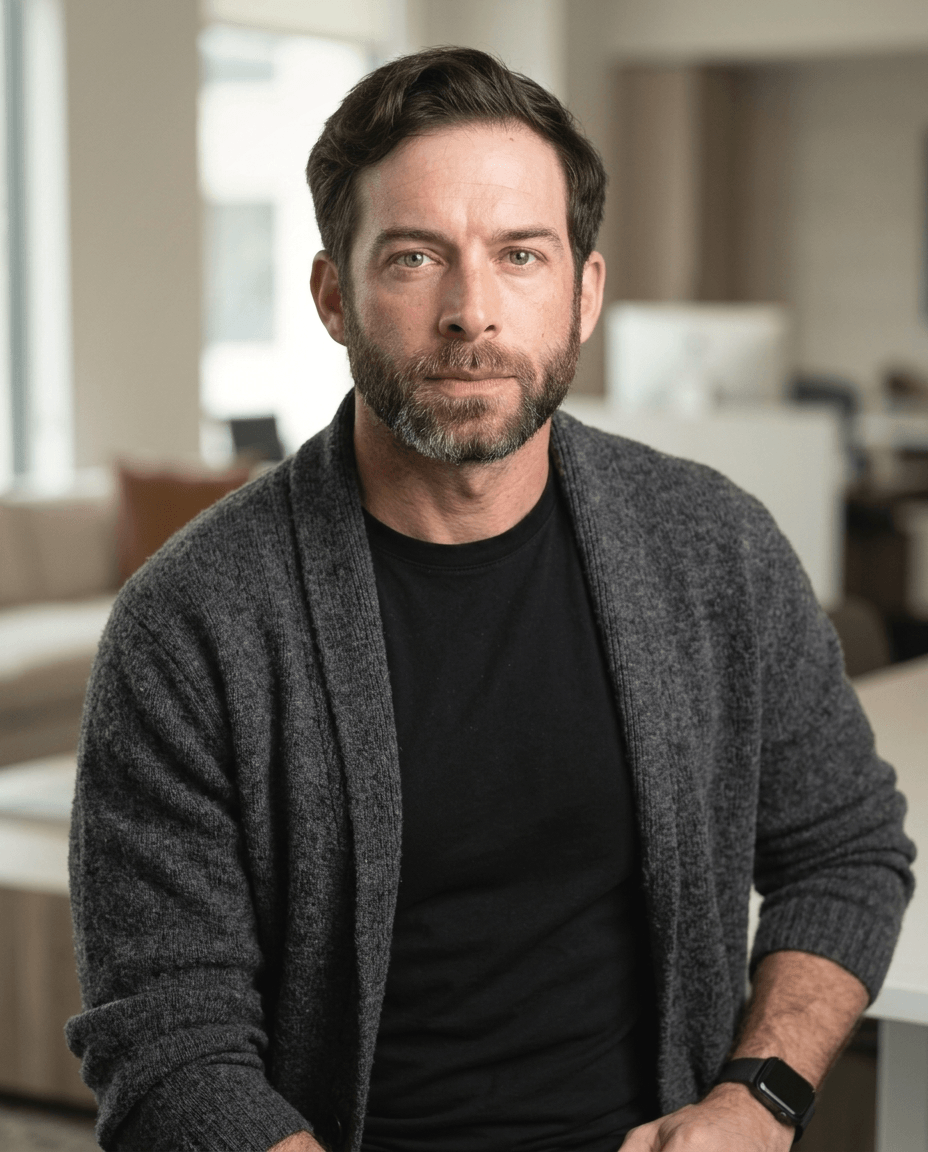
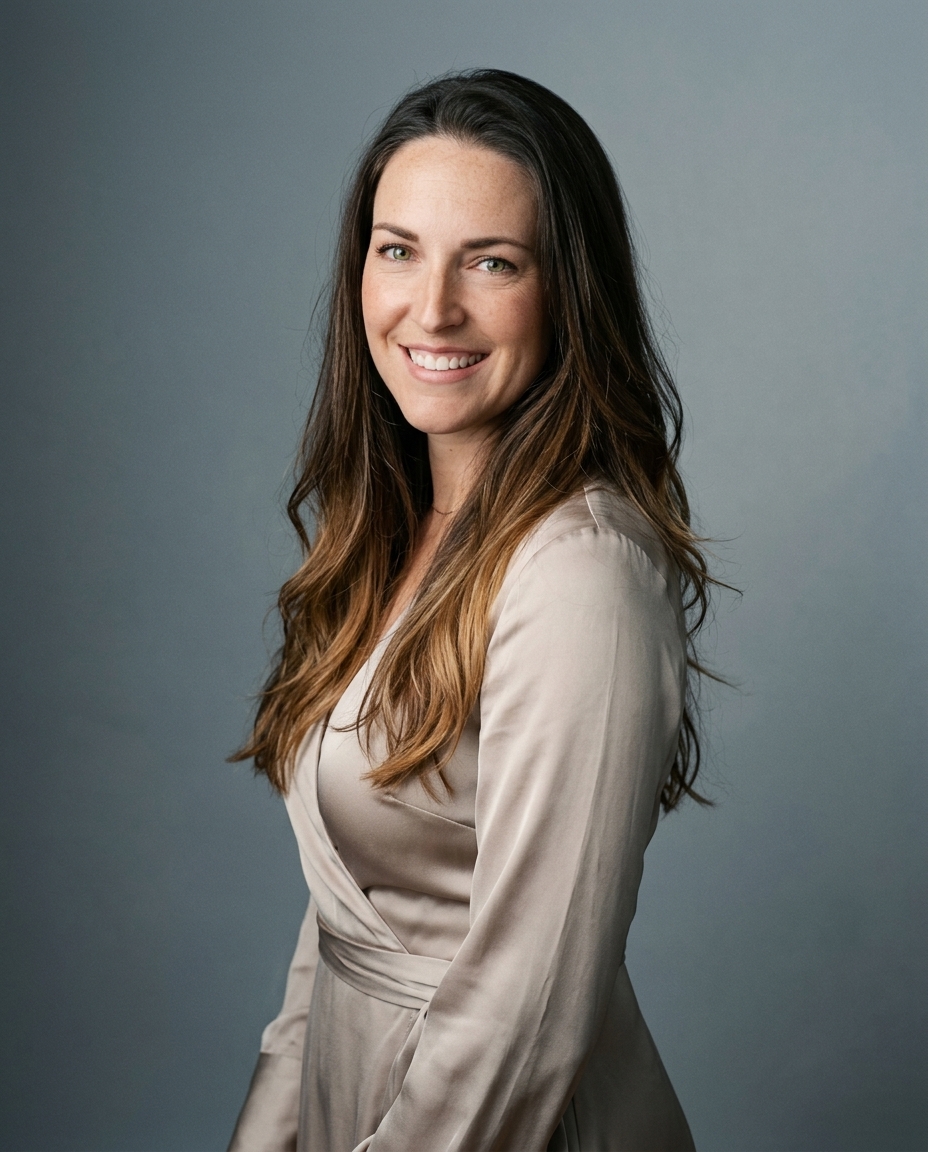

Wear solid, neutral or jewel-toned colors, and dress one level more formally than your normal workday. Formal attire shows the biggest measurable lift in perception testing, with +0.94 in perceived Competence and +1.29 in Influence.
Most advice on what to wear for a LinkedIn headshot is fashion content pretending to be photography advice. That's the wrong frame. Your shirt, jacket, collar, sleeve length, and color aren't style trivia. They change how light hits your face, how your shoulders read in a tight crop, and how competent you look before anyone reads a single word of your profile.
We know that from the camera side, not the mood-board side. Studio Pod has photographed 10,000+ real professionals since 2019, and that volume changes what you notice. Certain outfits work almost every time. Others fail in the exact same ways, no matter how expensive they were in person. The gap between “good outfit” and “good headshot outfit” is real.
Table of Contents
- Your headshot wardrobe is a professional tool
- The three pillars of a successful headshot outfit
- Why dressing one level up works
- Example outfits by professional role
- The small details that signal professionalism
- Your wardrobe is ready, let our studio do the rest
Your headshot wardrobe is a professional tool
A professional photo changes how people interact with your profile. LinkedIn profiles with professional photos receive up to 21 times more profile views and 36 times more messages, according to LinkedIn internal data cited by Alex Kaplan Photo's breakdown of professional headshot performance. That makes the headshot a business asset, not decoration.
Wardrobe sits right in the middle of that asset. It controls the read. The camera compresses detail. LinkedIn crops aggressively. Viewers make a snap call from a small circular image. If your clothing fights your face, the photo loses before your experience section ever gets a chance.
At Studio Pod, after 10,000+ sessions, the pattern is simple. People overestimate fashion and underestimate optics. They show up in trendy patterns, baggy layers, bright white shirts, shiny jewelry, or all-black outfits because those choices feel safe in a mirror. On camera, they pull attention away from the eyes, flatten the body line, or create glare and exposure problems.
Your best headshot outfit isn't the one that gets compliments in a room. It's the one that makes your face look clear, credible, and easy to read in a small crop.
That's why our rules are narrow. We'd rather give you a short list that works than a broad one that sounds flexible and produces weak photos. If you want the long-view thinking behind photographer-led consistency, our 10,000 headshots study is the right place to keep reading.
The three pillars of a successful headshot outfit
After 10,000+ headshot sessions at Studio Pod, the pattern is consistent. The outfits that perform best on LinkedIn are rarely the most fashionable ones. They are the ones that read clearly in a tight crop. Color. Fit. Formality. Get those three right, and the photo starts working for you.

Color controls attention
Color decides whether the viewer sees your face first or your clothes first. In a strong headshot, the face wins.
In studio, the safest performers are solid mid-to-dark tones: navy, charcoal, forest, burgundy, muted blue. These shades hold detail, separate cleanly from skin, and keep the frame calm. Bright white often blows out under lighting. Pure black can swallow texture, especially in jackets, knits, and dark backgrounds. Busy patterns create a different problem. They pull the eye sideways instead of upward to your expression.
This is one of the clearest gaps between fashion advice and photography advice. A shirt can look great in person and still fail on camera because contrast, texture, and crop behave differently under lighting. For a more detailed breakdown, our guide to attire for professional headshots covers which fabrics, necklines, and layers photograph cleanly.
Practical rule: If the shirt color is the first thing you notice, it is too aggressive for a LinkedIn headshot.
Fit changes your shape on camera
Fit is not about looking slimmer. It is about giving the camera a clean outline to work with.
Headshots show very little clothing, usually just the collar, shoulders, upper chest, and part of the sleeves or lapels. That makes every line count. A shirt with excess fabric adds width. A jacket with soft, collapsing shoulders makes posture look weaker. A top that pulls at the buttons or gaps at the neckline creates tension lines that read as sloppy in a still image.
Well-fitting clothes do one job extremely well. They create structure around the face. In our sessions, that single change often does more for professional presence than buying a more expensive outfit.
Formality sets the professional signal
Formality answers a simple question fast. Do you look ready for responsibility?
Clients often hesitate in this regard. They worry about looking stiff, corporate, or unlike themselves. The better standard is sharper than your daily norm, while still believable for your role. That balance tends to photograph best because it signals judgment. You understood the assignment and showed up prepared.
Across thousands of shoots, casual pieces fail in predictable ways. Thin tees cling or wrinkle. Hoodies bunch at the neck. Overly relaxed layers erase the shoulder line. A structured jacket, clean knit, collared shirt, or simple blouse usually fixes those problems immediately.
Why dressing one level up works
In 10,000+ Studio Pod headshot sessions, one wardrobe pattern shows up again and again. People who dress one level above their normal workday look more credible on LinkedIn, even when everything else stays the same.

A slightly sharper outfit reads better on camera
Generic style advice usually treats clothing as self-expression. Headshot photography is stricter. The frame is tight, the viewer decides fast, and small wardrobe choices change how competent you look.
Capturely's LinkedIn headshot guide reports stronger perception scores for formal attire, including gains in Competence and Influence. That result matches what we see in the studio. The best-performing outfits are rarely dramatic. They are more polished than what the client would wear to answer email at home or sit through a routine internal meeting.
That one-step shift works because it aligns with the job your photo has to do. A LinkedIn headshot is not a documentary image of your average Tuesday. It is a professional signal.
What "one level up" actually means
For a founder in a hoodie office, one level up usually means a blazer over a solid knit, polo, or button-down.
For a manager who already wears business casual, it often means cleaner tailoring, a better collar, or a jacket that adds authority without looking overdressed.
For lawyers, consultants, and executives, it means choosing the simpler, more controlled version of your usual professional wardrobe. If you want a role-specific benchmark, our guide to the lawyer headshot firm aesthetic shows how that restraint reads on camera.
The rule is simple. Look prepared for the next level of responsibility, not dressed for your most relaxed day.
| Daily norm | Better headshot choice | What usually underperforms |
|---|---|---|
| T-shirt or hoodie | Solid crewneck with blazer | Graphic tee, oversized sweatshirt |
| Casual button-down | Crisp long-sleeve button-down | Wrinkled linen, short sleeves |
| Business casual | Jacket, tailored blouse, or structured knit | Slouchy cardigan, busy print |
| Suit most days | Clean suit or dress in navy or charcoal | Severe black-and-white contrast |
A lot of clients worry that sharper clothing will make them look stiff. In practice, the opposite problem is more common. Under-dressed people look less intentional, and the camera exaggerates that gap.
There is also a practical cost to getting this wrong. If you are paying for a professional session, wardrobe is the easiest variable to control before you walk in. The better move is to arrive slightly sharper than necessary and let the photo carry that professionalism clearly.
Example outfits by professional role
Professional doesn't look identical across industries. It shouldn't. But the camera still wants the same fundamentals. Clean shape. Controlled color. Slightly increased formality.

Tech and startup
The mistake here is going too casual because the office is casual. A solid dark crewneck, a crisp polo, or a structured overshirt under a blazer photographs far better than the standard conference T-shirt uniform. You still look like you belong in tech. You just look like the person leading the meeting.
Avoid logos. Avoid thin, flimsy cotton that wrinkles across the chest. Avoid black if your complexion disappears into it.
Finance and law
These fields reward restraint. A well-fitting suit jacket, strong collar, and solid blouse or shirt in navy, charcoal, or soft ivory works because it reads organized and expensive without showing off.
We see a lot of people overdial contrast here. Stark white shirts and deep black jackets can look severe on camera. Softer neutrals usually hold detail better and keep the face in front. If you want a more role-specific example, our piece on the lawyer headshot firm aesthetic gets into that balance in more detail.
In law and finance, the winning outfit usually isn't the boldest one. It's the one with the cleanest line and the least distraction.
Creative and marketing
Muted jewel tones are particularly effective. Rich green, deep blue, burgundy, or a refined knit with subtle texture can give the frame some personality without turning the photo into a fashion shot.
Creative professionals can bend the rules a little on texture and silhouette, but only if the outfit still frames the face cleanly. Statement pieces usually lose. Smart texture wins.
Executive and leadership
Executives need authority without hardness. That usually means a beautifully fitted jacket, dress, or structured top with minimal visual noise. High-quality fabric matters because leadership headshots often need to hold up everywhere, from LinkedIn to speaking bios to investor decks.
The wrong executive outfit is often too “special.” Shiny fabric. Heavy jewelry. A dramatic pattern. Something expensive that announces itself too early. The right one looks settled, controlled, and deliberate.
The small details that signal professionalism
Good headshots often fail on small technical mistakes. Not because the outfit was wrong overall, but because one detail kept pulling the eye.

Collars, jewelry, and surface texture
For men, collar quality matters more than commonly recognized. HeadShots Inc. explains that a proper collar should be stiff and fit snugly, with room for 1–2 fingers between the neck and collar. A floppy collar spreads outward and drags attention away from the jawline. A collar that's too tight creates tension and bunching.
Jewelry should be minimal and matte. Shiny accessories reflect light and create hotspots. Large statement pieces become the second subject of the photo. That applies across the board, not just in formal business portraits.
A few details make a visible difference fast:
- Press everything. Wrinkles read as neglect faster than almost any other clothing flaw.
- Keep accessories quiet. Small studs, a simple chain, or a conservative watch is enough.
- Limit layers. One clean layer is strong. Multiple layers add bulk under the chin and date the photo.
Grooming that holds up on camera
Hair should look intentional. Not frozen. Not messy in a calculated way. Just controlled. If you wear facial hair, edge it cleanly. If hands will be in frame, nails need to be clean. If you wear makeup, keep it even and camera-aware rather than heavy.
The same rule applies to skin prep. Matte finishes usually photograph better than reflective ones because shine reads as sweat under studio light. Fabric works the same way. Matte materials keep attention on the face. Slick or glossy fabrics bounce light in distracting patches.
Clean and pressed beats expressive and complicated. Headshots reward restraint.
Your wardrobe is ready, let our studio do the rest
A good LinkedIn headshot outfit follows three rules. Solid color. Strong fit. One level up. Effective headshots often benefit from less wardrobe freedom and more discipline.
That's the hard-earned lesson from Studio Pod's 10,000+ real sessions. We're photographers first. Joseph West and Chris Bailey built AiHeadshots from an automated studio process, not from a software-first shortcut. That matters because quality in headshots comes from photographer logic. Light, crop, shoulder line, color control, and believable polish.
If you don't want to book a traditional shoot at $300–$600+, AiHeadshots handles the studio side without the studio visit. You upload 10–20 phone selfies, and our system delivers 30+ studio-grade headshots in about 30 minutes. Pricing starts at $29. Basic is $29, Professional $39, Executive $59, and team pricing runs $22–29 per seat for 10+ seats. You can see how it works on our process page, then compare outputs on examples and reviews.
We've served 30,000+ customers, delivered 255,000+ headshots, and hold a 4.9★ rating. Data handling is simple. 7-day input retention, 30-day output retention, and 90-day billing retention. There's also a 100% money-back guarantee within 14 days.
Upload 10 selfies, see your first headshot in 30 minutes, starting at $29 with AiHeadshots.