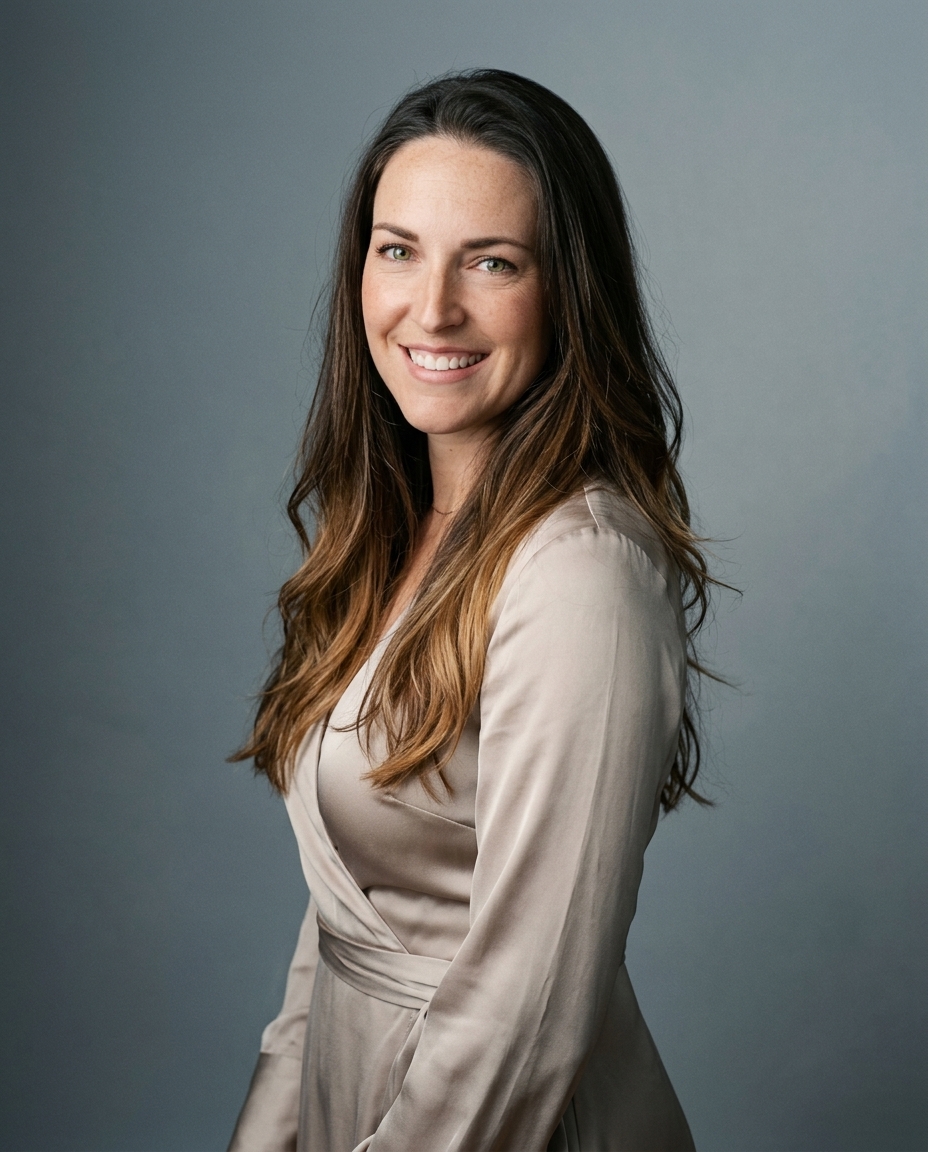

A common misconception is that professional photo retouching is about making someone look different. It isn't. Its purpose is narrower and more challenging: remove distractions, keep identity intact, and make the image fit its actual use. That's why the service market for retouching keeps growing. The global professional photo retouching services market was valued at about USD 3.2 billion in 2024 and is projected to reach nearly USD 4.1 billion by 2026, with 7 to 8 percent CAGR growth, according to this market overview of the future of photo retouching.
That demand exists because polished images still need judgment. Software can smooth skin. It can't decide how polished a LinkedIn headshot should look versus an editorial portrait. Clients feel that difference immediately, even if they can't name it.
Table of Contents
- What professional retouching actually means
- The three levels of photo retouching
- How retouching pricing and turnaround times work
- Human retouchers vs AiHeadshots
- How to get the results you want
- The fastest path to a professional headshot
What professional retouching actually means
Retouching removes noise, not identity
Professional photo retouching isn't a beauty filter. It's editing with intent. A good retoucher does the same thing a good editor does to a document. Remove what distracts. Keep what gives the subject character. Make the final piece easier to read.
That means temporary issues usually go first. A breakout. Redness. A stray hair crossing the eye. Uneven color from bad overhead light. It does not mean sanding down a face until it stops looking human.
Practical rule: If the viewer notices the retouching before they notice the person, the retouching failed.
This point matters even more in headshots. A corporate profile photo has to look polished, but it also has to look believable. That's where many DIY edits fall apart. They chase smoothness instead of clarity.

Why technique matters
Real retouching has craft behind it. One of the clearest examples is Frequency Separation. As explained in Studio Metrodesk's breakdown of expert retouching strategies, Frequency Separation separates texture from color so a retoucher can smooth tone or fix blotchiness without destroying pores, fabric weave, and other micro-detail. That's why a professionally retouched face still looks like skin.
Photoshop remains the standard for this kind of work because layers allow non-destructive changes. You can fix color without flattening texture. You can lighten an under-eye area without erasing the person.
If you're comparing methods, it's useful to understand the gap between true retouching and one-click edits. This guide to professional photo retouching software is a good place to see how the tools differ.
The standard is invisibility
The best compliment a retoucher gets is usually silence. No one says, "Great healing brush work." They say the photo looks strong, clean, and natural. That's the target.
Portrait photography still depends on that standard. It represents roughly 19 to 20 percent of professional photographers' primary specialties worldwide as of 2026, and the portrait segment was valued at about $21.75 billion in 2025 with projected 7.7 percent CAGR into 2026, according to these portrait photography trends and statistics. Even with AI tools everywhere, professionals still judge the image by whether it looks credible.
The three levels of photo retouching
You don't need the same edit for every image. That's where buyers get confused. They pay for high-end beauty work when they only needed cleanup, or they order basic retouching and wonder why the result still feels unfinished.

Basic retouching
Basic retouching is foundational. Think exposure correction, white balance, cropping, light blemish cleanup, and maybe a small reduction in under-eye darkness. This is the level many photographers include as part of normal delivery.
It's fast because the changes are broad and repeatable. In the current market, basic retouching is also the part most suited to automation. That's useful, but it doesn't solve taste.
Professional retouching
This is the level commonly intended when a polished headshot is requested. It includes selective skin work, stray hair cleanup, reducing shine, refining tone transitions, and controlling contrast so the face reads well at thumbnail size and full size.
The difference is restraint. A professional retoucher preserves texture, shape, and expression. They don't blur every line out of existence. They decide what to leave in because it helps the image feel honest.
A LinkedIn headshot isn't a magazine cover. It needs polish, not theatrical perfection.
This middle tier is where many strong business portraits live. It looks expensive because the work is precise, but it doesn't announce itself.
High-end retouching
High-end retouching is a different category. This is beauty advertising, luxury editorial, composite work, heavy object removal, and intensive skin reconstruction. It often includes shaping highlights and shadows with dodge and burn, building clean transitions by hand, and making changes that take patience.
Commercial and editorial standards can demand that level. A standard executive portrait usually doesn't.
Here's the simplest way to consider it:
- Basic means global cleanup and quick fixes.
- Professional means natural-looking polish for real-world use.
- High-end means labor-heavy image crafting where every detail is controlled.
If you're hiring, ask for the level that matches the image's purpose, not the most expensive label on the menu.
How retouching pricing and turnaround times work
Traditional retouching prices vary because labor varies. One image may need a few corrections. Another may need detailed skin work, clothing cleanup, reflection control, and color balancing across multiple deliverables.
Why quotes vary so much
Commercial and editorial retouching, including advanced beauty work used in executive headshots, typically runs from $15 to $150+ per image, according to this breakdown of photo retouching costs. The same source notes that specialist boutique retouchers can bill in ranges that land around $15 to $100+ per image because realistic texture preservation and tonal shaping take time.
That's only the post-production line item. You still have to account for the photographer. In many markets, hiring a photographer for a professional session starts around a $300 to $600+ day rate. Then retouching is added on top, or limited to one selected image.
What clients are actually paying for
You're paying for judgment first, software second. The retoucher has to know what to remove, what to preserve, and when to stop. That's why two people can use Photoshop and deliver very different results.
Turnaround usually follows the same logic. More manual work means more waiting. If you want a traditional session plus selected-image retouching, you should expect the process to move slower than automated generation. This overview of corporate headshot cost gives a useful baseline for how those fees stack up.
Fast isn't the same as rushed. Slow isn't the same as careful. The real question is whether the workflow fits the job.
For one executive portrait with exacting art direction, traditional retouching still makes sense. For routine professional headshots, the old process often asks clients to pay custom rates for a repeatable problem.
Human retouchers vs AiHeadshots
For professional headshots, the better tool is the one that produces a believable, current, business-appropriate portrait with the least friction and the fewest bad surprises. In that specific job, a photographer-trained AI often beats the usual freelance retouching workflow on consistency, speed, and cost.
AiHeadshots came out of Studio Pod, a headshot studio built by photographers. That matters because the hard part of retouching is not pushing pixels around. It is judgment. A good headshot needs to look polished without looking cosmetically altered, and generic AI systems often miss that line because they were not trained around real client approval standards.

Different tools for different jobs
Human retouchers still own the high-end work. If the brief involves beauty skin, advertising polish, compositing, or a very specific casting look, I would still choose a skilled retoucher over any automated system. Those jobs depend on interpretation, restraint, and back-and-forth with the client.
Headshots are narrower. The goal is usually clear. Look like yourself on a good day. Keep skin texture. Clean up distractions. Fit the expectations of LinkedIn, company bios, speaker pages, and recruiting profiles.
That narrower brief is exactly why AiHeadshots works well. The system was built by photographers who spent years seeing what clients accept, reject, and call "over-retouched." It is designed for appropriateness, not novelty.
AiHeadshots also removes a common weakness in the freelance route. With traditional retouching, results can swing a lot from one editor to the next. One retoucher preserves texture. Another smooths too far. One understands business portraits. Another edits like beauty work. AI built around one headshot standard can be more reliable than hiring a random freelancer for a routine profile photo.
Later in the process, it helps to see the workflow in action.
Where consistency beats customization
The main objection to AI retouching is fair. A lot of AI portraits still get skin wrong. Texture turns waxy. Teeth go too white. Eyes get sharpened past credibility. Features shift just enough that colleagues notice something feels off.
Photographer-built systems have a better shot at avoiding that because they start with the target use case. Business headshots need believable skin, clean lighting, natural expression, and a current likeness. They do not need magazine-style perfection. If a client wants to flag a specific skin concern before generating images, the Lumina Skin Sanctuary free analysis can help put better words around the issue.
Here is the practical trade-off:
| Factor | Traditional Retoucher | AiHeadshots |
|---|---|---|
| Workflow | Shoot first, then select frames, then send files for retouching | Upload selfies and generate finished options |
| Variation | Depends heavily on the individual retoucher's taste and restraint | More standardized output tuned for professional headshots |
| Best use | Editorial, advertising, bespoke portrait work | LinkedIn, team pages, company bios, recruiting, speaker profiles |
| Revision risk | Higher chance of subjective disagreement about how far to retouch | Lower chance of style drift for routine business images |
That is the central AI versus human question. It is not about whether software can replace expert craft everywhere. It is about whether a repeatable business portrait job still needs a custom post-production chain built for one-off creative work.
For that narrower job, AiHeadshots is often the better fit. It is faster, cheaper, and more predictable for the kind of image most professionals need. If you want a broader breakdown of the trade-offs, this guide on AI headshots vs photographer explains where each approach makes sense.
How to get the results you want
A strong retouch starts before anyone opens Photoshop. The first decision is use case. A headshot for LinkedIn needs one standard. An actor headshot needs another. Editorial beauty work needs another entirely.
Start with the use case
This is the context gap most advice misses. As explained in Retouching Academy's discussion of retouching guidelines and considerations, retouching standards shift sharply by end use, and that mismatch causes people to over-edit or under-edit their headshots. That's why a photo can look polished in isolation but still feel wrong on a professional profile.
If you're preparing for a business headshot, define the target plainly. You want to look rested, clear, and current. You don't want to look like a beauty campaign. If skin texture or tone is a concern before the shoot, a tool like Lumina Skin Sanctuary free analysis can help you identify what you're seeing so you can communicate it more precisely.

Review the image like a buyer, not a pixel peeper
Most clients review photos too close. They zoom to 200 percent and start judging pores. That isn't how the image will be seen. Recruiters, clients, and coworkers will see the full frame or a small crop next to your name.
Ask better questions. Do you still look like yourself. Does the skin look like skin. Do the eyes hold attention. Is anything distracting.
Natural retouching isn't about leaving everything in. It's about removing the things that pull attention away from the person.
If you're working with an AI workflow, input quality matters more than long revision notes. Give the system a good range of phone selfies. Vary expression slightly. Include different angles. Keep the images clean and current. That gives the generator enough identity information to produce stronger, more believable results.
For examples of what polished outputs look like, it's worth browsing the AiHeadshots examples gallery, the customer reviews, and the about page for Studio Pod and AiHeadshots. Those three pages tell you more than generic promises ever will.
The fastest path to a professional headshot
The fastest way to get a credible professional headshot is no longer a photo shoot, a retoucher, and two rounds of revisions. For standard business use, a photographer-built AI workflow is often the better tool.
That distinction matters.
Traditional retouching still earns its place in advertising, editorial work, and any image where a team is making subjective creative decisions by hand. But a LinkedIn photo, company bio, speaker profile, or team page usually needs something narrower. It needs to look polished, current, and believable. It needs to look like you on a good day, not like a beauty campaign.
That is exactly the gap many generic AI tools miss. They can generate a sharp image, but they often miss context. Headshots have conventions. Skin has to stay human. Wardrobe has to feel plausible for the role. The expression has to read well at small size. Background, crop, posture, and retouching all need restraint. AiHeadshots was built by photographers who spent years making those calls for real clients, which is why the output is more consistent than the usual freelance retouching chain for this specific job.
The input is simple. A small set of current phone selfies usually gives the system enough range to hold your likeness and produce usable options without scheduling a studio session. The craft is still there. We built it into the workflow instead of charging you for it one revision at a time.
Upload 10 selfies, see your first headshot in 30 minutes, for $29 with AiHeadshots.