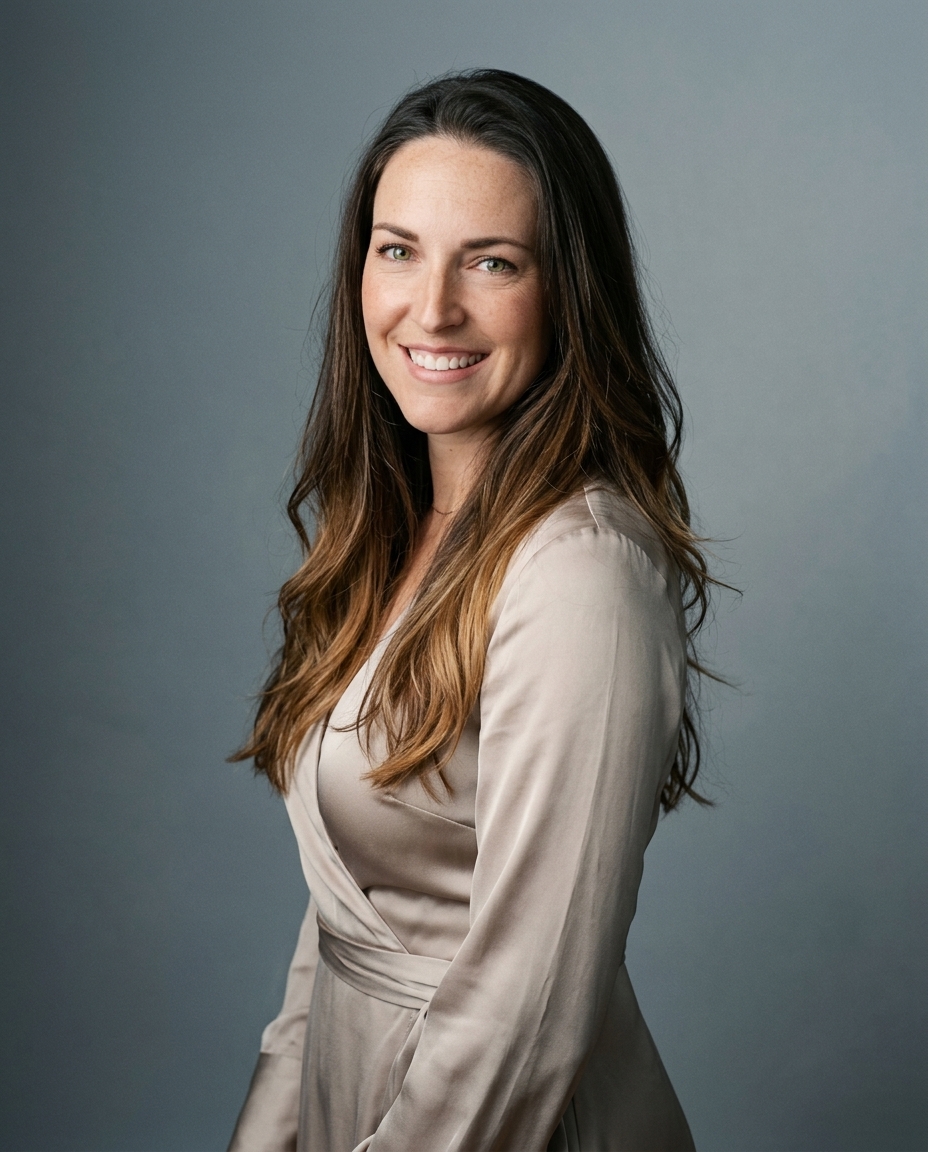

Traditional corporate headshots usually cost $250 to $450+ per person in many U.S. markets, $450 to $800 in major hubs, or $1,500 to $6,000+ per day for team shoot days. AI options sit in a different bracket entirely. AiHeadshots starts at $29 per person.
That price spread looks chaotic until you understand what buyers are paying for. The question isn't just the sticker price per employee. It's the total cost of ownership for the project: scheduling, employee time, setup, retouching, consistency, and the cost of redoing bad or mismatched photos later.
We know this from both sides. Studio Pod has photographed 10,000+ real professionals since 2019, and we built AiHeadshots from that photography background rather than from a generic software-first approach. If you want the short version, traditional photography still makes sense for some use cases. But for many teams, the biggest cost isn't the portrait. It's the operational drag behind it. You can compare options directly on our pricing page.
Table of Contents
- How much do corporate headshots cost?
- Traditional headshot pricing models
- What factors change your final headshot price
- Real-world examples of headshot costs
- Smart strategies for reducing headshot costs
- Your simple headshot budgeting checklist
How much do corporate headshots cost?
Corporate headshots can cost as little as $29 for AI-generated images and more than $6,000 for a fully staffed on-site production day. That range is real, but the per-person number is only part of the budget.
For a business buyer, the bigger question is total cost of ownership. After photographing 10,000+ professionals, the pattern is consistent. The cheapest option on paper can become expensive once you factor in scheduling, employee time, reshoots, travel, approval rounds, and the cost of inconsistent photos across a team page. A company is rarely buying a headshot alone. It is buying a system for getting dozens or hundreds of people photographed without creating admin drag.
That is why two quotes with similar image quality can be priced very differently. One may cover a single studio session for one person. Another may cover on-site setup, a photographer who can keep output consistent across departments, retouching, file delivery standards, and a process that does not pull your HR or marketing team into weeks of coordination.
I advise clients to budget against two variables first. The first is image standard. The second is operational burden. If your team is remote, growing fast, or updating profiles year-round, a lower-friction option such as AI headshot pricing for distributed teams can make sense. If you need a uniform look for leadership, sales, recruiting, and investor-facing materials, the production model matters just as much as the final portrait.
The same file size and crop can come from very different workflows. One workflow is cheap because the client absorbs the coordination. Another costs more because the vendor handles it.
That distinction matters for finance teams too. A low upfront quote often shifts hidden work to internal staff. A higher quote can reduce employee downtime, lower no-show risk, and avoid the expensive cleanup that happens when every office books a different photographer and the brand starts to look patchy. On the supplier side, pricing also reflects the business mechanics of building a profitable photography workflow, not just the minutes spent pressing the shutter.
A useful budget range starts with the format you are buying, then adds the internal time needed to make it work. That is the number that usually decides whether headshots feel efficient or unexpectedly expensive.
Traditional headshot pricing models
Headshot pricing looks simple until a company has to roll it out across a real team. The sticker price matters, but the model behind that price usually decides whether the project stays efficient or becomes a drain on HR, marketing, and employee time.

Traditional photographers usually quote corporate headshots in two ways: per person or by session block, usually a half day or full day. Both are legitimate. They fit different operating conditions, and the cheaper-looking option is not always the lower-cost option once internal coordination is included.
Per-person pricing
Per-person pricing is common for small groups, executive updates, and companies that only need a handful of people photographed at one time. Buyers like it because the math is easy. Ten employees at a fixed rate feels predictable.
The catch is that the rate still has to cover the full job, not just camera time. A photographer has to recover setup time, editing, scheduling, insurance, software, equipment, admin work, and the gaps between bookings. Analysts at Studio Lumen found that a viable headshot business often needs to price far above the casual "it only takes a few minutes" assumption many buyers start with (Studio Lumen analysis).
For a business client, the bigger issue is fit. Per-person pricing works well when attendance is certain and the list is short. It gets less efficient when a team is spread across offices, calendars shift, or new hires need to be added later. At that point, the quoted rate per employee stops being the whole story. Internal rescheduling, repeated setup, and inconsistent output across multiple shoot dates can cost more than the original invoice.
I see this often with growing teams. A company books a few people now, a few next quarter, then a few more after a rebrand. The per-head quote looked reasonable, but the total cost of ownership rises because the business keeps paying for coordination and visual inconsistency.
Practical rule: If a quote is unusually low, check what is missing. The usual trade-offs are retouching time, shot selection, setup quality, scheduling support, or consistency from one session to the next.
If you want a clearer view of why pricing works this way, SendPhoto has a useful article on building a profitable photography workflow. It explains the operational side of photography well, especially the link between throughput, service level, and price.
Day rates and session blocks
Day rates are the standard model for team headshot days, office shoots, and higher-volume sessions. The client is buying production capacity for a defined block of time, not a series of unrelated portraits.
This model usually makes more sense for companies with a real employee count to move through. The lighting is built once. The background is standardized once. Staff rotate through a schedule, and the unit economics improve as more people are photographed under the same setup.
That structure also reduces hidden costs for the client. One scheduled shoot day is easier to manage than dozens of one-off bookings. It gives marketing a better chance of getting matched files, matched crops, and a consistent brand look across the whole team.
Hair and makeup can change the budget quickly under either model. On individual bookings, it is often added as a separate service. On team days, it is usually priced as a day-based production add-on, which can be sensible for leadership groups or public-facing teams but unnecessary for every company. The right choice depends on how polished the final use case needs to be and whether that extra prep improves the business outcome.
From a finance perspective, session blocks often produce better value once the team is large enough. From an operations perspective, they are usually easier to control. From a brand perspective, they are often the safest choice because consistency is built into the workflow rather than left to chance.
What factors change your final headshot price
Per-person pricing hides a lot of the cost. For teams, the final number usually changes because of production complexity, internal coordination, and how strict the company needs the end result to be.
Geography affects more than the photographer's rate
Location changes the baseline quote, but the bigger issue for business buyers is the full operating cost around the shoot. Local labor, studio rent, parking, permits, travel time, and freight all show up somewhere, even if they are bundled into a day rate instead of listed line by line.
This is why quotes from different cities rarely compare cleanly. A lower creative fee in one market can still produce a higher total project cost if the shoot requires more travel, more setup time, or more disruption to the team.
Shoot format changes the true cost of the job
Studio and on-site sessions solve different problems.
A studio shoot gives the photographer a controlled environment. Lighting is already dialed in. Background options are ready. Fewer technical variables usually means a steadier pace and less risk of inconsistent files.
On-site shoots can lower employee travel time, which matters for busy teams. They also add production labor. Gear has to be moved, tested, and broken down. Conference rooms need to be cleared. Office lighting and background limitations often need workarounds. If the company wants polished, matched portraits across dozens of employees, those constraints affect both the quote and the odds of needing fixes later.
That trade-off matters more than the line item itself. A cheaper setup that produces uneven results often costs more once marketing starts requesting reshoots or trying to standardize files in post.
Post-production scope has a direct labor cost
Retouching changes price quickly because it is real editing time, not a cosmetic extra. Basic cleanup, skin retouching, flyaway control, wardrobe fixes, background cleanup, and composite work all require different levels of labor.
Selection policy matters too. One delivered image per person is simpler to process than a gallery with multiple finals, alternate crops, and leadership review rounds. If your team needs matched framing across a company page, someone has to enforce that standard from capture through delivery.
For buyers comparing options, this is a useful filter. A quote that includes less retouching, fewer finals, or looser consistency standards is not automatically cheaper in practice. It may just move the work to your internal team. Our broader guide to headshot pricing by use case and delivery model explains how those pricing differences show up across different buying scenarios.
Speed, stakeholders, and coordination also move the budget
Rush turnaround usually adds cost because it compresses editing capacity and pushes other jobs aside. That is standard production economics.
Internal review can add just as much friction. Executives often need more direction during the session and more time in image selection. Large teams need scheduling, reminders, late-arrival handling, and a point person who keeps the line moving. After shooting more than 10,000 professionals, I can say that coordination is one of the biggest hidden costs in team headshot programs. It rarely looks dramatic on the estimate, but it shows up in downtime, delays, and follow-up work.
Cheap headshots often become expensive after delivery. The company ends up paying in missed time, inconsistent branding, extra admin, and avoidable reshoots.
The final quote usually reflects one question: are you buying a simple photo session, or are you buying a repeatable system for getting consistent headshots across a team? That is the difference between sticker price and total cost of ownership.
Real-world examples of headshot costs
The cleanest way to look at corporate headshots cost is by scenario, not by isolated per-person pricing. Procurement teams don't buy one photo. They buy a program.
What the budget holder actually buys
For a single executive, traditional photography still has a clear place. You may want the control of a dedicated photographer, careful direction, and a polished session environment. That works especially well for bios, press, speaking pages, or founder branding where a specific visual language matters.
For teams, the math shifts. One 2026 guide puts Bay Area traditional pricing at $200 to $300 per person for 5 to 10 people, but only $100 to $150 per person for 50+ people, with full-day shoots running $3,000 to $6,000. The same guide notes a 100-person shoot can total $25,000+ for traditional studio photography versus approximately $4,900 for virtual headshots (Luminous Space corporate pricing).
That's the TCO issue most articles ignore. Even when the per-person rate drops, the total project cost remains high because the company is still buying coordination, scheduling, downtime, and production labor.
You can see how buyers think about these trade-offs in this broader guide to headshot prices.
| Scenario | Traditional Photographer | AiHeadshots |
|---|---|---|
| Single executive | Usually the right fit when image control, live direction, and a premium session matter most. Higher cost, but high-touch. | Lower-cost remote option. Best when speed and convenience matter more than an in-person shoot. |
| Small team of 5 to 10 | Often priced per person. Simple to approve, but still requires scheduling everyone and managing the shoot day. | Remote collection is easier. No office setup, no travel, and less coordination. |
| Large team of 50+ | Per-person cost falls, but total spend and logistics climb. Coordination becomes the real project. | Volume is where remote generation changes the economics. Lower total cost and easier rollout across offices or remote staff. |
For teams, the hidden line item is employee interruption. Every reschedule, missed slot, and follow-up request adds cost even if it never appears on the invoice.
Smart strategies for reducing headshot costs
Lower headshot cost comes from cutting wasted labor, not from chasing the lowest per-person price. For teams, the expensive part is rarely the camera. It is the time spent scheduling, rescheduling, collecting files, fixing inconsistent results, and repeating the process for new hires.

How to cut spend without creating a worse problem
Start by reducing variation. One shoot standard, one background, one retouching policy, and one approval process will save more money than negotiating a slightly lower day rate.
For traditional photography, the practical cost controls are straightforward. Book one coordinated shoot day or a tight block of shoot days. Use a setup the photographer already knows how to light efficiently. Limit the deliverables to the formats the company will use. Decide in advance who approves selects and how many final images each person gets.
That keeps the project from turning into an open-ended production job.
The most expensive “budget” approach is letting employees arrange their own portraits over time. Companies then pay for inconsistency in small pieces: different crops, different wardrobes, uneven lighting, mismatched retouching, and repeated admin time every time someone needs a replacement image. The invoice may look smaller, but the total cost of ownership climbs because the brand standard never stabilizes.
If you are evaluating AI tools, this roundup of top AI LinkedIn photo generators is useful for understanding how different products position quality and use case. The critical buying question is whether the output is consistent enough for a company directory, bio page, or sales team rollout, not whether the headline price is low.
It also helps to compare the operating model, not just the sample images. This breakdown of AI headshots vs photographer workflows is useful because the project management burden changes as much as the image source.
Where AI fits and where it does not
AI is a cost-control tool when the company needs speed, standardized output, remote participation, and an easier process for distributed teams. It is a poor fit when the image must be a literal photograph from a directed session, or when legal, editorial, or brand rules require full documentation of how the portrait was created.
Our perspective is straightforward. The right option depends on what the business is buying.
If the company needs executive portraits for press, investor materials, or a high-stakes leadership page, I would still look closely at a traditional photographer. Live direction, wardrobe guidance, subtle expression coaching, and precise lighting still matter at the top end. If the company needs matching images for a larger team across offices or remote locations, the economics often favor a remote workflow because it removes travel, studio setup, and most of the scheduling overhead.
We built AiHeadshots from a photography business that has photographed 10,000+ professionals, not from a generic text-to-image background. The system takes 10 to 20 phone selfies and returns 30+ studio-grade headshots in about 30 minutes. Pricing starts at $29. Teams pricing runs $22 to $29 per seat at volume. If that fits your use case, the right next step is to review output quality and consistency, not broad AI claims. See our customer reviews and our 10,000-headshots study.
Your simple headshot budgeting checklist
Teams often don't need a bigger spreadsheet. They need better questions before they approve the spend.

Use this checklist before you request quotes or choose a platform:
- Count the headcount: Include new hires, leadership, and any remote employees who will need matching imagery soon after launch.
- Define the use case: A website directory, executive bio page, LinkedIn refresh, and press kit do not all require the same production level.
- Set the deadline early: Tight timelines narrow your choices fast and usually make coordination more expensive.
- Decide how much consistency matters: If every employee needs the same framing, background, and visual standard, that requirement should shape the whole buying decision.
- Price the admin work: Ask who will schedule people, chase uploads, approve selects, and manage exceptions. That labor is part of the budget.
- Choose your credibility threshold: Some organizations need photographs. Others are comfortable with synthetic portraits if they look polished and on-brand.
- Budget for maintenance: Team pages rarely stay frozen. New hires and role changes turn a one-time shoot into an ongoing process unless you plan for updates.
A good headshot program isn't just affordable on day one. It stays manageable six months later when more people need matching images.
If your team is spread across offices, hiring continuously, or short on internal coordination time, a remote system usually lowers the true cost more than squeezing a photographer's quote ever will.
Upload 10 selfies, see your first headshot in 30 minutes, starting at $29 with AiHeadshots.