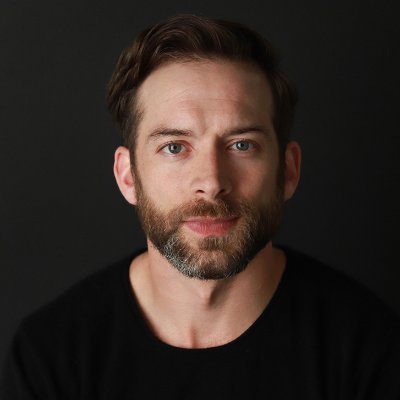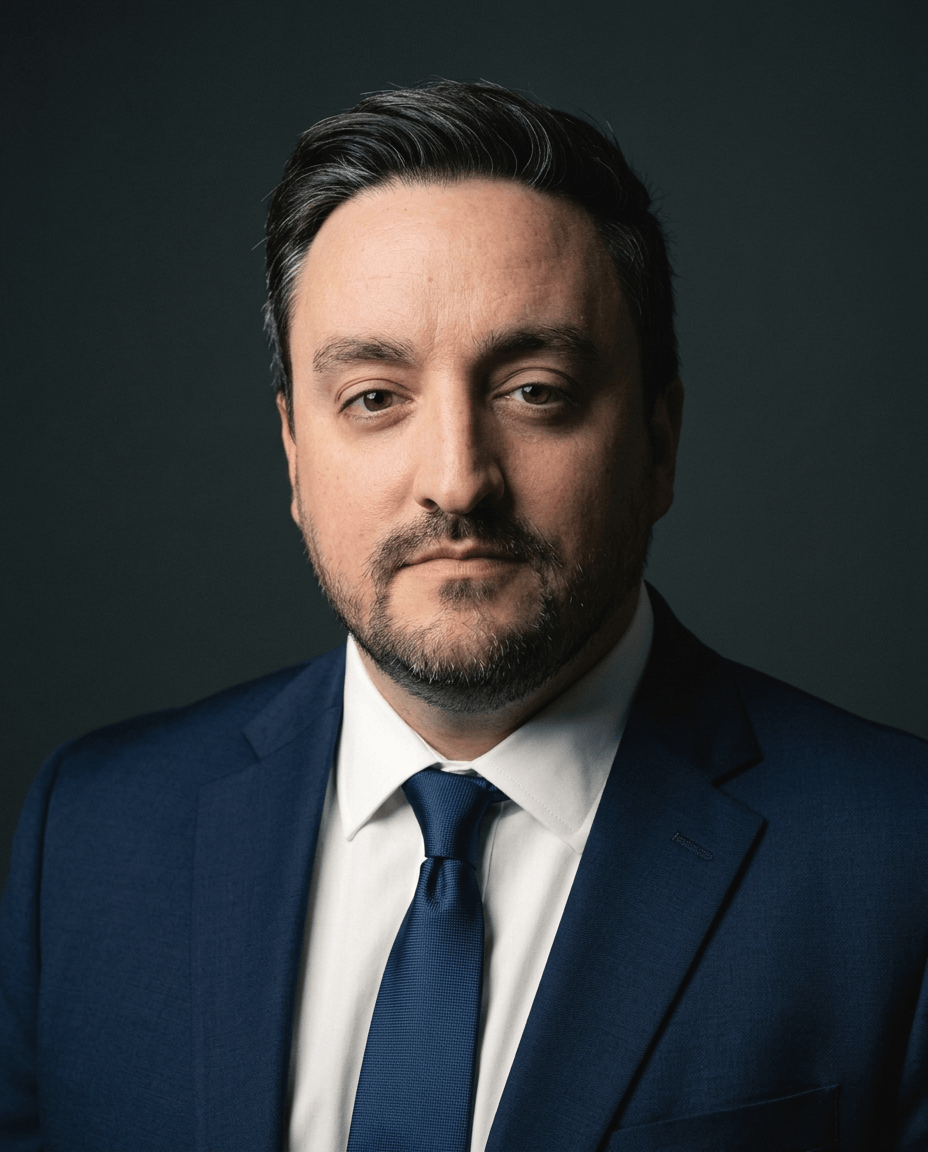
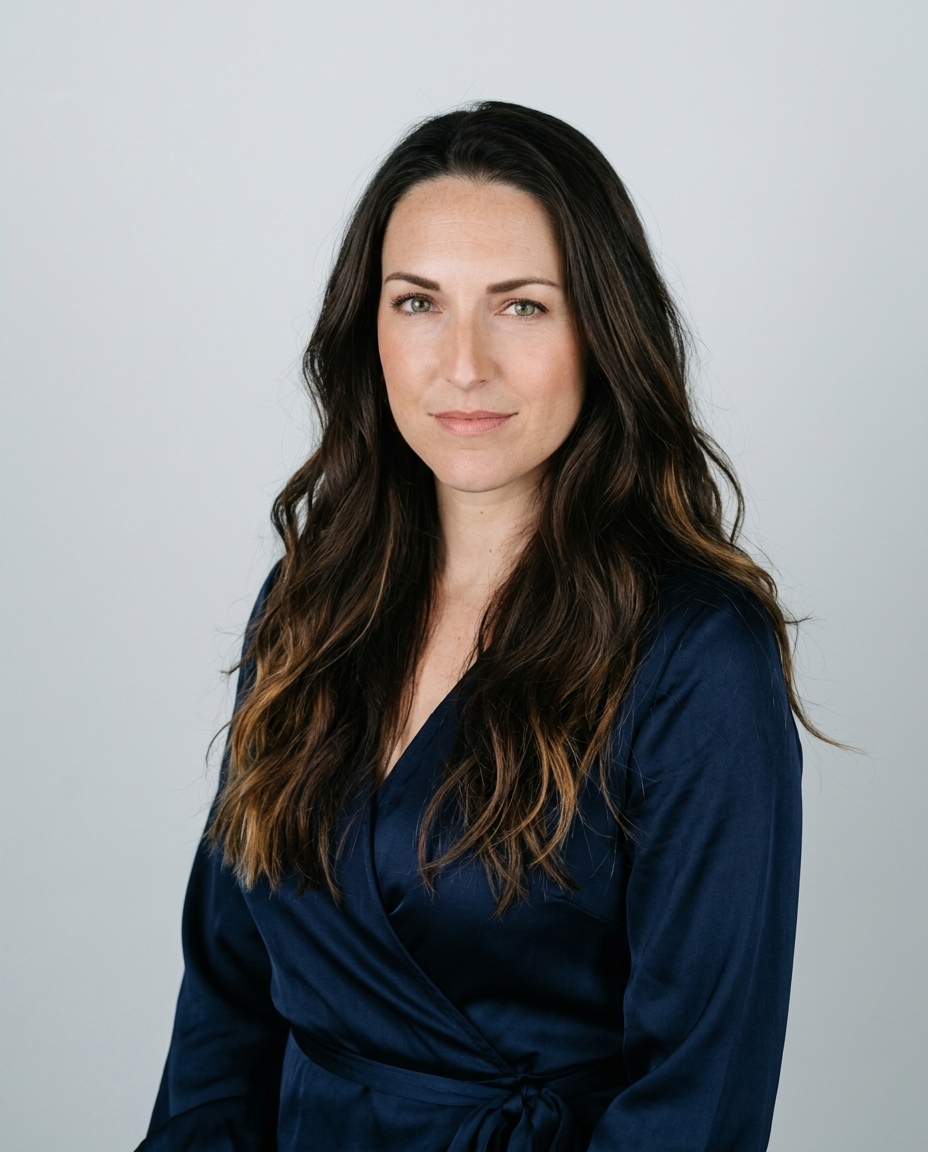
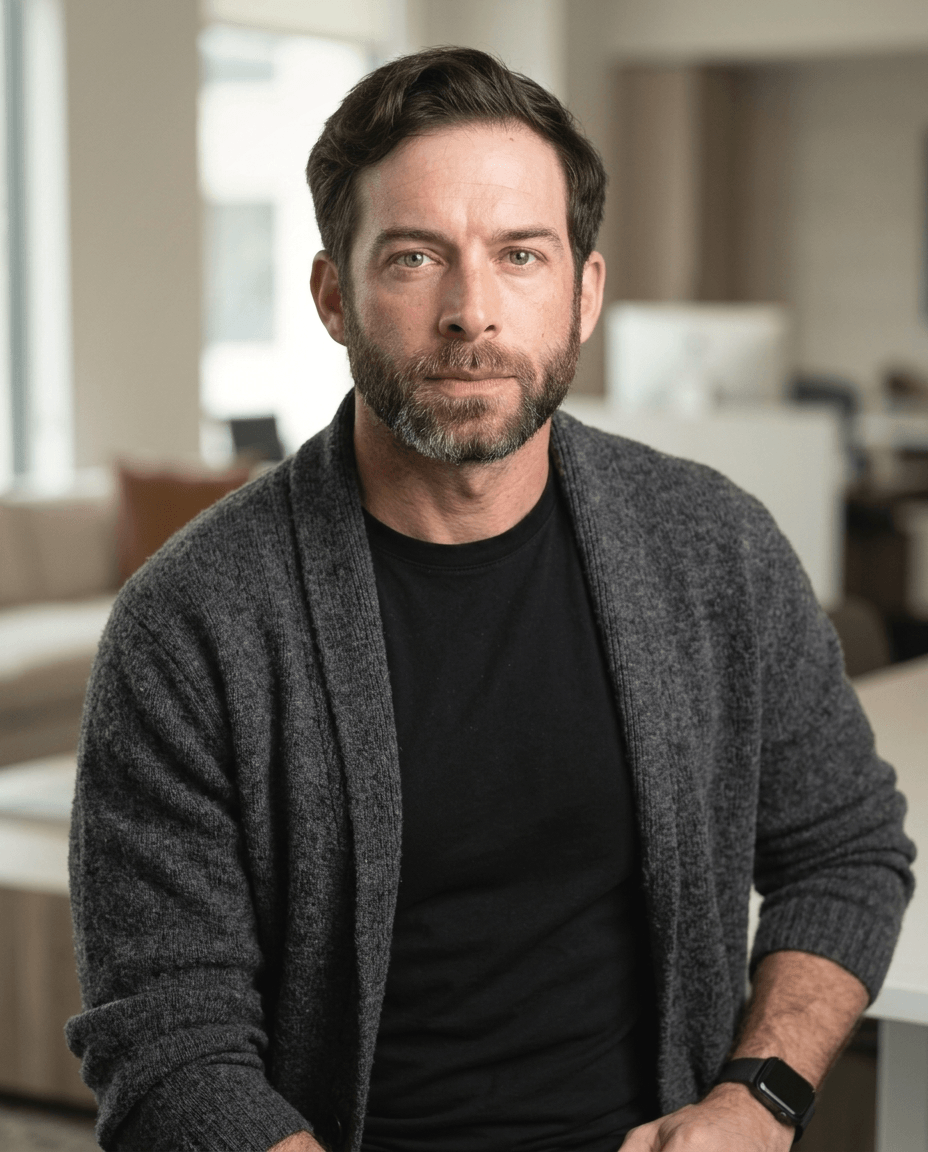
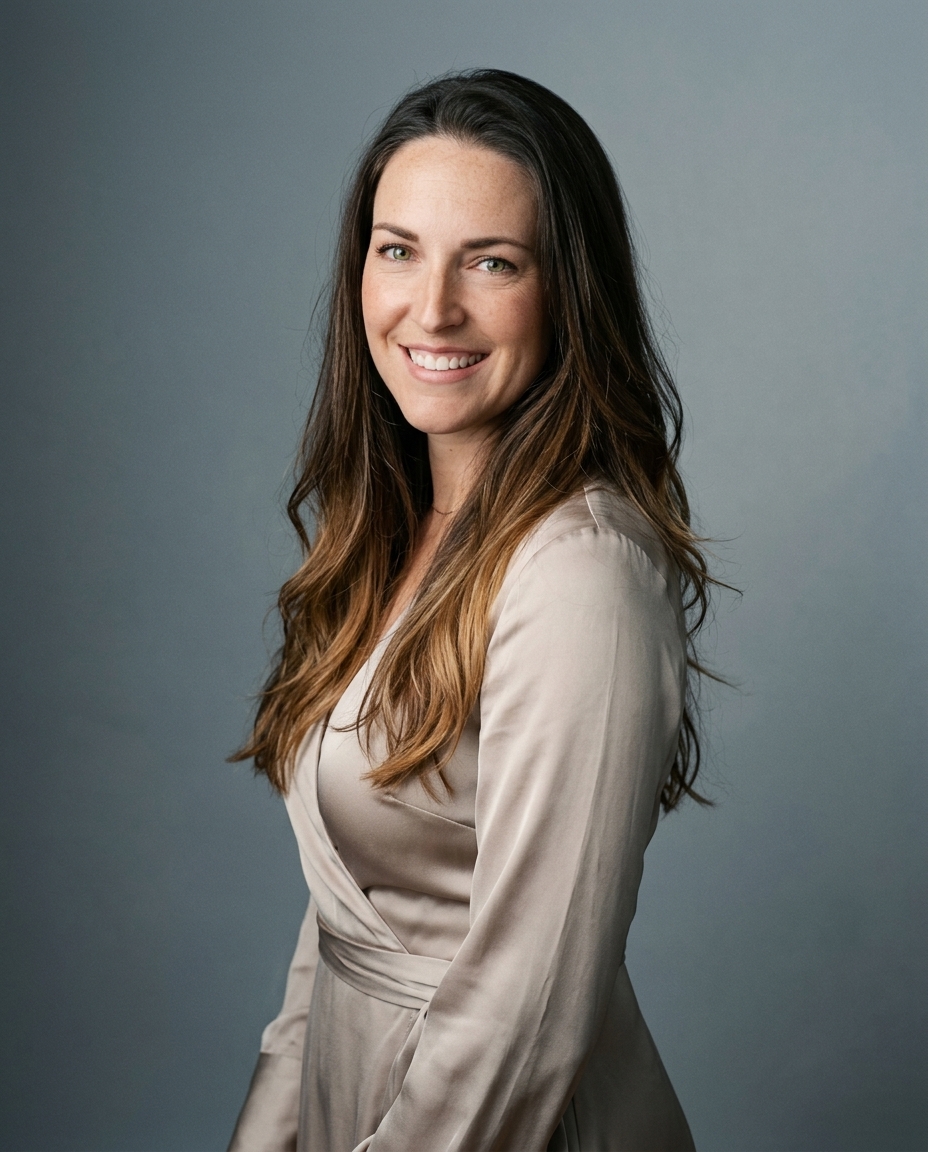
Up to 21 times more profile views and up to 36 times more messages can follow from having a professional photo on LinkedIn. A professional headshot isn't decoration. It changes whether people notice, trust, and contact you.
That makes headshots for professionals part of your working infrastructure. Recruiters see them beside your experience. Prospects see them before a sales call. Clients see them on a company page, speaker bio, or press kit. A weak image reduces the credibility of everything around it, while a well-made portrait gives your credentials a fair chance to be read.
The operational challenge is consistency. Lighting, wardrobe, background, cropping, retouching, and delivery format all affect perception differently on LinkedIn, corporate websites, and press materials. The right solution isn't automatically a photographer or an app. It depends on how many images you need, how quickly you need them, and how closely they must match across a brand.
Table of Contents
- Why professional headshots matter more than credentials
- The four headshot types professionals actually need
- How lighting and wardrobe shape professional perception
- Studio photographers versus AI-generated headshots
- Choosing the right headshot system for your career stage
- Where to go next after selecting your headshot path
Why professional headshots matter more than credentials
Profiles with a professional photo can receive up to 21 times more profile views and up to 36 times more messages than profiles without one, according to LinkedIn-referenced headshot data. The figures don't promise a job, a promotion, or a new client. They show something more practical: people are more likely to engage with a profile when the first visual signal feels credible.
Consider two consultants with similar experience. One uses a cropped holiday photo with uneven lighting. The other uses a direct, relaxed portrait with a clean background and clothing that fits the role. The second consultant hasn't changed their qualifications. They have changed the moment at which a viewer decides to keep reading.
That first decision matters on platforms built for fast scanning. A LinkedIn thumbnail doesn't provide room for a detailed explanation of your methods or career history. Your face, expression, contrast, and crop carry the first impression. The image needs to communicate competence without looking distant, and approachability without looking casual.
Practical rule: Treat the headshot as the front door to your professional profile. If the door looks careless, visitors judge the business before entering.
Independent research on professional portrait perception found that replacing a casual photo with a professional headshot increased perceived competence by 76%, influence by 62%, and likability by 9% among participants, as documented in professional portrait perception research. Those numbers describe perception, not performance. A strong portrait can't replace expertise, but it can stop poor presentation from obscuring it.
For a deeper assessment of the business case, see this guide on whether professional headshots are worth it. The useful conclusion is straightforward. Your photo doesn't need to look luxurious or theatrical. It needs to look current, intentional, recognizable, and appropriate for the people you want to reach.
The four headshot types professionals actually need
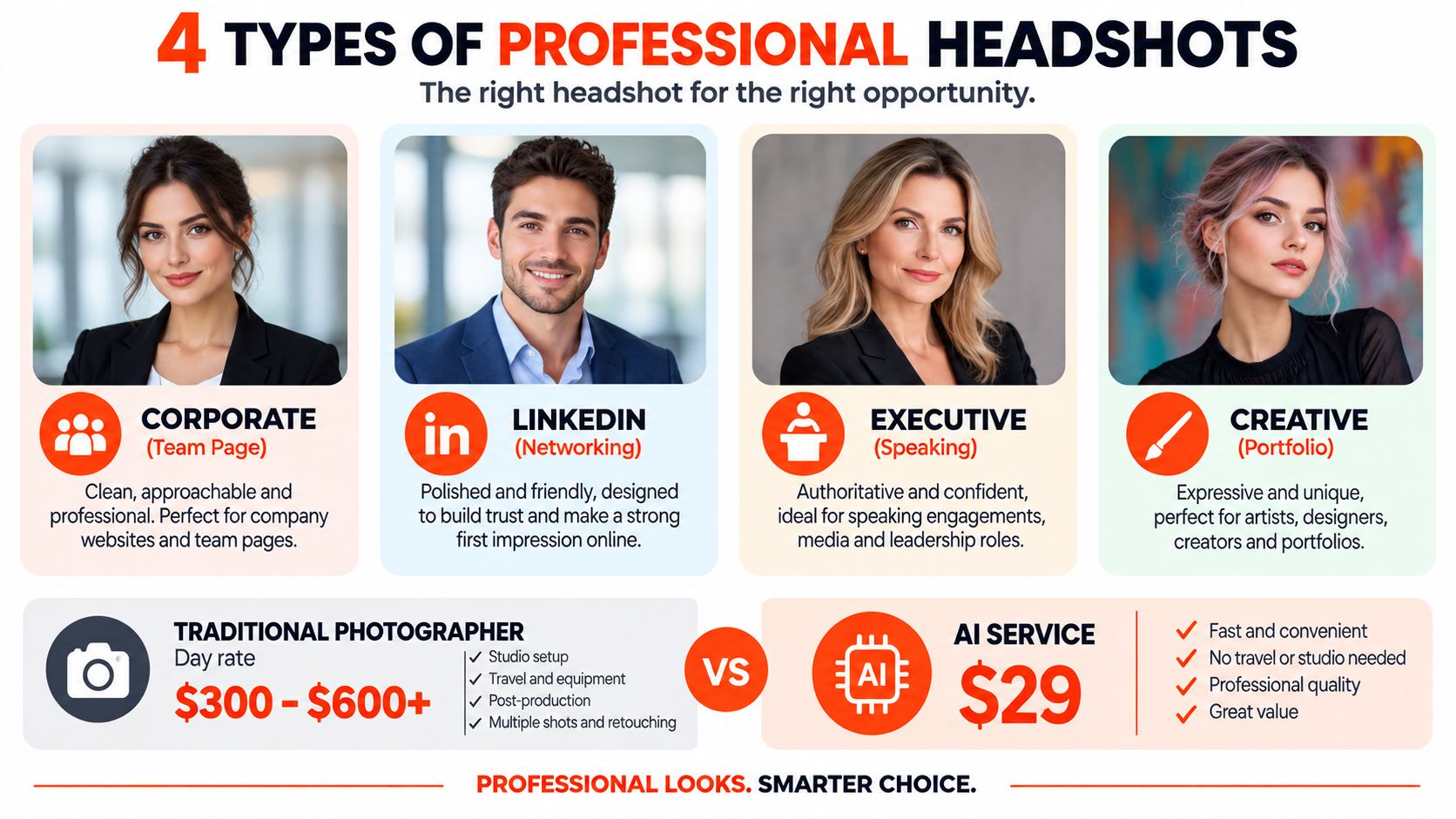
There isn't one universal professional headshot. A corporate team page has a different job from a casting submission, and a founder's press-kit portrait shouldn't always look like a LinkedIn thumbnail.
Corporate headshots
Corporate portraits prioritize clarity, consistency, and authority. They belong on team pages, recruiting materials, investor documents, and internal directories. The background should support the company identity without competing with the face. A matching crop and similar lighting across employees matter more than giving every person a different creative treatment.
LinkedIn portraits
LinkedIn images need to survive a small circular or square crop. Direct eye contact, visible facial detail, and an expression that feels open usually work better than a distant editorial pose. The image should feel polished enough for business development while retaining enough warmth for networking.
Actor headshots
Actor headshots serve a casting decision, not a corporate credibility check. Character, emotional range, and believable presence matter more than uniform branding. A theatrical or agency submission can require several distinct looks, so forcing every image into a conservative corporate style weakens the portfolio.
Environmental and executive portraits
Environmental portraits add context through a workspace, studio, clinic, office, or industry setting. They suit founders, consultants, therapists, designers, and speakers who want the setting to reinforce what they do. Executive portraits for keynote pages and press kits can use a more deliberate pose and stronger visual authority than a social profile photo.
The mistake is sending the same file everywhere without considering its audience. A formal corporate portrait can look stiff on a creative portfolio. An expressive environmental image can feel unfocused on a law firm's team page. The different types of professional headshots make more sense when you treat each image as a communication asset, not just a picture of your face.
A traditional photographer's day rate commonly runs $300 to $600 or more, while an AI service can start at $29. The cost difference matters, but the more useful comparison is fit. Pay for custom direction when one specific image carries major weight. Choose a faster image system when you need multiple formats, variations, or consistent portraits across a group.
How lighting and wardrobe shape professional perception
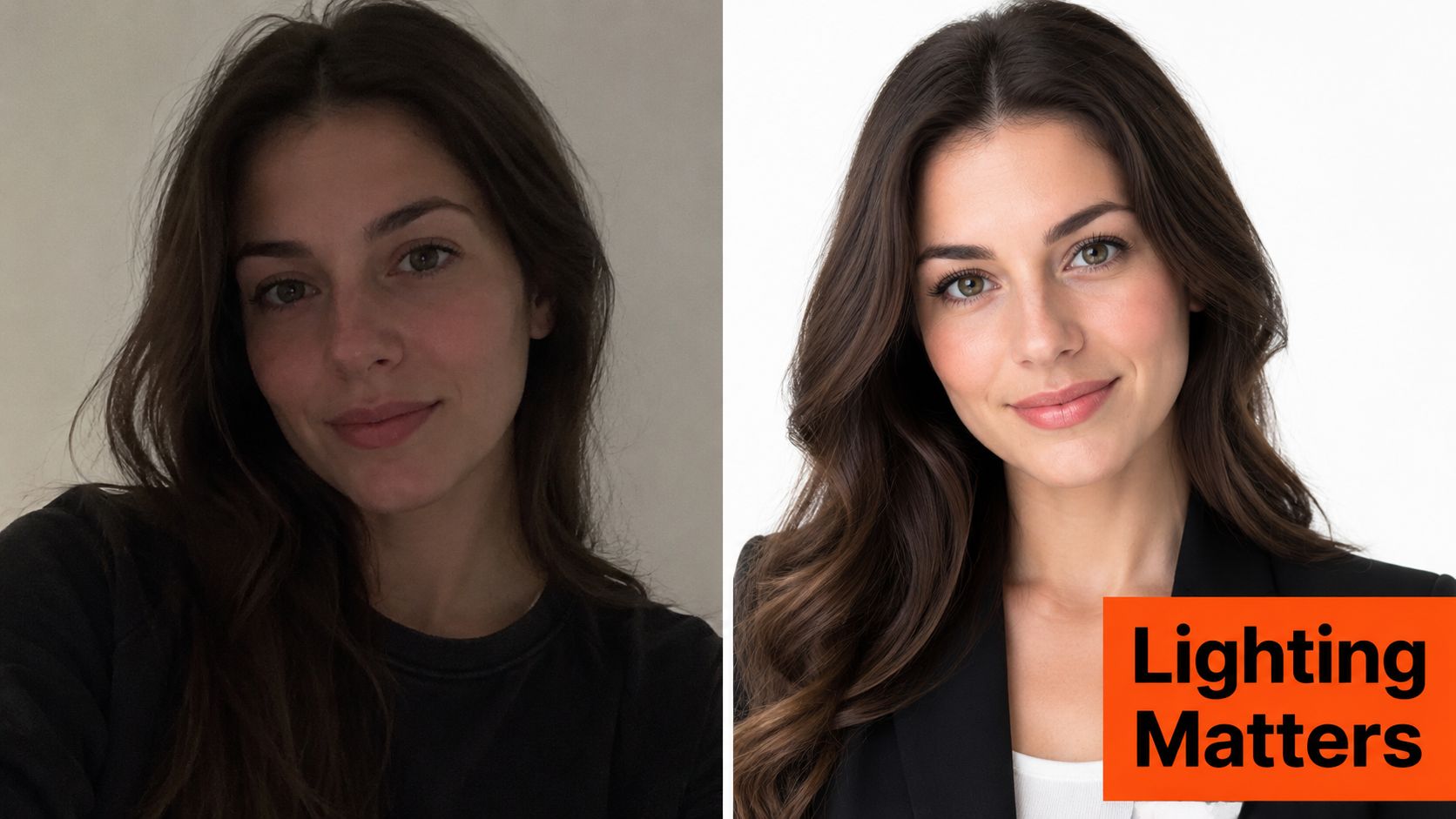
A high-end camera cannot rescue flat light, distracting clothing, or a background that competes with the subject. In practice, a controlled lighting plan has more influence on a professional portrait than an expensive camera body used without one.
A common studio arrangement places the key light 30 to 45 degrees off-center and slightly above eye level. A weaker fill light controls contrast on the opposite side, while a separate hair or rim light separates the subject from the background. This preserves facial structure and shadow detail instead of flattening the face. The setup is explained in our guide to the best lighting for headshots and this headshot lighting guide.
The eyes should remain clear, facial proportions should look natural, and the subject should separate cleanly from the background. Bright front-facing light can erase the shadows that give a face dimension. Harsh overhead light can create deep eye sockets and pronounced lines. The camera records those decisions faithfully. It does not correct them later.
Wardrobe frames the message
Clothing supports both the face and the role. Solid colors, restrained patterns, and clean collar lines keep attention on the person. A fitted blazer can communicate structure for a lawyer or executive. A softer knit or open collar may feel more natural for a consultant, therapist, or technology founder.
Avoid large logos, dense patterns, and colors that blend into the background. Bring more than one option when the session allows it, then select clothing for the intended use. A press-kit portrait can show more character than a team-directory image, while both still need a clean face crop.
LinkedIn, a corporate website, and a press kit may need different expressions, crops, and levels of formality. Consistency at scale therefore means repeating the visual rules, not forcing every image into the same pose. For founders balancing personality with authority, these founder portrait best practices offer useful context.
Retouching needs the same discipline. Natural skin texture, believable expressions, and visible character lines usually serve professional credibility better than aggressive smoothing, as discussed in recent LinkedIn headshot trends. Finance and law often favor formal presentation, while technology, marketing, and creative roles can support warmer expressions and environmental settings. The right level of polish depends on the audience and where the image will appear.
Studio photographers versus AI-generated headshots
A photographer and an AI headshot service solve different operational problems. A studio session gives you live direction, real-time adjustments, and a bespoke result. An automated system gives you speed, image volume, and repeatable output without a studio visit.
A traditional photographer's day rate is commonly $300 to $600 or more. The photographer also controls the lighting, pose, expression, wardrobe changes, and retouching process in real time. That makes the traditional route a strong choice for one defining portrait, an editorial assignment, a speaker campaign, or a situation where you need the photographer to solve visual problems as they appear.
The trade-off is coordination. You need to schedule the session, travel to the location, prepare clothing, and wait for the finished files. For one important image, that effort can be justified. For a distributed team or a professional who needs several platform-specific crops, it can become the bottleneck.
A practical decision test
Ask three questions before choosing:
| Need | Better fit |
|---|---|
| One highly directed image with bespoke posing | Traditional photographer |
| Multiple polished variations without a studio visit | AI headshot service |
| Consistent portraits across a team | A standardized AI workflow or coordinated studio shoot |
| Editorial character, complex location, or live art direction | Traditional photographer |
AiHeadshots delivers 30 or more studio-grade headshots in about 30 minutes. Customers upload 10 to 20 phone selfies, so there's no studio visit. Its tiers are Basic at $29, Professional at $39, and Executive at $59, with Teams pricing at $22 to $29 per seat for volume bookings of 10 or more seats. The workflow is designed for professionals who need a set of usable options rather than one carefully directed exposure.
The product comes from Studio Pod, an automated headshot studio in Houston founded by photographers Joseph West and Chris Bailey. Studio Pod has shot more than 10,000 real professionals since 2019. That heritage matters because lighting, facial structure, wardrobe behavior, and retouching decisions come from photography practice. We built a photographer-led system rather than retrofitting generic open models.
Marketers who already have portraits and need controlled finishing can also use a portrait retouching tool for marketers. That route makes sense when the source image is strong and the remaining need is editing. It doesn't solve inconsistent lighting or a weak original expression.
Choosing the right headshot system for your career stage
A single portrait rarely covers every professional surface. LinkedIn needs a readable thumbnail. A company site needs team consistency. A press kit needs space for different crops and a pose that holds up beside editorial copy. Speaking bios and presentation slides often need a different orientation from a profile image.
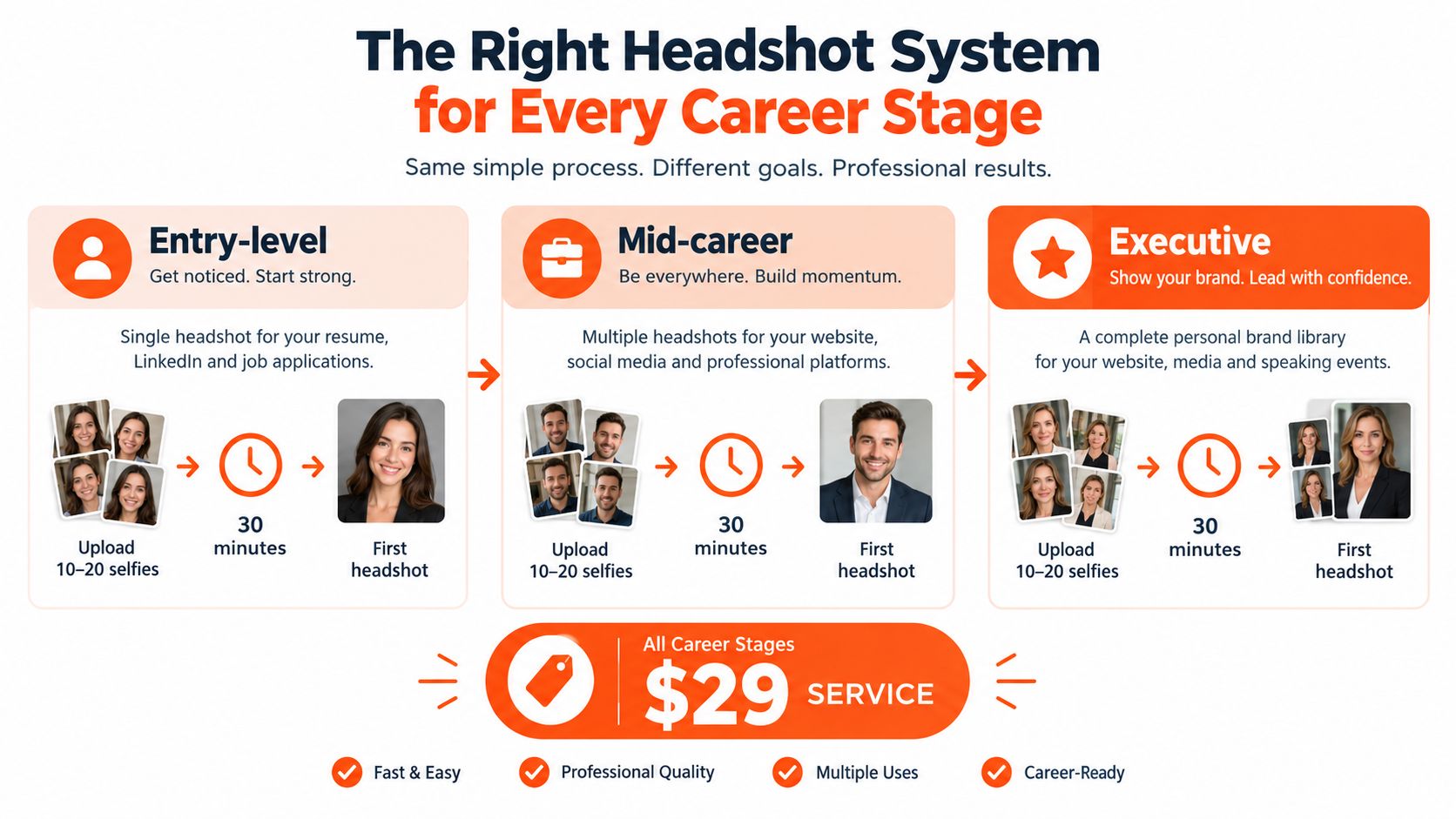
The most useful system has three variables: image volume, delivery speed, and consistency across people or platforms. Career stage changes the weighting.
Entry-level professionals
Start with a clear LinkedIn portrait and a version that works in applications, email signatures, and professional directories. You need recognizability and a credible expression more than a large visual library. A fast workflow makes sense when your current image is outdated or was cropped from a group photograph.
Mid-career professionals
Build a small set of variations. Use one direct portrait for LinkedIn, one with more breathing room for a company biography, and another with a warmer expression for networking or client communication. This isn't about changing your identity from platform to platform. It's about giving the same identity the right crop and tone.
Executives and personal brands
Executives, founders, and speakers need a repeatable library for press kits, keynote pages, presentations, company announcements, and video profiles. The images should share a coherent lighting approach while offering enough variety to prevent every communication from looking copied and static.
Teams face an additional production problem. Everyone needs to appear as part of the same organization, even when employees work in different locations. Group bookings usually reduce the per-person price as headcount rises, and one industry pricing guide reports typical group savings of 10% to 25% for team bookings, with lower per-person pricing often appearing at 10, 25, 50, or 100 employees. See the team headshot options for a workflow built around volume and consistency.
Privacy also belongs in the selection process. Retention policies differ by provider. One AI headshot provider says uploaded selfies are deleted within 30 days of generation, while another documents deletion of uploaded images after 7 days and generated headshots after 30 days, as summarized in this AI headshot privacy guide. AiHeadshots retains inputs for 7 days, outputs for 30 days, and billing records for 90 days. Check those policies before uploading images, particularly for team projects.
Where to go next after selecting your headshot path
Choose a traditional photographer when you need one exceptional portrait with live direction, a complex environment, or a specific editorial result. Choose an AI-generated workflow when you need multiple polished variations quickly, don't want a studio visit, or need a consistent process across a team.
The visual choices still decide the quality. Controlled light gives the face structure. Wardrobe keeps attention where it belongs. Natural retouching preserves recognition. Correct crops make the same professional identity work on LinkedIn, a company site, a press kit, and a presentation.
For teams, the delivery method matters as much as the image itself. A shared visual standard prevents one employee from appearing in hard fluorescent light while another has a carefully shaped portrait. For individuals, a small library gives you context-specific options without forcing one photo to perform every job.
Studio Pod has served more than 30,000 customers, delivered more than 255,000 headshots, and holds a 4.9-star rating. AiHeadshots includes a 100% money-back guarantee within 14 days, so the practical next step is to test the output against the places where your current image appears. Review the crop, expression, lighting, and consistency before replacing every profile at once.
Upload 10 to 20 selfies to AiHeadshots, receive 30 or more professional headshots in about 30 minutes, and choose the set that fits your LinkedIn, corporate, executive, or press-kit needs, starting at $29.