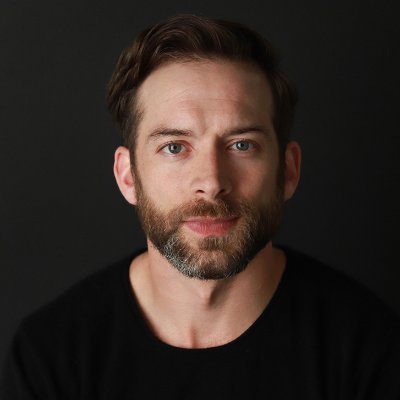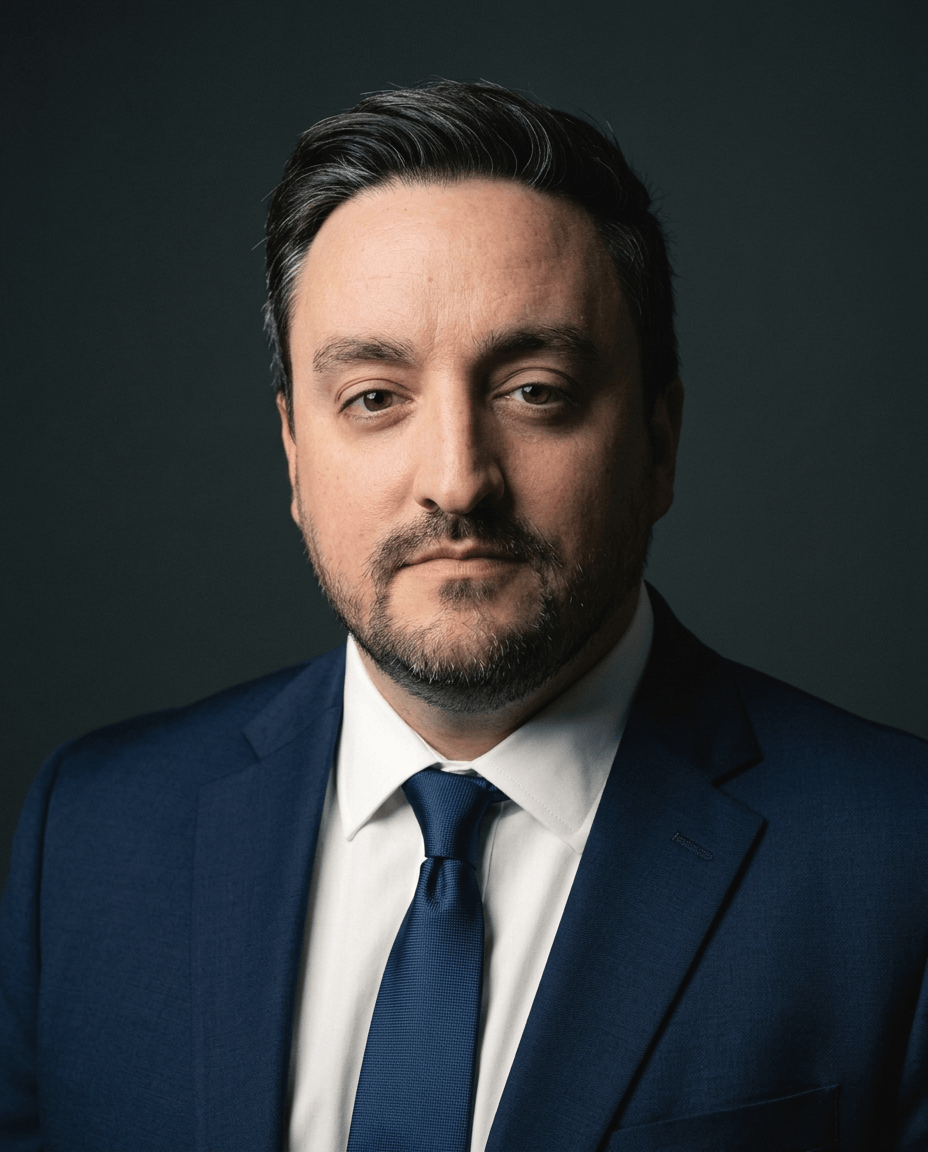
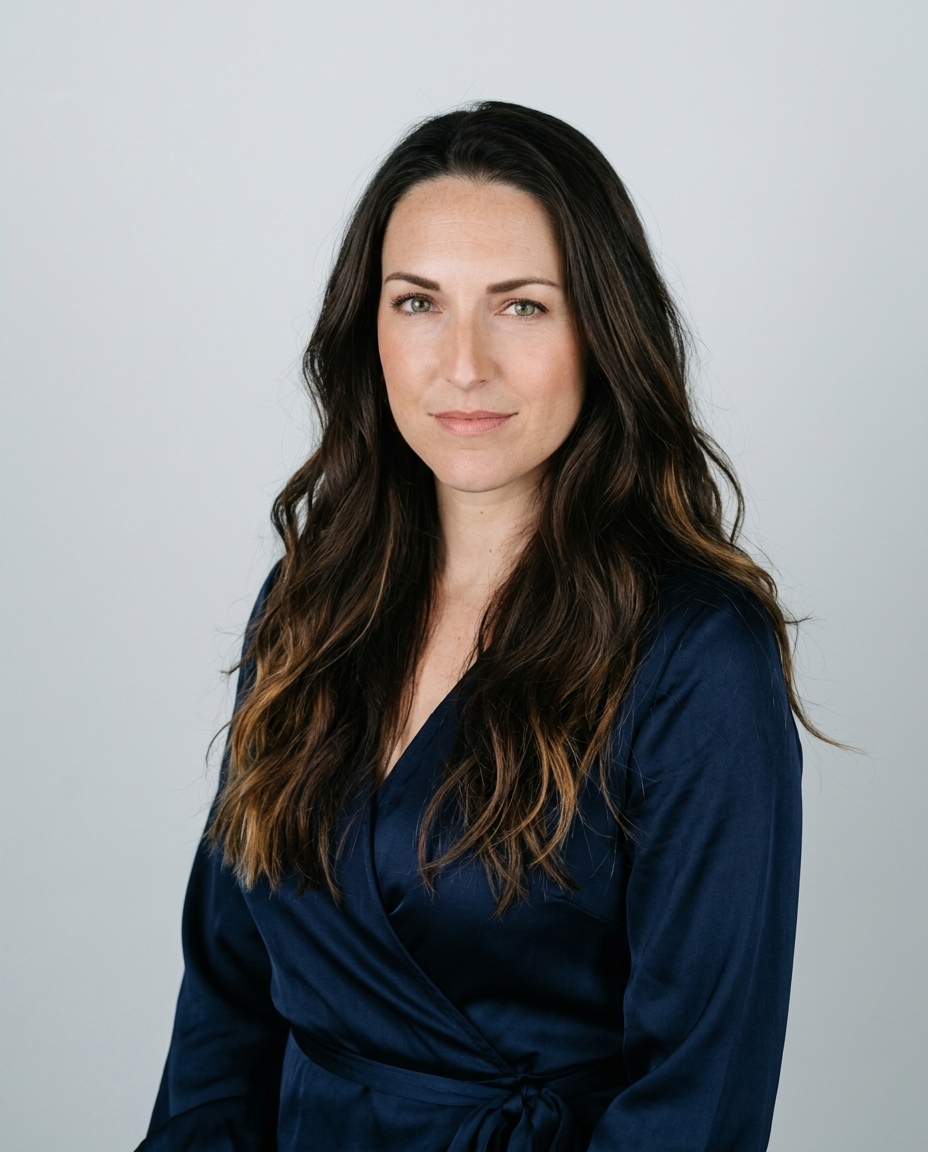
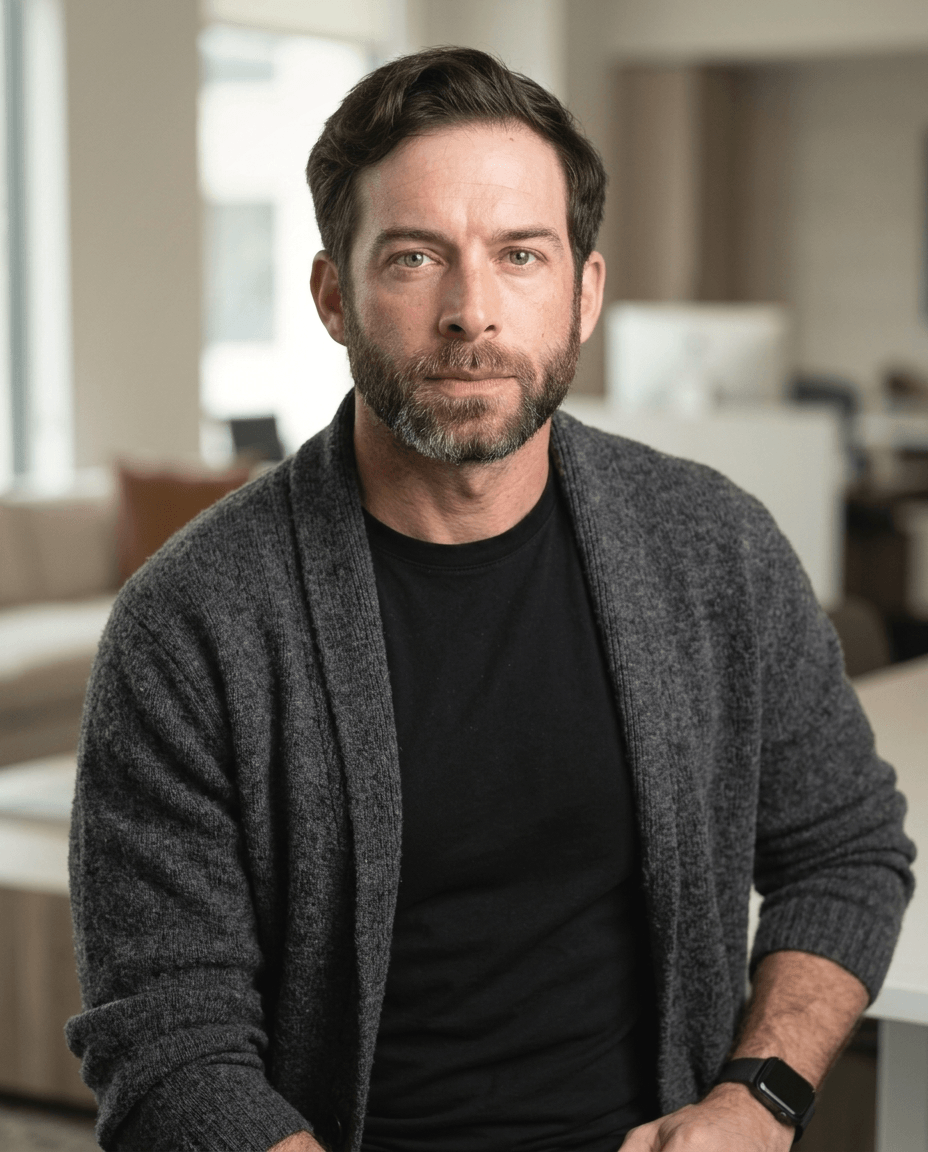
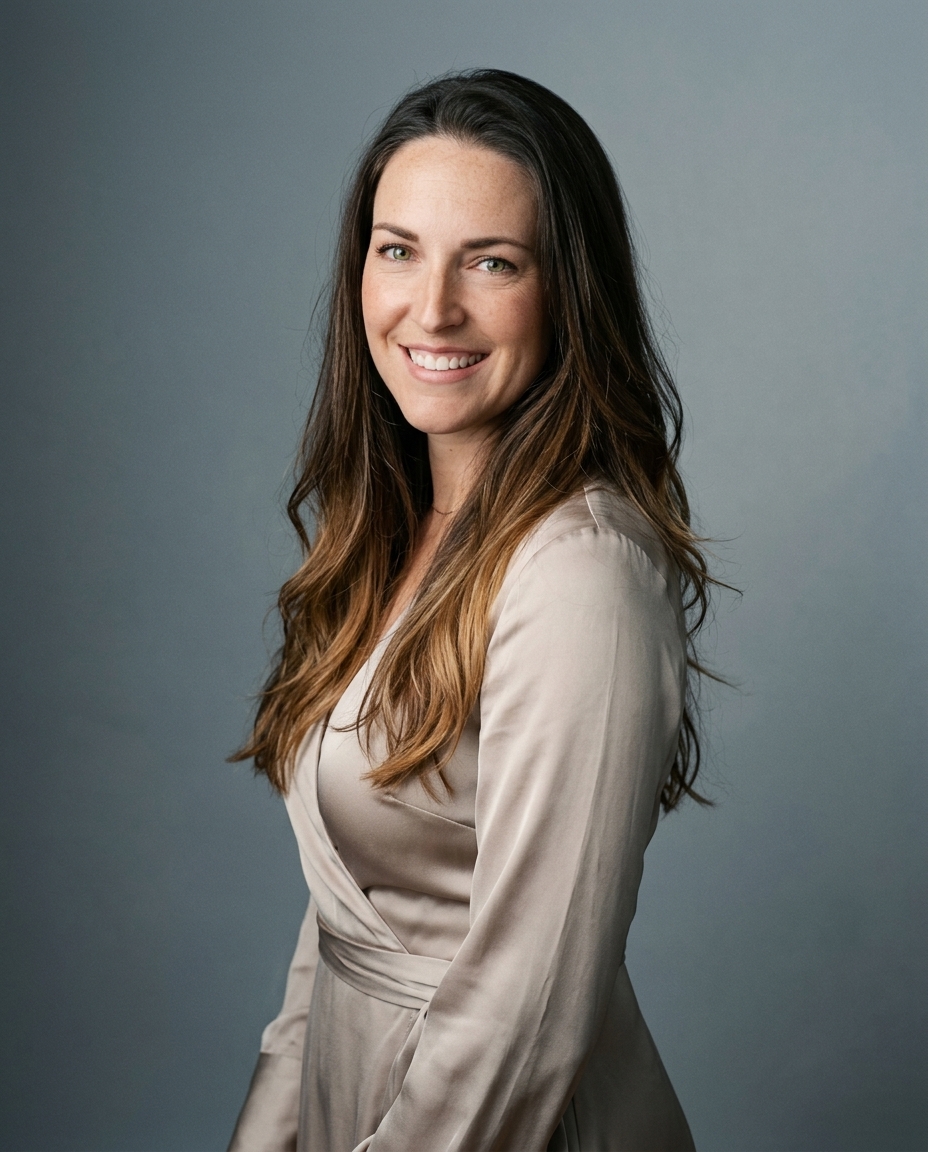

The only headshot lighting setups that matter are the ones that make a face look trustworthy, competent, and natural. Lighting does that job more than camera bodies, lenses, outfits, or retouching. After photographing over 10,000 professionals at Studio Pod in Houston, we stopped treating lighting like taste and started treating it like geometry. Certain setups work. Others fail in repeatable ways.
That hands-on studio history is exactly why AiHeadshots exists. We didn't start as a software company trying to imitate portraits. We started as photographers. Joseph West and Chris Bailey built Studio Pod by photographing real professionals, then built AiHeadshots around the same lighting logic we use in the studio. If you want a useful parallel for controlled visual setup, this guide on video lighting setups is worth a look.
Here are the eight lighting patterns that matter most for professional headshots, and why they work.
Table of Contents
- 1. Butterfly lighting
- 2. Rembrandt lighting
- 3. Loop lighting
- 4. Split lighting
- 5. Broad lighting
- 6. Short lighting
- 7. Three-point lighting key fill back
- 8. Ring light and catch light technique
- 8-Point Headshot Lighting Comparison
- Studio lighting without the studio
1. Butterfly lighting

Butterfly lighting is the cleanest starting point for the best lighting for headshots. The light sits in front of the subject and slightly above eye line, which creates a centered nose shadow and even shaping across the face. On a corporate shoot, this is one of the fastest ways to make a team look consistent without making everyone look identical.
The setup works because soft frontal light is flattering when it's close. Light intensity drops fast with distance. Under the inverse square law, doubling the distance cuts brightness to 25 percent and halving it raises it to 400 percent. Peter Hurley teaches placing the light really close, typically about 18 to 24 inches away in his headshot lighting tutorials, because that proximity softens texture and lets the background fall off cleanly.
Why butterfly works
A lawyer, physician, or finance executive usually doesn't need mood. They need clarity. Butterfly lighting keeps both eyes open and readable, reduces under-eye shadow, and gives the face structure without making the portrait look severe.
Practical rule: If the nose shadow gets long or starts touching the upper lip, the light is too high or too hard.
A reflector under the face improves this setup fast. The classic clamshell version places fill below the chin, which softens neck and jaw shadows. In studio work and in AiHeadshots, that's one of the most reliable ways to produce a polished LinkedIn-style image that still looks human.
2. Rembrandt lighting

Rembrandt lighting adds authority. The key light moves to the side and above the subject until a small triangle of light appears on the shadow cheek. Done well, it gives the face dimension and keeps the portrait professional. Done badly, it turns into theatrical side light.
This is one of the few setups where angle discipline matters more than gear. For high-volume corporate sessions, placing the main light so the bottom edge sits at the subject's eye corner and angling it 45 degrees down is a standard studio benchmark. That keeps the nose shadow descending correctly instead of kicking upward, which is one of the fastest ways to make a headshot look amateur.
Where Rembrandt earns its keep
Executives often respond well to this setup because it adds shape without making the image look hostile. Attorneys, consultants, founders, and speakers also benefit from it when they want presence on a website bio page.
The trade-off is simple. Rembrandt lighting demands control. If the subject turns too far, the triangle disappears. If the fill is too weak, the eye on the shadow side dies.
Keep both eyes alive. If one eye loses catch light, the portrait loses engagement.
In our studio work, we use this pattern selectively. It isn't the default for every face. It's the right move when someone needs more structure than butterfly lighting gives, but still needs approachability.
3. Loop lighting
Loop lighting is the default for professional headshots because it solves the primary job. It gives the face shape, keeps both eyes clear, and avoids the stylized look that can hurt trust in a business portrait.
The setup is simple. Place the key light slightly off center and a little above eye level until the nose shadow falls softly to one side without connecting to the cheek. That small shadow is the tell. If it gets too long, the portrait starts drifting toward Rembrandt. If it disappears, you are back in flat frontal light.
This pattern holds up under volume. For company directories, recruiting pages, speaker bios, and LinkedIn profiles, loop lighting gives consistent results across a wide range of face shapes and ages. It is forgiving, but it is not lazy. The best version still depends on careful light placement, subject angle, and enough fill to keep the lower eye area clean.
Why it works so well for business portraits
Business headshots need readability first. People make fast trust judgments from a face, and loop lighting preserves the information they use. The jaw stays defined. The cheekbones get shape. The expression stays open.
A practical setup is one large diffused key light, close to the subject, with a reflector or low fill under the face to control shadows under the eyes and chin. I use this pattern constantly because it survives small posture changes better than more dramatic setups. That matters in real sessions, where subjects blink, rotate, and relax between frames.
It also maps well to how we evaluate strong headshots at scale. After thousands of sessions, the pattern is clear. The images people choose most often are usually not the most dramatic. They are the ones that look competent, approachable, and clean. Loop lighting delivers that balance better than almost any other setup.
If the goal is credibility with shape, start here.
4. Split lighting
Split lighting puts one side of the face in light and the other in shadow. It's dramatic. It can be striking. It is usually the wrong answer for a business headshot.
Creative fields can use it well. Musicians, actors, designers, and some editorial portraits benefit from that tension. But for LinkedIn, law firms, financial advisors, therapists, or hospital staff pages, split lighting creates distance. It reads as moody before it reads as professional.
Why we rarely use it for business portraits
The main problem isn't style. It's trust. Most professionals need their face fully legible. Split lighting hides half the information. That's useful when mystery is part of the assignment. It isn't useful when someone is deciding whether you look approachable and credible.
Here's where restraint matters. If you insist on using split lighting, add gentle fill and keep the subject separated from the background. Otherwise the shadow side collapses and the portrait becomes a silhouette with one eye.
Split lighting is a good technique to know because it teaches you what business headshots usually need less of, not more of.
We almost never use this pattern as the primary look for teams. Consistency matters in group headshot sets, and split lighting creates too much variation across face shapes.
5. Broad lighting
Broad lighting illuminates the side of the face turned toward the camera. That makes the visible part of the face appear wider. On the right subject, it fixes imbalance. On the wrong subject, it exaggerates width immediately.
This is a face-shape decision, not a trend. Narrow, angular faces can benefit from broad lighting because it adds visual fullness. Wider or rounder faces usually don't.
Face shape decides everything
If you're photographing a creative director with a lean face and pronounced cheekbones, broad lighting can make the portrait feel more balanced. If you're building a uniform employee directory across many different face shapes, it's much riskier because it won't flatter everyone equally.
That's one reason we usually reserve this look for selective use, not default use. Outdoor headshots can create a similar widening effect when open shade hits the front plane of the face too evenly, which is why face shape matters there too. If you're working outside, this guide to professional headshots outside is a useful companion.
Broad lighting isn't wrong. It's just specific. You use it because the face asks for it, not because the setup diagram looks good on paper.
6. Short lighting
Short lighting is the opposite of broad lighting. The key light strikes the side of the face turned away from the camera, leaving the camera-side cheek in softer shadow. This is the studio default for a reason. It slims, sculpts, and adds definition without forcing drama.
If you need one setup that works across a mixed team of executives, sales staff, clinicians, and operators, short lighting is usually it. It gives the face shape while keeping the image friendly.
The studio default for a reason
Professional guides note that Rembrandt or loop lighting at around 45 degrees covers over 90 percent of professional headshot setups, largely because that angle creates jaw definition and helps hide fullness under the chin. Short lighting builds on that principle. You're placing the shadow where it helps the face most.
This is also where lens choice matters. Photographers often choose an 85mm lens or longer, commonly in the 70mm to 200mm range, because that perspective minimizes facial distortion. Good lighting and a bad focal length still produce a weak headshot. Good focal length and weak lighting still produce a weak headshot. The best results need both working together.
For AiHeadshots, this is one of the key benefits of photographer-built training logic. We aren't guessing at flattering structure. We're applying the same visual rules we've used on thousands of real people in studio.
7. Three-point lighting key fill back
Three-point lighting adds a back or rim light behind the subject. That third source separates the head and shoulders from the background and gives the portrait a more finished studio look. On executives and formal branding portraits, that extra polish can matter.
Use it carefully. More lights don't automatically mean better headshots. Most amateur setups fall apart because every light is too strong.
A short demo helps if you want to see the parts working together.
Polish without overlighting
Professional lighting guides recommend keeping the kicker or rim light at only 10 to 20 percent of the main light's intensity. That's enough to define hair or jawline without blowing out skin or making the shot look overproduced.
For annual reports, leadership pages, and premium branding portraits, this setup earns its keep. You get separation, shape, and a cleaner edge against darker backgrounds. For many standard LinkedIn portraits, though, a key plus fill setup is enough.
If you want a more formal portrait reference point, this piece on formal portrait photography pairs well with three-point headshot lighting. The principle is the same. Add the back light only when the image needs separation.
8. Ring light and catch light technique

Ring lights are useful for one job. They make self-shot headshots fast, repeatable, and forgiving.
That convenience comes with a visual cost. The light sits close to the lens axis, so it wipes out the small shadows that give a face structure. Skin looks smooth, exposure is easy to manage, and the eyes get a clean circular catch light. Jawline, cheek contour, and depth usually get weaker.
Photographers who have shot thousands of corporate headshots learn this quickly. Professional trust rarely comes from perfectly flat light. It comes from controlled shape. A hiring manager, client, or investor may not know why one portrait feels stronger than another, but they react to it. Ring light works best when the goal is clean source capture, not a final portrait with a lot of authority built into the lighting.
That distinction matters for AI headshots too. Even, front-facing photos give the system clear facial information and fewer problems with harsh shadows or uneven skin tone. We built around that principle because good inputs produce more reliable outputs. If you are shooting your own setup, this guide on how to take a professional headshot at home will help you keep the light, framing, and background under control.
Use the catch light on purpose. A ring-shaped reflection can look modern and polished for creators, coaches, fitness brands, and lifestyle work. In conservative fields, it can read as stylized or social-first. For a law firm partner, physician, or board portrait, I would usually trade the ring catch light for a softer rectangular reflection from an off-camera source.
Placement helps. Keep the ring light slightly above eye level instead of dead center, and do not push brightness harder than necessary. If the face starts to look two-dimensional, back the light off a little or let window light add subtle direction from one side. The result stays clean without looking blank.
8-Point Headshot Lighting Comparison
| Technique | Implementation complexity 🔄 | Resource requirements ⚡ | Expected outcomes ⭐📊 | Ideal use cases 💡 | Key advantages ⭐ |
|---|---|---|---|---|---|
| Butterfly lighting | Low 🔄 | Low ⚡ (1 light, optional reflector) | Polished, flattering, repeatable, ⭐⭐⭐⭐ 📊 consistent headshots | Corporate/LinkedIn, team headshots | Forgiving across faces; simple; minimizes blemishes |
| Rembrandt lighting | Medium–High 🔄🔄🔄 | Medium ⚡⚡ (key + fill, precise positioning) | Dimensional, authoritative look, ⭐⭐⭐⭐ 📊 adds presence without harshness | Executive portraits, actors, personal branding | Enhances cheekbones and structure; cinematic depth |
| Loop lighting | Low–Medium 🔄🔄 | Low ⚡ (1 light ± reflector) | Natural contour, subtle depth, ⭐⭐⭐⭐ 📊 balanced and approachable | Mid-level corporate, LinkedIn, on-location shoots | Versatile; adds contour without drama; easy to tune |
| Split lighting | Medium 🔄🔄 | Low–Medium ⚡⚡ (directional key, optional subtle fill) | Dramatic, high-contrast impact, ⭐⭐⭐ 📊 memorable but less approachable | Creative portfolios, actors, editorial work | Strong visual impact; emphasizes facial definition |
| Broad lighting | Medium 🔄🔄 | Low ⚡ (1 light, placement-sensitive) | Visually widens face, ⭐⭐⭐ 📊 best for narrow/ angular faces | Fashion/editorial; subjects with narrow faces | Balances narrow faces; emphasizes features on slim faces |
| Short lighting | Low–Medium 🔄🔄 | Low ⚡ (1 light + fill recommended) | Slimming, sculpted, widely flattering, ⭐⭐⭐⭐ 📊 studio staple for teams | Corporate teams, professional services, LinkedIn | Flattering across face shapes; repeatable and reliable |
| Three-point lighting (key, fill, back) | High 🔄🔄🔄 | High ⚡⚡⚡ (3 lights, modifiers, control tools) | Polished, three-dimensional separation, ⭐⭐⭐⭐⭐ 📊 high production value | Executive, high-end branding, commercial portraits | Creates clear subject/background separation and premium look |
| Ring light and catch light technique | Low 🔄 | Low ⚡⚡ (portable ring, easy setup) | Soft, even illumination with circular catchlight, ⭐⭐⭐ 📊 clean but flatteringly stylized | Remote/self-shoots, influencers, beauty portraits | Portable and forgiving; distinctive eye catchlight |
Studio lighting without the studio
Mastering the best lighting for headshots takes time, repetition, and gear. A traditional photographer charges $300–$600+ for a session, and delivery often takes days or weeks. We know because we're photographers first. Studio Pod has photographed 10,000+ real professionals in Houston since 2019, and that experience is the reason AiHeadshots looks different from AI products built without studio heritage.
Joseph West and Chris Bailey didn't retrofit generic image generation into a headshot brand. They built AiHeadshots from the visual rules that make real headshots work. Soft key light close to the face. Controlled falloff. Clean catch lights. Fill that opens shadows without flattening the features. Separation that feels polished, not synthetic. Those decisions come from years of photographing actual clients, not prompt engineering.
That matters because headshots aren't fashion images. They have a job to do. They need to look natural, credible, and professionally lit. We built AiHeadshots to reproduce those standards at scale. You upload phone selfies. Our system applies the same photographer-led principles behind butterfly, loop, short, and three-point lighting patterns.
The product is simple. You upload 10–20 phone selfies. AiHeadshots delivers 30+ studio-grade headshots in about 30 minutes. Pricing is straightforward: Basic $29, Professional $39, Executive $59, and Teams pricing for 10+ seats at $22–29 per seat. There's a 100% money-back guarantee within 14 days. Data retention is also clear: 7-day input retention, 30-day output retention, and 90-day billing retention.
That combination matters for real buyers. A solo professional can get a polished LinkedIn image fast. An HR team can standardize portraits across a company without coordinating studio schedules. A recruiter or operations lead can move quickly without sacrificing the look of the final image. We serve 30,000+ customers, have delivered 255,000+ headshots, and hold a 4.9★ rating because the product starts from photography, not software abstraction.
Upload 10 selfies, see your first headshot in 30 minutes, $29.
AiHeadshots comes from Studio Pod's photographer-led background, not a generic AI template. You can see pricing, browse real examples, read customer reviews, explore team options, or try AiHeadshots.