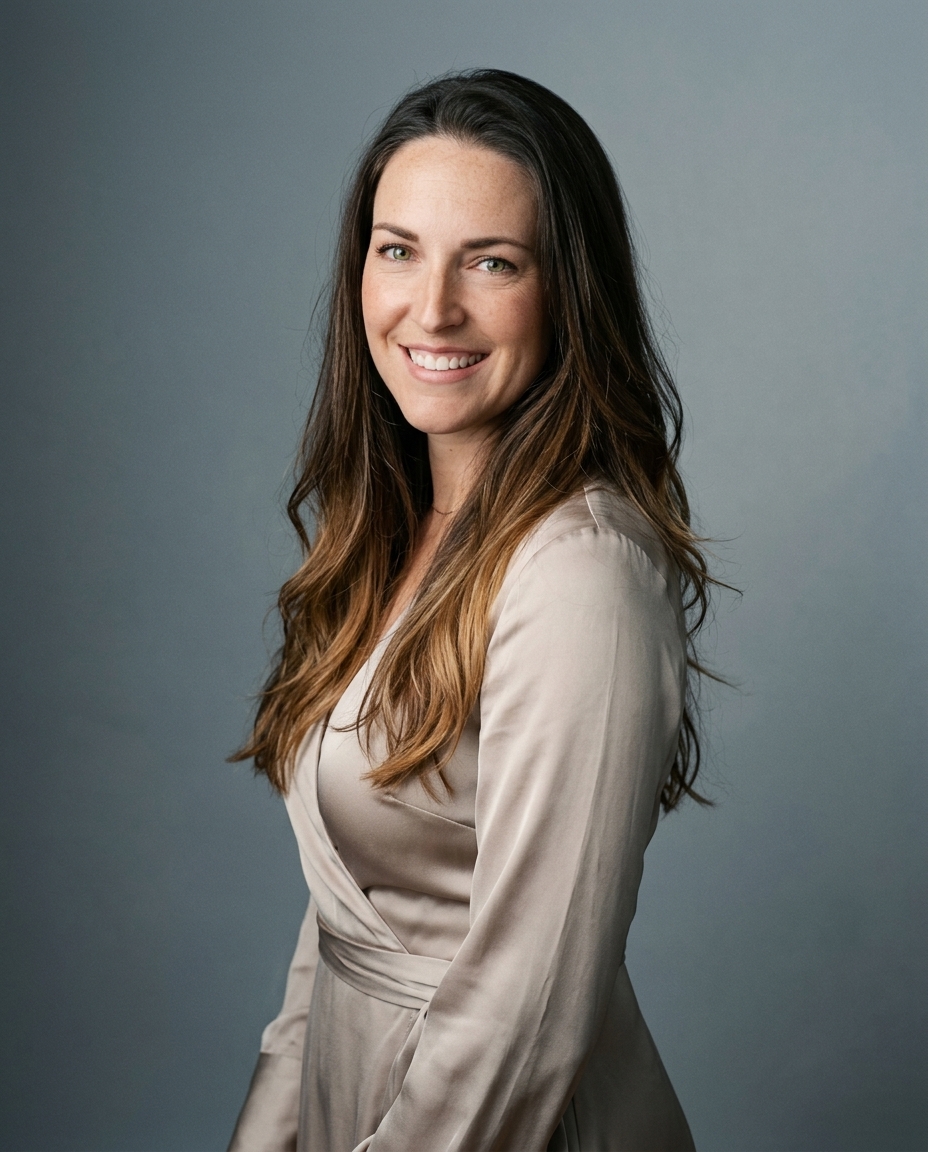

Most advice about professional headshots outside starts with aesthetics. Find a pretty park. Chase golden hour. Pick a scenic background. That's backwards.
Outdoor headshots are a control problem first. Light shifts. Wind picks up. Pedestrians walk through frame. Reflections show up in glasses. The people who get strong results outside don't win because the location was beautiful. They win because they reduced variables before the first frame.
That's also why outdoor sessions are sometimes the wrong call. We built AiHeadshots after photographing more than 10,000 real professionals at Studio Pod because we know how much quality depends on control. Photographers understand this instinctively. The question isn't “indoors or outdoors?” The question is “how much risk can this job tolerate?”
Table of Contents
- Your foundation is location and wardrobe
- Mastering natural light is non-negotiable
- The right settings for your camera or phone
- How to get an expression that looks like you
- Common mistakes that guarantee a bad photo
- The predictable alternative to an outdoor shoot
Your foundation is location and wardrobe
Before you think about camera bodies, lenses, or retouching, get two things right. Where you stand and what you wear.
Most outdoor headshots fail because the background competes with the face. A nice-looking location can still be a bad headshot location. Busy leaves, parked cars, bright signage, glass reflections, and hard lines behind the head all pull attention away from the person.
Scout for simplicity
The best outdoor background is often the least interesting one. Look for a clean wall, soft greenery pushed far behind the subject, or architecture with simple tone and shape. If you can describe the background in detail, it's probably doing too much.
Open shade matters here too. Shade from a building, overhang, or the shadow side of a structure gives you softer light and keeps the background from exploding into distracting highlights.
Practical rule: If the eye goes to the background before the face, change locations.
There's also a production reason to keep the setup stable. In a real-world outdoor corporate portrait workflow, a stable setup can achieve about 15 minutes per person, but if the background changes for each subject the pace drops to roughly one person every 45 minutes according to this outdoor headshot prep workflow.
Dress for the frame, not the closet
Outdoor headshots reward restraint. Solid colors work. Good fit works. Clean lapels, pressed collars, and simple necklines work. Loud patterns, giant logos, and trendy pieces date the image fast.
If you're planning a more formal portrait, start with wardrobe that holds shape well on camera. Jackets and structured tops tend to read better than loose fabric flapping in the wind. If you want more guidance, this breakdown of executive headshot wardrobe is a strong reference point.
A useful pre-shoot check is simple:
- Background: clean, distant, and free of visual clutter
- Clothing: solid, fitted, wrinkle-free
- Accessories: minimal, intentional, not reflective
- Backups: one extra top or jacket in case weather or lint becomes an issue
That isn't glamour. It's risk reduction. Outside, that's the whole game.
Mastering natural light is non-negotiable
Natural light is generous. It's also unforgiving.
The same sun that gives you soft skin tone at one angle will carve dark eye sockets and blown highlights at another. Outdoors, the photographer's real job is to shape available light into something controlled.

Open shade beats direct sun
If you remember one thing, remember this. Don't put a subject in overhead sun and hope the camera fixes it. It won't.
Midday sun creates the worst headshot problems all at once. Squinting. Dark shadows under the eyes. Shiny skin. Bright patches on forehead, nose, and cheeks. A tense expression because the person is physically uncomfortable.
The fix is open shade. Scout a location with shade that still faces open sky, then place the subject so the light wraps softly across the face. That gives you cleaner transitions, more flattering skin, and less contrast.
Digital Photography School recommends a practical starting pose for outdoor portraits: place the subject at about a 30- to 45-degree body angle with the head turned back toward the lens. That setup reduces flatness and adds depth, as outlined in their outdoor portrait posing guidance.
Golden hour is useful, but not magic
Early and late daylight can look beautiful because the sun sits lower and the light becomes warmer and softer. That part is real.
What's not real is the idea that golden hour fixes bad location choices or poor direction. If the background is chaotic, golden hour just lights the chaos beautifully. If your subject is standing in mixed light, you still get color problems. If the schedule slips, the light changes fast.
Good outdoor light isn't found. It's managed.
A lot of photographers also use subtle fill flash outdoors. Not to make the shot look “flashy,” but to lift shadows under the eyes, add life to the face, and hold detail when the ambient light gets uneven. Used lightly, it looks invisible. Used badly, it looks like an event photo.
Here's the practical hierarchy outdoors:
| Lighting situation | What it does to the face | What to do |
|---|---|---|
| Overhead direct sun | Harsh shadows and squinting | Move immediately |
| Open shade | Soft, even light | Start here |
| Late-day directional light | Shape and warmth | Use if the background and timing cooperate |
| Mixed light near windows, trees, and pavement | Uneven color and contrast | Simplify or relocate |
Photographers don't fear sunlight. They fear inconsistency.
The right settings for your camera or phone
You don't need expensive gear for professional headshots outside. You need settings that keep attention on the face.
With a phone, the easiest route is Portrait Mode. It gives you background separation, and that separation is what makes a headshot read like a headshot instead of a casual snapshot. Keep the blur believable. If the edges of hair, glasses, or shoulders start looking cut out, pull the effect back.
If you're shooting on a phone
Tap on the eye closest to camera to set focus. Then lower exposure slightly if the skin looks hot or shiny. Phones love to brighten a scene until the face loses shape.
Step away from the background. Distance creates separation. That matters more than trying to fake depth after the fact.
If clothing is part of the photo's purpose, the styling and fit need to survive camera compression. This guide to perfect photos for clothes is useful because it shows how fabric, shape, and camera angle affect how garments read in a final image.
If you're using a camera
A mirrorless or DSLR setup gets easier once you ignore the noise and focus on three controls. Aperture, focal length, and subject distance.
Use Aperture Priority mode. Set the aperture as low as your lens handles well. A portrait lens in the 50mm to 85mm range usually gives the most natural compression for headshots. Wider lenses distort features if you get too close. Longer lenses can look excellent, but they need more working room.
Camera setup: Favor a lens and distance that flatter the face. Don't stand too close and let a wide lens stretch the features.
If you're comparing phone shots against generated portraits, the gap usually isn't megapixels. It's consistency in angle, light, and lens behavior. We break that down in more detail in why a phone camera isn't enough.
Your settings are there to simplify the image. Sharp eyes. Soft background. Clean skin tones. Everything else is secondary.
How to get an expression that looks like you
A stiff smile ruins more outdoor headshots than bad exposure.
People often assume expression is a posing issue. It isn't. It's a timing issue. The strongest frame usually lands between instructions, right after the person reacts, resets, or remembers what they're trying to communicate.

At Studio Pod, that lesson came from photographing thousands of real professionals, not models. Lawyers, physicians, founders, recruiters, sales teams. Most didn't need “posing.” They needed direction that produced a real expression instead of a performed one. Our 10,000 headshots study gets into that pattern.
Stop posing and start reacting
The fastest way to get a fake smile is to say “smile.” People freeze their jaw, widen the mouth, and leave the eyes behind. It reads instantly.
Instead, shift the person's attention away from their own face. Ask a specific question. Reference a recent win. Ask them to exhale and reset. Give them something to react to, then shoot the transition.
The body still matters, but as support, not the main event. A slight turn through the shoulders gives shape. Weight shifted onto the back foot relaxes the frame. Chin comes out slightly, then down. The face turns back toward camera.
Most people look best a fraction of a second after they stop trying to look good.
Trust signals matter more than style
For trust-sensitive use cases, expression and framing carry more weight than scenic flair. Peer-reviewed research cited in headshot guidance shows that direct eye contact and eye-level framing score highest for trustworthiness, which is why corporate headshots stay conservative even outdoors, as noted in this summary on best headshot poses.
That matters if the image is for LinkedIn, recruiting, healthcare, legal, finance, or any profile that has to work at thumbnail size. A dramatic off-axis pose may look editorial. It often reads weaker in professional use.
A short direction sequence works well:
- Relax the mouth completely.
- Turn the body slightly away from camera.
- Bring the eyes back to lens.
- Think of a person, not the camera.
- Let the smile arrive, don't paste it on.
This demo shows the difference between directed expression and static posing:
Good expression looks effortless. It never is. It's directed, observed, and timed.
Common mistakes that guarantee a bad photo
A lot of people talk about outdoor headshots as if the default result is fresh, modern, and approachable. That only happens if you avoid a long list of failure points.
Outside, every uncontrolled variable enters the frame. Wind changes hair and jacket lines. Foot traffic interrupts concentration. Reflections bounce off nearby glass and pavement. Mixed light shifts skin tone from shot to shot. For teams and executives, that inconsistency becomes a real liability.
The Studio Pod team has written directly about this problem. Outdoor portraiture is dependent on uncontrollable variables such as wind, foot traffic, and mixed light, which can change image quality shot-to-shot. For teams or executives, that's a liability where consistency matters more than aesthetic variety, as explained in this piece on outdoor headshots and consistency.
The failure points most people miss
The obvious mistake is harsh midday sun. The less obvious one is a background that looked fine to the naked eye but turns messy once compressed into a portrait. A branch behind the head. Bright cars in the distance. Repeating windows. Contrasting signs.
Another common issue is wardrobe meeting weather. A jacket that looked sharp indoors starts bunching in the wind. Hair moves across one eye. The subject gets cold, posture tightens, and the expression gets brittle.
If you're benchmarking your shot against strong professional LinkedIn profile photos, notice what they usually have in common. Clean framing. Controlled eye line. Little to no visual noise. The image feels calm.
Outdoor is not automatically more natural
That's the myth worth challenging. Outdoor doesn't equal authentic. Sometimes it equals distracted.
A bad outdoor headshot often has one or more of these traits:
| Mistake | What it causes |
|---|---|
| Busy background | Split attention |
| Windy conditions | Messy hair and tense expression |
| Mixed lighting | Uneven skin tone |
| Reflective glasses | Hidden eyes |
| Midday timing | Squinting and deep shadows |
The strongest outdoor headshots feel simple because someone worked hard to remove problems before they showed up.
The predictable alternative to an outdoor shoot
An outdoor session can produce excellent work. It can also eat half a day and still leave you with inconsistent files.
That's the actual trade-off. Not taste. Control. A photographer on location still has to solve weather, background, light direction, passersby, and pacing. For many professionals, that's a poor fit for the job. The cost stakes are real too. A photographer day rate often runs $300–$600+, and if conditions go sideways, you still spent the time.

We built AiHeadshots alternatives from a photographer's perspective because this problem isn't theoretical to us. Studio Pod has photographed more than 10,000 real professionals since 2019, and that studio experience shaped how our system handles flattering light, believable facial structure, and professional styling. It isn't a software team retrofitting generic image models. It comes from photographers who know what a usable headshot needs to do.
Risk versus control
If you want the outdoor look, there are two honest options. Hire a skilled photographer and accept the risk profile of an outdoor session. Or use a controlled workflow that delivers outdoor-style results without weather and location variables.
For professionals who need speed and consistency, AiHeadshots takes 10–20 phone selfies, delivers 30+ studio-grade headshots in about 30 minutes, and starts at $29 on the pricing page. Other tiers are Professional $39, Executive $59, and Teams pricing for 10+ seats at $22–29 per seat. There's also a 100% money-back guarantee within 14 days. That's a practical alternative to spending hours coordinating a live shoot.
One more stake matters here. LinkedIn profiles with a professional photo can receive up to 21 times more profile views and 36 times more messages than profiles without one, according to this headshot and business visibility reference. That doesn't prove any one style is best. It does prove the image matters.
When the outdoor session is a mistake
If you need strict consistency across a team, an outdoor shoot is usually the wrong tool.
If you work in a trust-sensitive field and need a clean thumbnail that reads instantly, an outdoor shoot can work, but only if the background stays quiet and the light stays disciplined. If you just need a polished, credible image fast, control wins.
You can browse examples, read reviews, compare team workflows on teams, or upload images directly on try.
Upload 10 selfies, see your first headshot in 30 minutes on AiHeadshots. Pricing starts at $29.