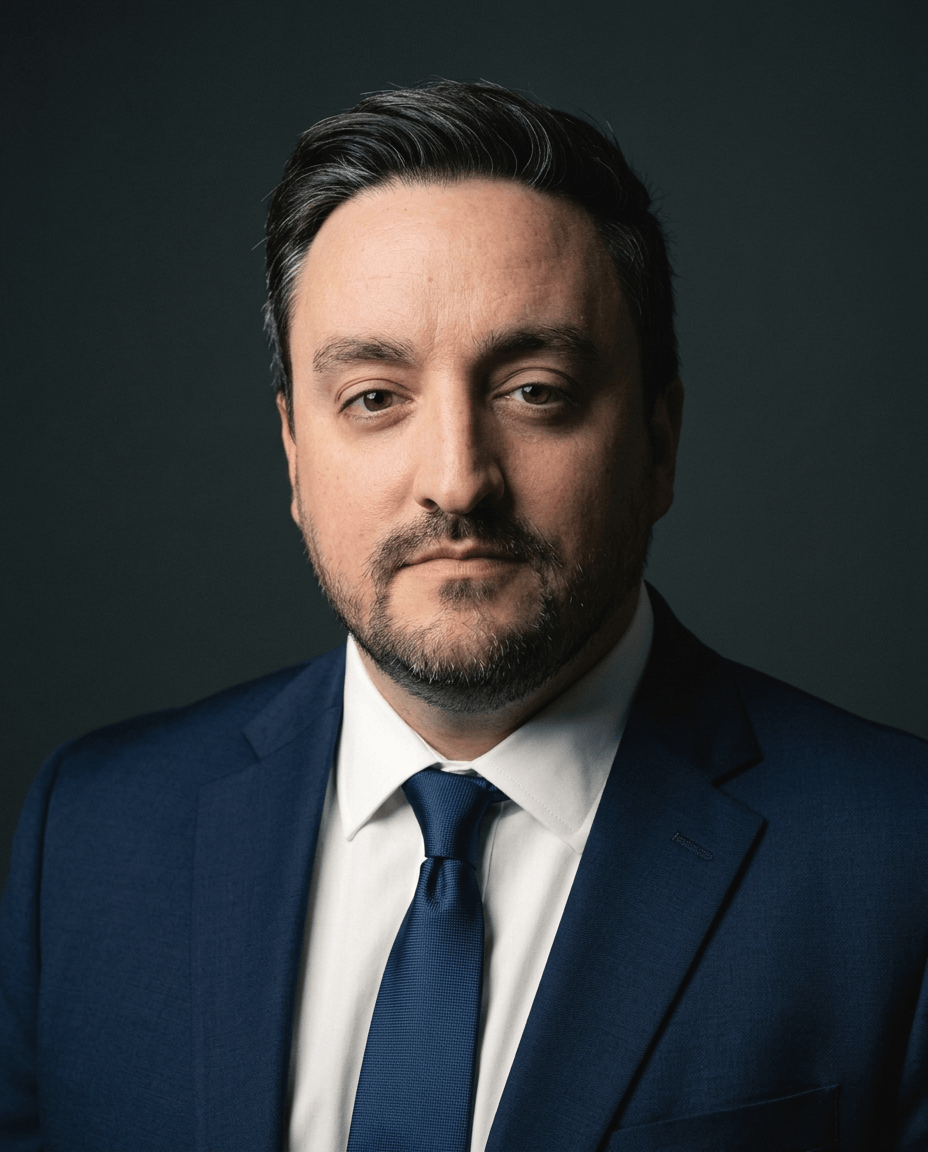
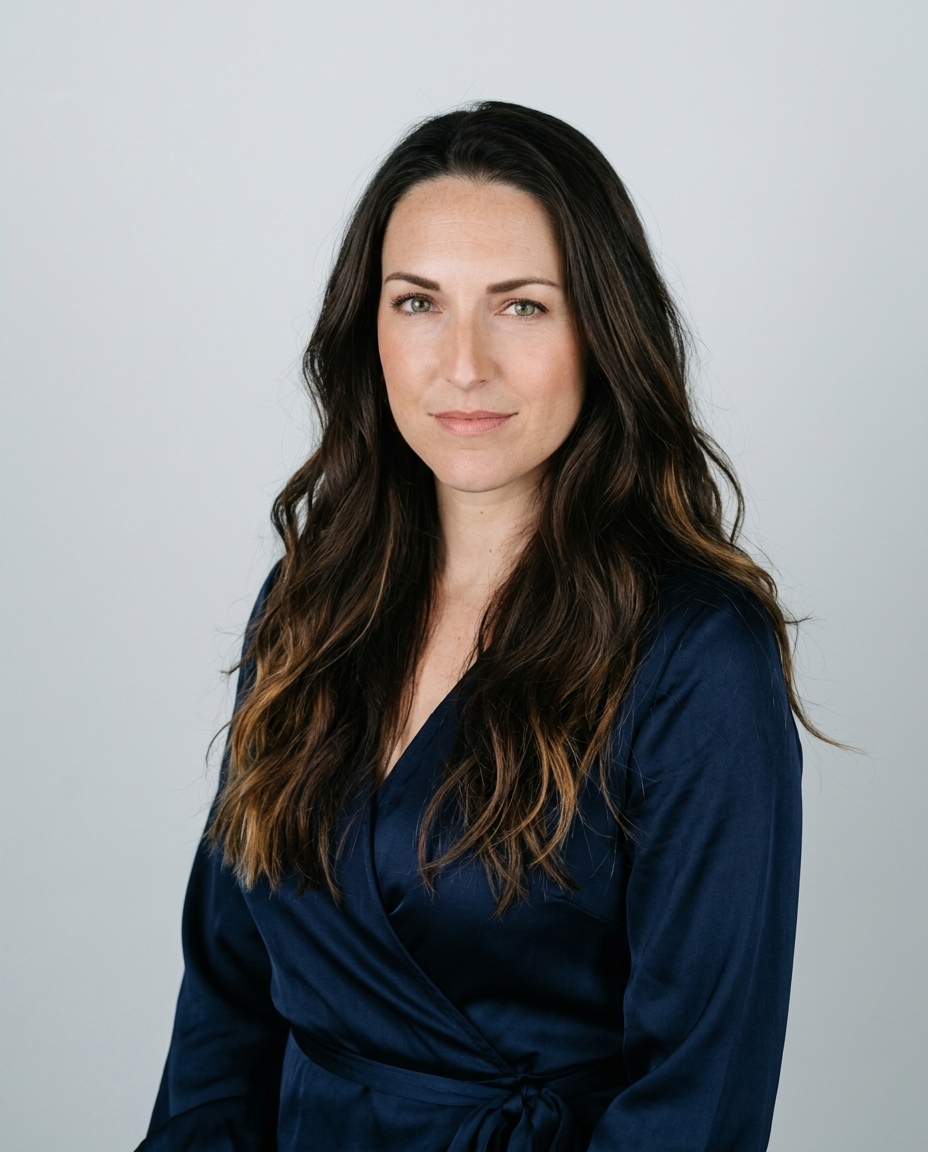
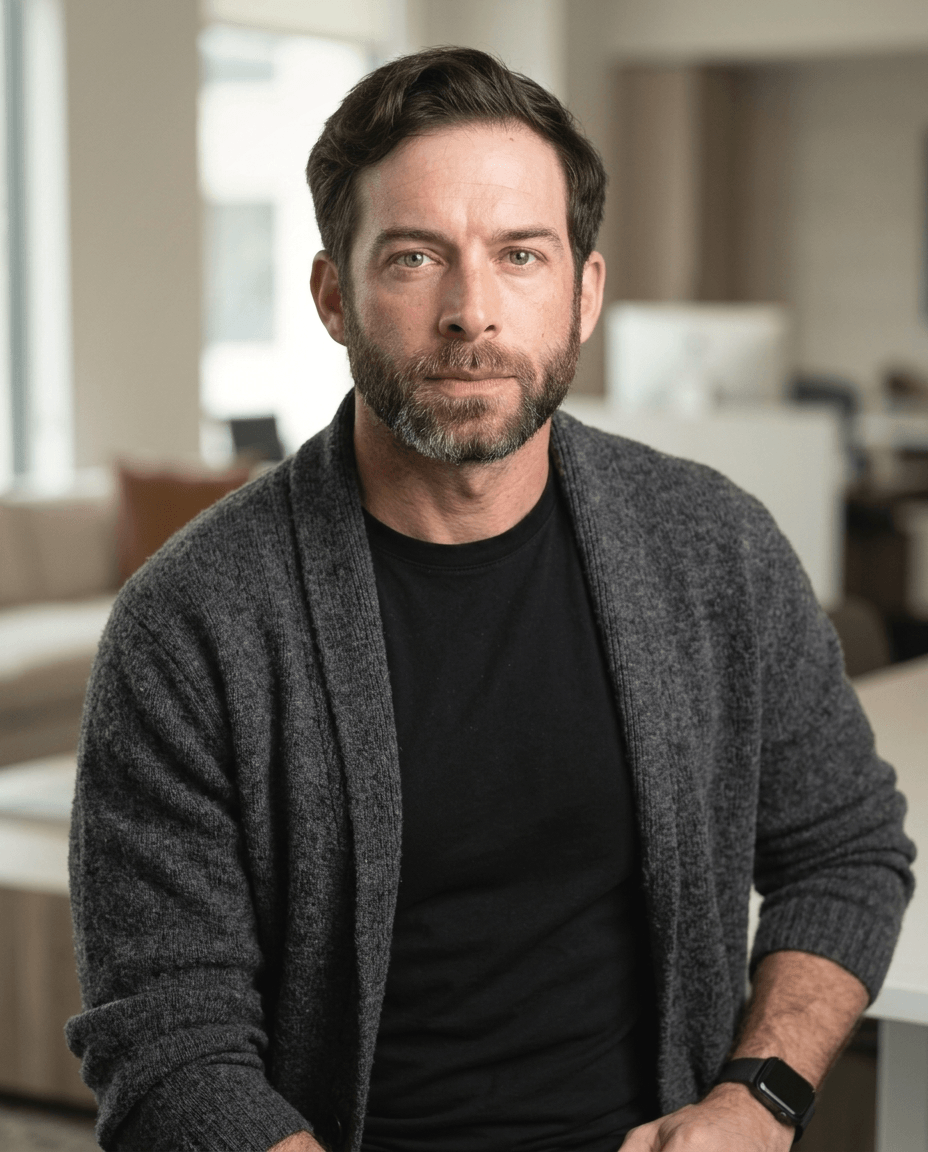
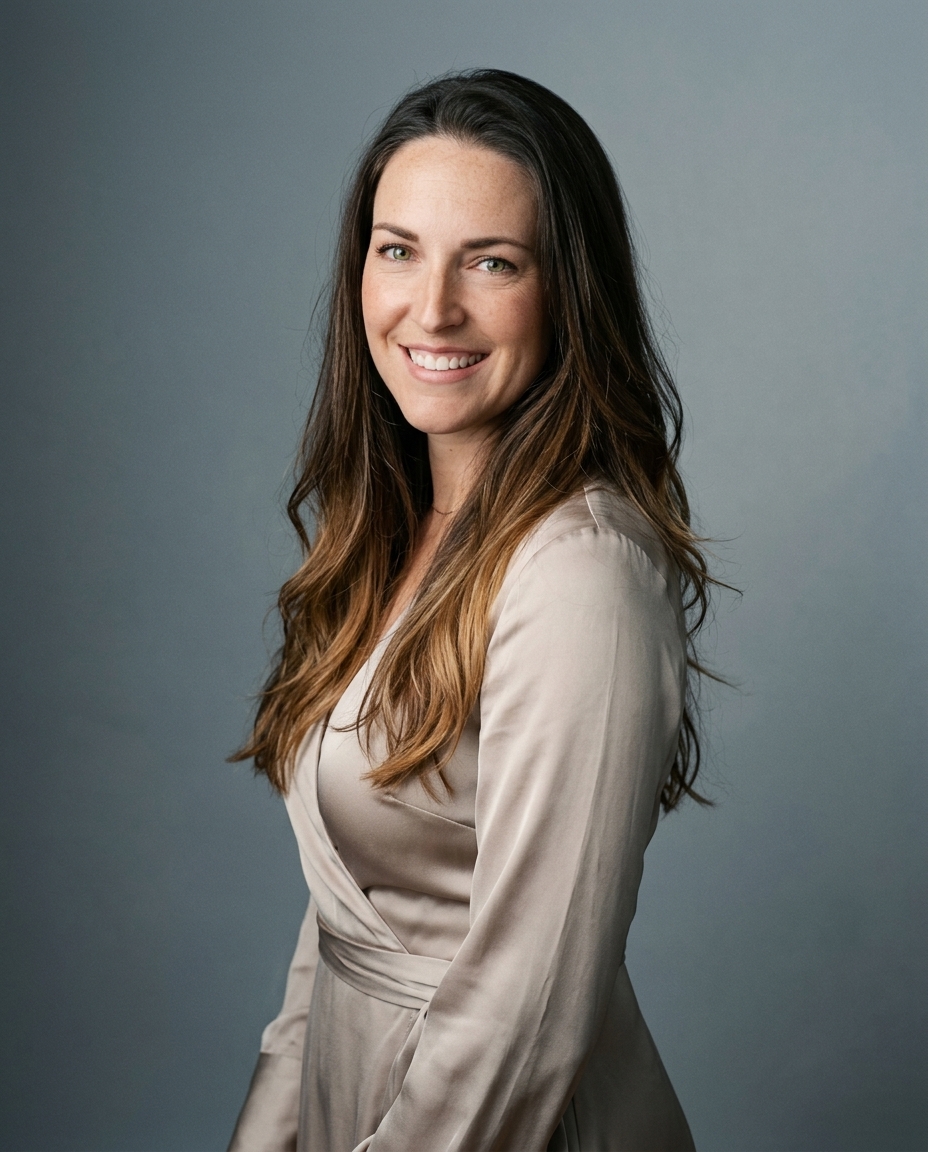

The most popular advice about posing for corporate headshots is also the reason so many portraits look dated. Standing square to the camera, forcing a broad smile, and holding your shoulders rigid doesn't communicate professionalism. It communicates that you're uncomfortable being photographed.
A strong corporate portrait has a clearer job. It should make you look credible, approachable, and aligned with the work you do. That requires controlled posture, direct eye contact, and an expression that feels human rather than rehearsed. The right pose isn't one universal position. It changes with your profession, audience, and personal brand.
Table of Contents
- Why stiff corporate posing is dead
- Body angle and posture fundamentals
- Facial expressions that build trust
- Adapting your pose to your profession
- Hands, clothing, and framing details
- Your repeatable headshot workflow
Why stiff corporate posing is dead
The old corporate headshot had a recognizable formula. Shoulders faced directly forward. The smile was fixed. The eyes opened wide. The subject appeared polished, but not necessarily present.
That formula has lost its usefulness. People are better at recognizing a performed expression, especially in professional profiles where every image competes with a steady stream of personal and business content. A portrait that looks overly arranged can suggest distance or insecurity, while a relaxed expression gives viewers a more believable sense of the person behind the title.
This doesn't mean your headshot should look casual or improvised. Natural posing is still directed posing. The photographer controls the angle, posture, light, and crop. The subject avoids looking frozen inside that arrangement.
Practical rule: Professional doesn't mean emotionless. It means your expression supports the kind of trust your work requires.
LinkedIn's own guidance connects a profile photo with measurable visibility. Profiles with a photo receive 21 times more profile views and 9 times more connection requests than profiles without one, according to LinkedIn profile picture statistics. The same guidance also says profiles with a photo are 14 times more likely to be viewed. Those figures make the headshot a working part of your professional identity, not a decorative profile detail.
The image needs to earn attention quickly, then communicate something accurate. A lawyer may need calm authority. A therapist may need warmth. A creative director may need energy and individuality. The pose should support that message instead of forcing every profession into the same formal template.
For a broader look at how professional portrait styles are changing, see headshot trends for 2026. The useful shift isn't toward careless photos. It's toward portraits that look composed without looking manufactured.
Body angle and posture fundamentals
Your torso sets the tone before your expression enters the frame. A square stance gives the camera a flat plane of shoulders and often makes the body look tense. A slight rotation creates dimension and lets the face remain the visual anchor.
Start by turning your body 30 to 45 degrees away from the camera. Keep the shoulder closest to the lens slightly lower and relaxed. Then bring your face back toward the lens so you maintain direct eye contact. This creates a clean relationship between body and face. Your body has movement, while your attention stays with the viewer.

The chin adjustment that changes the portrait
Move your chin slightly forward and down. Don't pull your head backward or raise your chin. The forward movement stretches the front of the neck, while the downward angle defines the jaw and prevents the face from drifting away from the camera.
The cue often feels awkward. That's normal. In a two-dimensional portrait, a small forward movement can make the neck and jaw appear cleaner than a relaxed position does. Raising the chin usually weakens the jawline and can make the subject look less engaged.
Keep your neck long. Drop your shoulders away from your ears. Lean slightly toward the lens from your waist, not by jutting your head forward alone. That small lean creates interest and prevents the backward tilt that often produces a withdrawn posture.
The pose should remain open, not twisted. A body turned too far sideways makes you look disengaged. A body facing directly forward can look rigid. Make small adjustments until one shoulder leads, both shoulders stay loose, and your face returns naturally to the camera.
For additional guidance on shoulder placement, head position, and professional portrait preparation, use these professional headshot tips. The technical details matter because viewers notice posture before they consciously evaluate clothing or background.
Facial expressions that build trust
Expression is where technically sound portraits often fail. A person can have the right body angle and still look unavailable because the eyes are tense, the smile is disconnected, or the mouth is held in a forced position.
Start with the eyes. Look directly into the lens, then narrow the lower eyelids slightly. This is the squinch, not a hard squint. It reduces the startled look created by wide eyes and gives the face a more focused quality.
A large headshot-rating analysis cited by corporate headshot posing guidance found that a smile showing teeth increased perceived likability by +1.35 points. The same analysis associated the squinch with a +0.33 change in perceived competence and a +0.37 change in perceived influence. These aren't instructions to exaggerate either technique. They show how small facial adjustments can change the way viewers read a portrait.
Use the right level of warmth
A teeth-showing smile works well for recruiters, client-facing consultants, sales professionals, and many service providers. It makes the portrait feel open and energetic. The smile has to reach the eyes, though. If only the mouth moves, the result looks pasted on.
A closed-mouth smile offers more restraint. It suits lawyers, senior executives, analysts, and professionals whose work depends on discretion. A composed neutral expression can also work, provided the eyes stay engaged and the jaw isn't clenched.
Avoid “say cheese.” It creates a mouth-first expression and often leaves the eyes vacant. Instead, relax your lips, think of a person you enjoy speaking with, and let the smile build gradually. Take a neutral frame, then a restrained smile, then a fuller smile. The strongest option is often between the extremes.
Your jaw should stay loose. Keep the mouth from pressing tightly together. If you're uploading phone selfies to a headshot service, vary your expressions rather than submitting only formal images. The additional range gives the system more natural input for a professional portrait. More expression guidance is available in this guide to happy facial expressions.
Adapting your pose to your profession
A headshot communicates role before anyone reads your résumé. That doesn't mean you need a costume pose for your industry. It means you should decide whether the portrait needs to emphasize authority, warmth, energy, precision, or a combination.
A lawyer generally benefits from an upright posture, a moderate torso turn, and a direct gaze. Keep the smile controlled or use a calm neutral expression. A broad grin can feel disconnected from a practice built on judgment and precision. The image should feel composed, not severe.
A therapist needs a different balance. Use a softer shoulder position and a slight forward lean. Keep the eyes attentive and choose a genuine, gentle smile. Excessive formality creates distance, which works against the sense of safety many clients look for before making contact.
A startup founder can carry more energy. An open stance, a little more shoulder visibility, and an engaged expression suggest momentum without requiring a theatrical pose. The face should remain directed toward the lens, but the body can feel less restrained than a traditional executive portrait.
Match the signal to the audience
Recruiters and people professionals usually benefit from approachability. Consultants need competence with enough warmth to invite conversation. Creative professionals can use more environmental context, distinctive wardrobe, or a less symmetrical pose. Executives often need both authority and accessibility, so a straight gaze paired with relaxed shoulders works better than a hard expression.
The pose also changes if the portrait will appear in a campaign, speaker reel, or company introduction. For teams producing broader visual content, a resource covering corporate video production companies can help place still portraits within a larger brand system.
The best question isn't “What's the most professional pose?” It's “What should a prospective client, colleague, or employer understand about me before they read anything else?” Build the posture and expression around that answer.
Hands, clothing, and framing details
Most corporate headshots are cropped tightly enough that your hands won't appear. That's useful. Hands often introduce tension because people don't know where to put them, and that uncertainty travels into the shoulders and face.
If the composition is wider, keep your hands relaxed. Rest them lightly, place them in pockets with the thumbs visible for a casual professional look, or cross your arms loosely if the role supports a more authoritative message. Don't clench your fingers, grip your jacket, or press your arms tightly against your body. Those choices create visual tension and make the torso look closed.
Clothing should support your face, not compete with it. Solid colors and quiet textures are dependable for LinkedIn, company directories, and executive bios. Choose a jacket or shirt that fits cleanly at the shoulders. Avoid distracting patterns, prominent logos, shiny fabric, and collars that collapse under the jaw.
Your wardrobe also needs to match the context. A structured jacket can reinforce authority for legal or financial work. A softer knit or open collar can feel more approachable for therapy, recruiting, or design. The goal isn't uniformity. It's visual consistency between your clothing, expression, and professional role.
Keep the face dominant
A LinkedIn headshot guide recommends a head-and-shoulders crop where the face fills 60 to 70% of the vertical frame, the top of the head sits about an inch below the frame edge, and the shoulders end around the lower third of the image, as specified in this LinkedIn headshot framing guide.
That crop gives the face enough size to remain recognizable in a small profile image. It also leaves enough shoulder structure to show posture and clothing without turning the portrait into a full-body photo.
Check the background edges before finalizing the image. A bright object behind your head, a crooked horizon, or a hard shadow can distract from an otherwise strong pose. Soft, even front light keeps attention on the eyes and reduces the need to compensate with an exaggerated expression.
Your repeatable headshot workflow
Good posing becomes easier when you stop treating it as a single perfect position. Set a baseline, make one adjustment, review the result, and keep the strongest variation. This works in a studio, with a phone, or through an online headshot workflow.
Start with your body turned away from the camera, your face returned to the lens, shoulders relaxed, and chin slightly forward and down. Capture a test frame. Then change only one variable at a time, such as shoulder angle, smile intensity, or the amount of forward lean.
A photographer-led session makes sense when you need custom direction, complex lighting, environmental portraits, or images for a larger campaign. Professional photographer day rates commonly run $300 to $600+, depending on the photographer, location, production needs, and licensing. That investment buys direction and a controlled physical session, not just a file.
AiHeadshots serves a different use case. It was built by Houston photographers Joseph West and Chris Bailey through Studio Pod, an automated studio that has photographed 10,000+ real professionals since 2019. Customers upload 10 to 20 phone selfies, receive 30+ studio-grade headshots in about 30 minutes, and can choose plans from Basic at $29, Professional at $39, and Executive at $59. Teams receive volume pricing for 10 or more seats, at $22 to $29 per seat.
The service has delivered 255,000+ headshots to 30,000+ customers and carries a 4.9-star rating. AiHeadshots also provides a 100% money-back guarantee within 14 days. Its stated retention periods are 7 days for inputs, 30 days for outputs, and 90 days for billing data.
Our approach comes from photographers who built an AI product, not a software team retrofitting open models. That heritage matters because posing is visual judgment. The system needs to preserve the cues that make a portrait feel directed rather than generic.
Use the AiHeadshots pricing options to choose the workflow that fits your role, timeline, and volume. If you're preparing portraits for a larger group, the team headshot service is designed for consistent employee images.
Upload 10 selfies, see your first headshot in about 30 minutes, and choose a polished corporate pose for $29 with AiHeadshots. Compare the results against your professional message, then use the image wherever your current headshot is underselling your work.