
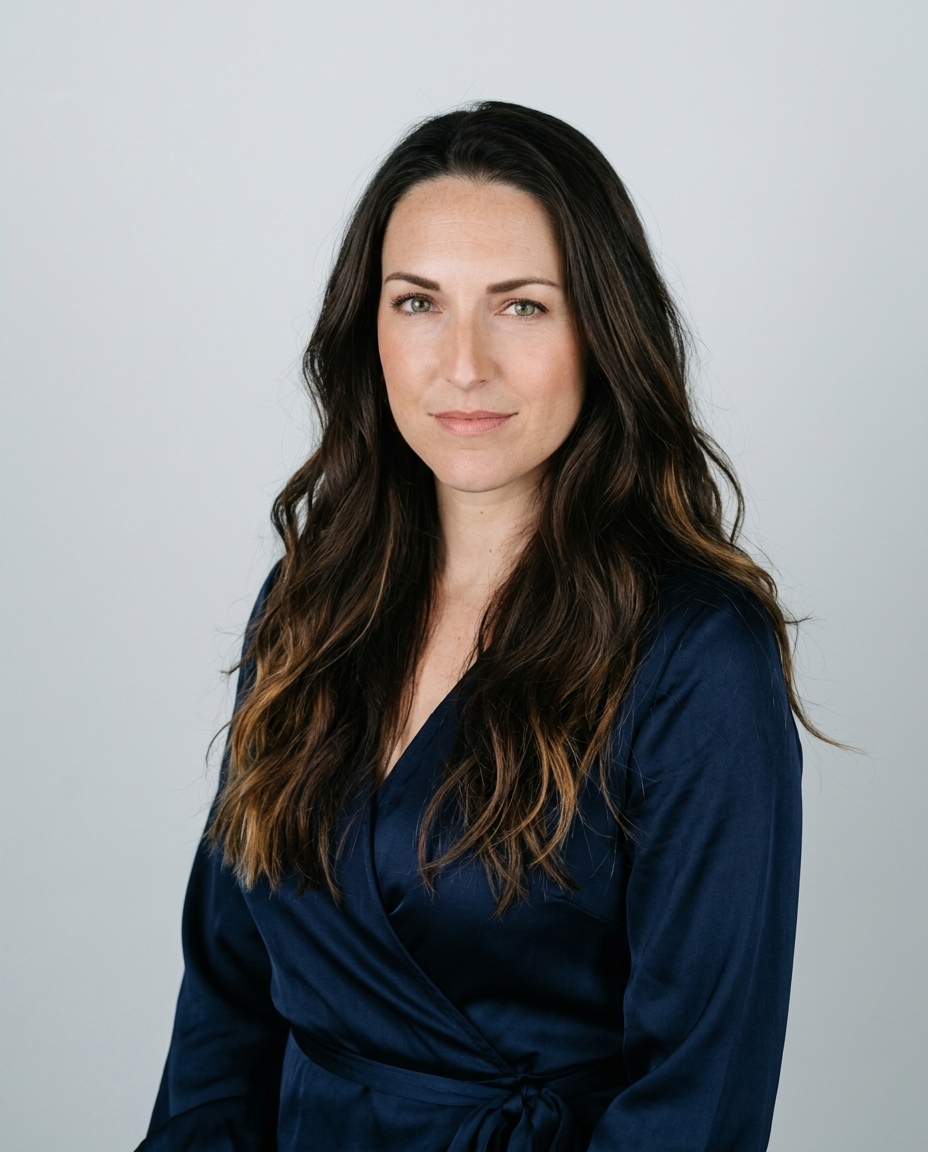

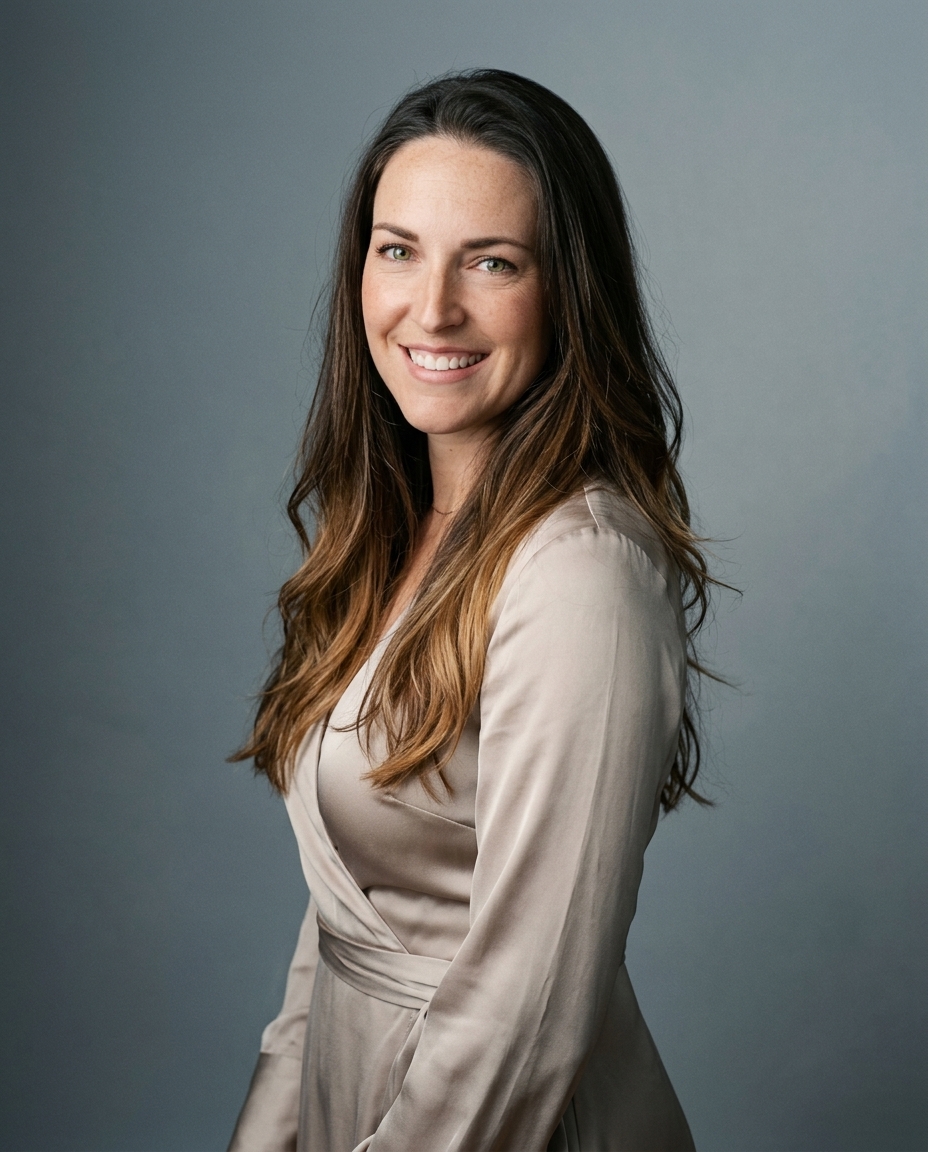

You've got the gallery link, the files open, and the question is simple, what do you do with these headshots now. Digital photo delivery is the part that turns a finished image into something you can use, store, share, and keep secure. If the handoff is sloppy, the photo quality drops fast. If it's handled well, the same image works cleanly on LinkedIn, a corporate site, a press page, or a team directory.
Table of Contents
- What digital photo delivery actually means
- The five common delivery methods compared
- File formats, resolution, and what actually changes a photo
- Security, privacy, and who actually owns the photo
- Turnaround times and what counts as a revision
- Downloading and uploading without losing quality
- Recipient checklist for the moment the link arrives
What digital photo delivery actually means
The moment a photographer sends you a gallery link by email or text, digital photo delivery begins. It is more than a download button. It includes the channel, the file packaging, the access controls, and the rights that come with the image.
That matters because photography no longer moves through a lab counter and a stack of prints. In the film era, delivery could stretch from 2 to 4 weeks for lab proofs plus about another month for final physical prints and albums, which meant 4 to 8 weeks or more was normal. By 2020, the handoff had shifted toward cloud galleries, and by 2024 to 2026 premium providers were normalizing 30-day delivery as a competitive standard, according to the historical summary in this digital photo delivery timeline.

Who this really serves
This topic matters to three groups at once. Working photographers need a delivery setup that protects files and keeps clients from asking the same question three times. Clients need to know what they received, what they're allowed to do with it, and how to use it without wrecking the image.
Anyone buying AI-generated headshots needs the same clarity. The delivery layer still decides whether the photo is easy to find, easy to download, and easy to reuse correctly. That's the practical part often overlooked.
Practical rule: delivery is not finished when the file exists. It is finished when the right person can open the right file, in the right format, under the right permissions.
The five common delivery methods compared
Different delivery methods look simple on the surface, but the recipient experience changes a lot. Some are fast and polished. Some are convenient and a little too open. Some are useful only in specific production settings.
What you'll see as the client
Private online galleries are the cleanest experience for most headshots. Platforms like Pic-Time, Pixieset, and ShootProof give you a branded gallery, usually with a clear download button, often with passwords and expiration settings. They're easy to use on a phone, but they can expire or hide files behind extra clicks.
Direct cloud links from Google Drive or Dropbox are common too. They're easy for the sender, but too easy to forward. If a link gets shared in a group chat, it stays shareable unless the sender changes the access settings.
Email attachments work only for small jobs. They're fine for a single lightweight file, but they're a poor fit once you need multiple finals or higher-resolution versions. FTP still shows up in agency work and very large sessions, but for headshots it's usually overkill. AI delivery portals sit somewhere else entirely. AiHeadshots, for example, uses a download flow after generation, which keeps the handoff organized for the user.
Practical rule: if you only need one polished headshot, ask for a password-protected gallery. If you need a batch for a team site, ask for a portal that supports clean bulk download.
| Method | Best for | Typical limit | Access control |
|---|---|---|---|
| Private online gallery | Headshots, client work, small to medium sets | Gallery-dependent | Passwords, expiring links, download buttons |
| Direct cloud download link | Simple file handoff | Link and folder dependent | Shared link permissions |
| Email attachment | One small file | Often too small for full sets | Email inbox only |
| FTP | Agency deliveries, very large transfers | Workflow dependent | Credentials and server access |
| AI platform portal | Generated headshots and structured delivery | Platform dependent | Account access and download controls |
What breaks in real life
Galleries can be ideal and still frustrate a client if the link expires before they download. Cloud links can be quick and still create accidental oversharing. FTP is technically sound and still inconvenient for a lawyer who just wants one usable portrait for LinkedIn and the company bio.
A solo professional usually wants the simplest secure path, not the fanciest one. A corporate team ordering hundreds of images needs a delivery flow that avoids zip errors and supports batch download. Those are different jobs.
File formats, resolution, and what actually changes a photo
The format matters, but only to the extent that it fits the final use. For professional headshots, JPEG is usually the practical handoff format, while TIFF fits higher-fidelity or prepress workflows. That guidance lines up with the professional delivery advice in the ASMP digital photo guide.
What matters for screens and what doesn't
For LinkedIn, a corporate site, Slack, or Notion, pixel dimensions matter more than ppi. A 1200 by 1200 pixel JPEG displayed on a screen looks the same whether it's tagged at 72 ppi or 300 ppi. The ppi number is mainly relevant when you're preparing files for print, not for a profile image viewed on a monitor.
That's why sRGB is the safe default for screen delivery. It matches how most web and app environments handle color. The ASMP guide also notes that print-oriented delivery often calls for 300 ppi and minimal compression, because that's where tonal detail and artifacting start to matter most.
Practical rule: if the photo lives on a screen, prioritize pixel size and color profile. If it lives in print, pay attention to ppi, compression, and the destination's file rules.
What AiHeadshots gives you
AiHeadshots delivers 30+ JPEG headshots in a usable square format, sized for screen-first use and ready to upload without extra conversion. For a professional profile, that means you can pick the strongest image and move it straight into LinkedIn or a company site. If you're comparing formats, the visible difference usually comes from cropping and compression, not from a file type that sounds more technical.
If you want a deeper edit pass on what to keep and what to fix before delivery, this professional photo retouching guide is worth reading.
Security, privacy, and who actually owns the photo
A delivery link is only useful if the right people can open it. That's why private galleries are better than raw cloud folders for most client work. Password protection adds another layer, while a plain Google Drive link can keep working for anyone who gets it forwarded.
Why access control matters
Photographers also think about metadata. Many delivery portals strip EXIF data automatically, which helps keep camera details or location traces from leaking into a file. That's good for privacy, even if it means the recipient can't always inspect the original capture data.
Rights matter just as much as access. In most deliveries, you receive a usage license, not full copyright. That usually covers practical business uses like LinkedIn, a corporate site, a press page, or a bio card. It does not automatically cover a large advertising campaign or resale. If you need broader usage, ask before you publish.
For a real-world cautionary example, the BradleyPhotos security breach report shows why galleries, permissions, and storage discipline aren't abstract concerns.
Retention is part of privacy
AiHeadshots keeps input selfies for 7 days, generated headshots for 30 days, and billing data for 90 days, then purges them. That creates a clear retention window, which is exactly what you want in a delivery system. It tells you how long the files stay available and when you need to save your copies.
If you want the platform-specific security details, the AiHeadshots security page lays them out in one place.
Turnaround times and what counts as a revision
Delivery speed used to be tied to film processing, proofing, and shipping. That is why the old turnaround could stretch to 4 to 8 weeks or more. Once images became digital, the bottleneck shifted to editing, curation, and transfer. By 2020, cloud galleries had replaced physical USB handoff in many workflows, and by 2024 to 2026 premium providers were treating 30-day delivery as a normal standard in the market.
AiHeadshots sits at the fast end of that range. It delivers 30+ studio-grade headshots in about 30 minutes because the workflow doesn't depend on printing or shipping. That's a different production model, not just a faster email.
What a real revision is
A revision is a fix to the delivered file. A reasonable request is a color cast on one background, a crop that's too tight for a corporate bio, or a blemish that slipped through. Those are file-level corrections.
A reshoot is different. “Regenerate my entire face” or “make me look ten years younger” is not a revision request. That changes the image itself, not the delivery. Good delivery systems make that distinction clear, because clients need to know whether they're asking for an edit or a new output.
Downloading and uploading without losing quality
The file on your screen is not always the file you should use. Most gallery interfaces are optimized to preview quickly, especially on mobile. That preview is not the same thing as the original.
The cleanest workflow
Start on a desktop browser. Download the highest-resolution file, not the preview thumbnail. Then upload that original directly to the destination platform. If you screenshot the gallery view or open the image in a chat app and save it from there, you're locking in extra compression before it ever reaches LinkedIn.
For LinkedIn, a square image around 1000 by 1000 pixels or larger is the safe target. For most corporate site headshot slots, ask for the site's exact dimensions, because many teams use square placeholders in the 600 by 600 to 800 by 800 range. Slack and Notion usually don't need anything fancy, they just need a clean square file.
If you want a quick practical reference on export handling, this guide on how to avoid compressed photos with this guide covers the file-quality side of the problem.
Practical rule: if the upload destination is public or client-facing, use the downloaded original every time. Never use a screenshot of the preview.
A useful internal reference for selfie input quality is the AiHeadshots selfie upload guide, especially if you're preparing a new order and want the source images to support better delivery.
Recipient checklist for the moment the link arrives
If the gallery lands in your inbox, use this five-minute routine.
- Open on desktop first: Check the gallery in a desktop browser before you touch mobile, because desktop usually gives you the cleanest download path.
- Download the highest-resolution file: Pick the original JPEG, not the preview image and not the watermark view.
- Choose one strong shot and one backup: Save both so you're not scrambling later if a site crops the first one awkwardly.
- Check the destination size: Make sure it fits the platform, around 1000 by 1000 pixels for LinkedIn and 600 by 600 for many corporate sites.
- Back it up immediately: Copy the original to your own cloud folder before the gallery expires, especially if the platform has a retention window.
- Avoid the screenshot shortcut: If you screenshot the preview, you're uploading a lower-quality file than the one you already paid for.
If email delivery is involved, a quick pass through this Gmail spam prevention guide can help keep the link out of the junk folder next time.
AiHeadshots gives you a fast, file-ready delivery flow built for LinkedIn, corporate sites, and team use. If you want a professional headshot package without a studio visit, visit AiHeadshots and upload 10 selfies to see your first headshot in about 30 minutes.