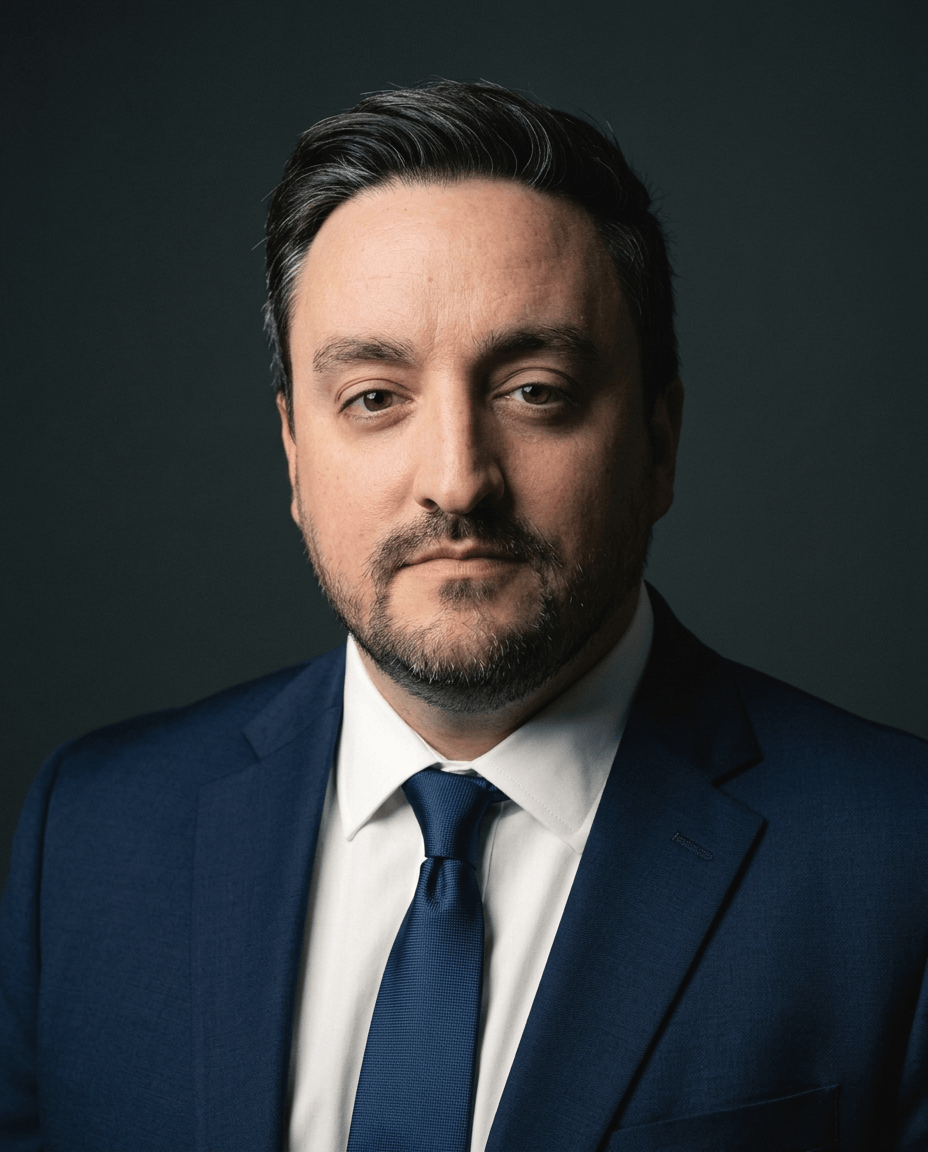
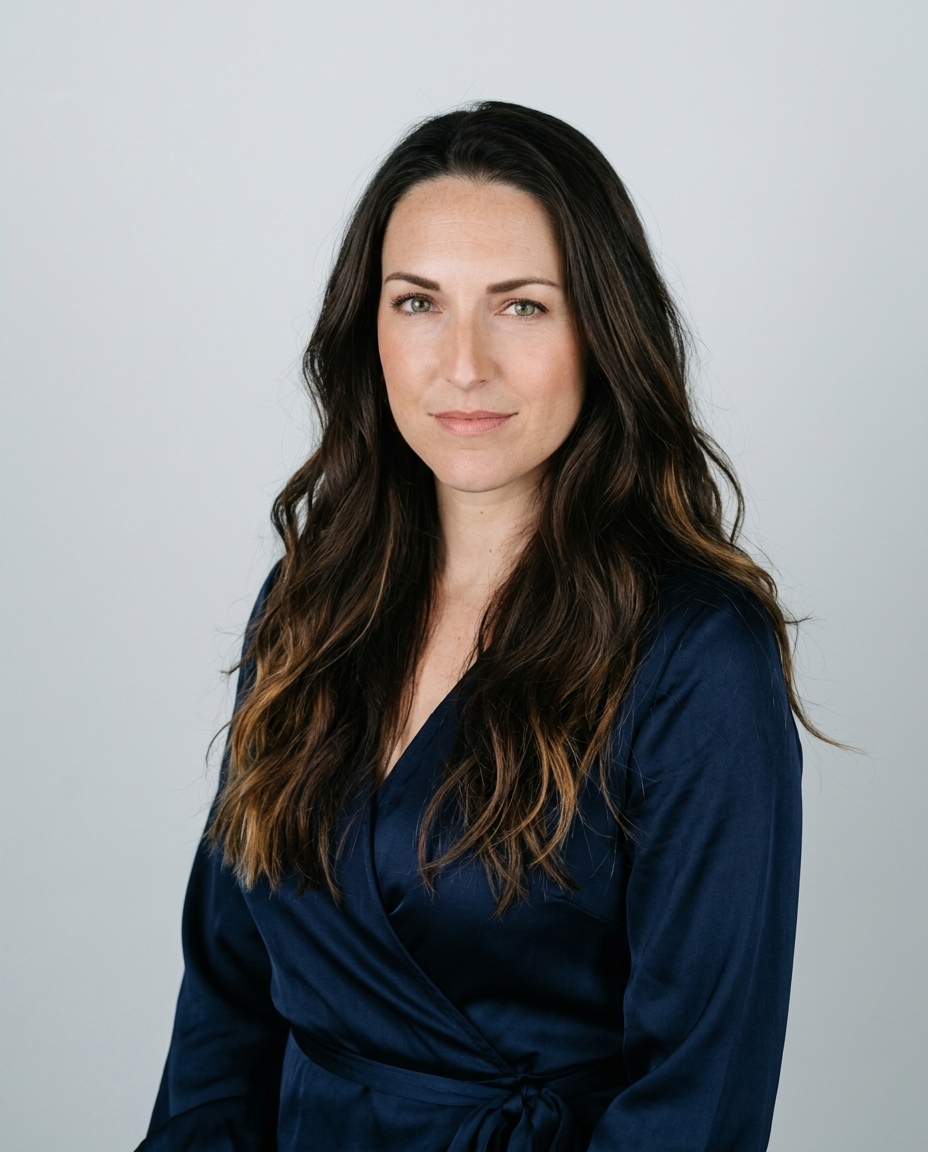

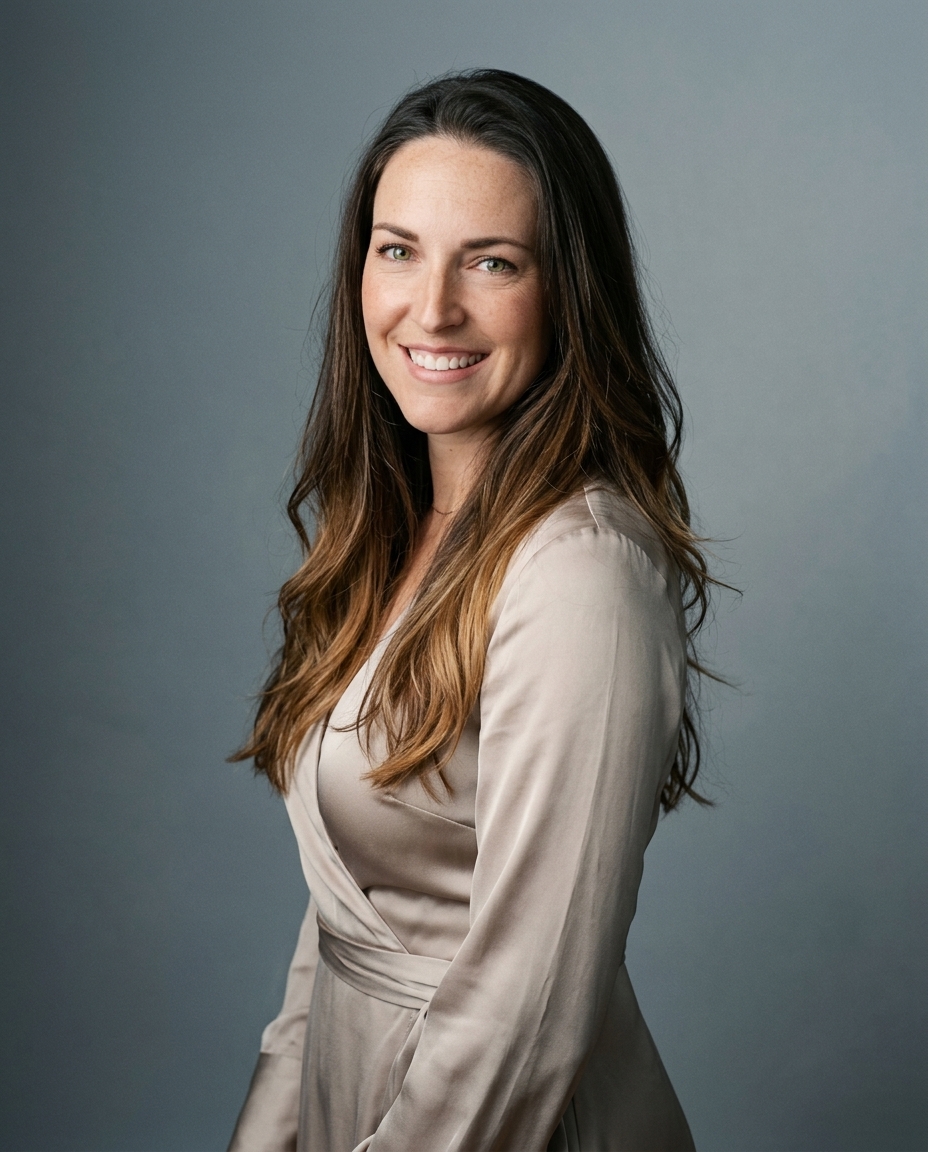

The best corporate headshots for women aren't the ones that look generically professional. They're the ones that answer one specific question fast: Should this person read as more authoritative, more approachable, or precisely balanced between the two?
That distinction matters because people often make first judgments from a headshot almost immediately. One professional headshot guide reports that 73% of hiring managers make initial judgments within the first 30 seconds of viewing a professional headshot, and the same source notes that most professionals update their headshot only every two to three years (professional headshot refresh guidance). A weak photo lingers. A well-calibrated one keeps working across LinkedIn, company bios, speaker pages, and executive profiles.
At Studio Pod, we've photographed 10,000+ real professionals since 2019. That volume changes how you see headshots. The usual advice for women, smile more, angle your shoulders, wear something nice, isn't wrong. It's just incomplete. Corporate headshots women use effectively are built around role, market, and audience, not a universal formula.
Table of Contents
- The one question your headshot must answer
- How to choose wardrobe and colors
- Guidance on hair, makeup, and expression
- The two modern paths to a great headshot
- Final touches background and retouching
The one question your headshot must answer
A strong corporate headshot doesn't ask, "Do I look nice?" It asks, "What signal does this role require?"
For some women, that answer is clear. If you're in C-suite leadership, litigation, or investment banking, a stronger posture, direct eye contact, and a neutral expression or very slight smile often read better. If you're in healthcare, education, or client-facing consulting, a softer body angle and a genuine smile can be more effective. The key point is simple: the best headshot depends on professional context (role-based headshot guidance for women).
Authority and warmth aren't fixed settings
Women get more one-size-fits-all headshot advice than men do. That's the problem.
A lot of generic posing guidance pushes women toward "friendly" no matter what job they're in. That works for some roles. It weakens others. A litigation partner with an oversized smile can look less authoritative than intended. A therapist with a severe neutral expression can feel closed off. Both photos can be technically polished and still be strategically wrong.
Practical rule: Your headshot should match the level of reassurance your role demands. Some roles reassure through confidence. Others reassure through warmth.
At Studio Pod, we've seen this repeatedly across executives, attorneys, recruiters, physicians, consultants, and founders. The image isn't there to flatten personality. It's there to sharpen the right signal.
Start with role, not outfit
Before you think about blazer color or lipstick, answer three questions:
- Where will this image live? LinkedIn, company bio, conference page, press mention, or all of them.
- Who is reading it first? Recruiters, clients, investors, peers, patients, or a board.
- What do they need to feel? Trust, competence, ease, authority, or accessibility.
That last question changes everything. It changes your expression. It changes your posture. It changes whether your shoulders stay square to camera or turn slightly. It even changes how tightly the image should be cropped.
This is the unwritten rule behind effective corporate headshots women use for work. "Professional" is too vague to direct a shoot. Specific beats professional every time.
How to choose wardrobe and colors
Clothing should frame the face, not compete with it.

Photographers consistently recommend solid-color clothing and long sleeves, with neutral backgrounds such as light gray or charcoal, because that combination keeps attention on the face and expression and helps the portrait project credibility (female professional headshot wardrobe guidance). That's not arbitrary studio tradition. It's camera logic. Patterns, shiny fabrics, and distracting necklines steal attention from the one area that matters most: your eyes.
Clothing should support your face
The safest wardrobe choices for corporate headshots women use are usually the strongest. Structured blazers, clean knits, solid blouses, and dresses with stable necklines all tend to hold shape well on camera. Long sleeves are especially useful because they create a polished line and avoid the unfinished look that sleeveless tops can produce in tighter crops.
Deep neutrals and jewel tones usually photograph cleanly. Think navy, charcoal, deep green, burgundy, or cobalt. Lighter neutrals can also work if the background and lighting are balanced properly. What matters is contrast with your skin tone and hair, not chasing a trendy color.
If you want a more detailed breakdown, our guide to executive headshot wardrobe gets into outfit selection by use case.
Clothes don't make the headshot. They either support the face or they fight it.
What works and what fails on camera
Use this as your filter before the shoot:
- Wear solids first: Solid colors keep the frame calm and read cleanly in LinkedIn thumbnails, company directories, and speaker bios.
- Choose structure: Blazers, structured tops, and fabrics with some body photograph better than limp materials that wrinkle or collapse.
- Keep accessories restrained: A simple necklace or earrings can work. Large statement pieces pull the eye away from expression.
- Skip busy details: Thin stripes, loud prints, oversized ruffles, and heavy logos usually date the photo faster and create visual noise.
- Watch the neckline: Necklines that are too low, too wide, or asymmetrical can shift the image from professional portrait to outfit-focused photo.
A quick visual explainer helps here:
The biggest wardrobe mistake isn't being underdressed. It's choosing something memorable for the wrong reason. If someone remembers the blouse before they remember your face, the wardrobe is doing too much.
Guidance on hair, makeup, and expression
The polished version of you always wins over the transformed version of you.
A strong session starts before the camera comes out. A pre-session brief should define the image's intended use, such as LinkedIn, a speaker bio, or a company website, and the image you want to project, like authority, creativity, or approachability. That strategic conversation is a key predictor of a successful session outcome (pre-session headshot planning).
Hair and makeup should look controlled, not theatrical

For makeup, aim for balance. Even skin. Controlled shine. Defined eyes. Natural lip color. The camera likes polish, but it punishes excess. Heavy foundation can flatten the face. Glitter catches light in the wrong way. Overly glossy lips can become the brightest object in the frame.
Hair should be neat, intentional, and kept off the face enough to preserve your eye line and jawline. If you want a useful outside reference on best professional styling for work, that guide is a practical starting point for workplace-appropriate hair choices.
For at-home prep before any shoot, this selfie prep guide is useful because many of the same camera rules apply.
Keep your styling familiar enough that colleagues recognize you instantly. Surprise is a bad outcome in a corporate headshot.
Expression is where most women get bad advice
"Just smile" isn't direction. It's avoidance.
Expression has to match role and seniority. A founder raising capital doesn't need the same face as a college admissions director. An in-house counsel doesn't need the same warmth level as a real estate advisor. The details are subtle, but they matter: how open the eyes are, whether the lips part, how much the cheeks lift, how directly the chin meets camera.
Here is what tends to work in practice:
| Role context | Expression that usually reads well | What often misses |
|---|---|---|
| Executive, legal, finance | Calm face, direct eye contact, slight smile or neutral mouth | Broad grin that softens authority too far |
| Healthcare, education, consulting | Genuine smile, softer angle, relaxed brow | Overly stern face that feels inaccessible |
| Creative leadership, founder roles | Composed warmth, confident eye contact, natural asymmetry | Forced smile or exaggerated "personal brand" posing |
The strongest expressions look inhabited, not performed. That's why experienced photographers talk to clients through expression instead of asking for one frozen smile. Tiny changes in posture and face shift the whole message.
The two modern paths to a great headshot
A good headshot is not about looking nice. It is about sending the right level of authority and approachability for the job you do.
Today, there are two valid ways to get there. You can book a photographer, or you can use an AI headshot service. Both can work. The better choice depends on the stakes of the image, the amount of direction you need, and whether your priority is custom control or speed.
A traditional executive portrait session often takes real planning. One studio example puts the session itself at about 45 to 90 minutes without hair and makeup, and 2 to 3 hours with it included, followed by several business days for proofing and final retouching (women's executive portrait session timeline). That timing is fine for a scheduled rebrand, leadership page update, or press feature. It is less convenient when you need a new photo this week for a promotion, speaking event, or hiring round.
Traditional photography
Traditional photography is still the strongest option for high-stakes portraits.
It works best when the expression has to be calibrated in real time. That matters for women in roles where small shifts change the message. A litigation partner may need firmer eye contact and less smile. A healthcare director may need warmth without looking casual. A founder may need both authority and accessibility in the same frame. In a live session, a photographer can adjust posture, chin position, lens choice, lighting ratio, and micro-expression shot by shot until the image reads correctly.
That level of control is hard to beat. So is the feedback loop of having another professional in the room.
The trade-off is time, scheduling, and cost. There is also more operational friction. You need to book the date, get there, bring options that photograph well, and wait for selects and retouching. For board members, executive teams, and media-facing leaders, that is often the right call.
AI headshots
AI headshots are strongest when the brief is clear and the deadline is short.
They are a practical fit for profile refreshes, internal directories, conference bios, recruiting updates, and distributed teams that need visual consistency without coordinating an in-person shoot. They also suit professionals who already know the message they need the image to send. For example, a consultant who wants polished and approachable, or a finance manager who needs credible and steady rather than bright and overly social.
At Studio Pod, we built our AI workflow from studio experience, not from software alone. After photographing 10,000+ real clients, you learn the patterns that make a headshot work: how a crop affects authority, which expressions hold up on LinkedIn, how wardrobe renders across skin tones, and where retouching starts to hurt trust instead of helping it.
Here is the practical comparison:
| Attribute | AiHeadshots | Traditional Photographer |
|---|---|---|
| Price | Basic $29, Professional $39, Executive $59 | Higher cost, often with separate fees for styling or retouching |
| Time to submit | Upload 10 to 20 phone selfies | Book, travel, shoot in person |
| Delivery speed | 30+ studio-grade headshots in about 30 minutes | Selection and retouching usually take days |
| Studio visit | None | Usually required |
| Best for | Busy professionals, hiring cycles, team consistency, quick refreshes | Custom directed shoots, editorial needs, live photographer guidance |
For a detailed side-by-side, see this comparison of AI headshots vs photographer.
The key judgment is not whether one path is modern and the other is old-school. The key judgment is fit. Use a photographer when the image carries higher reputational weight or when you need live direction to fine-tune authority versus warmth. Use AI when you need a strong professional result fast, at lower cost, and with enough range to match your role.
Final touches background and retouching
Background and retouching decide whether a headshot reads as credible, polished, and current, or slightly off.
A strong portrait does not need visual decoration. It needs control. Once wardrobe, hair, makeup, and expression are doing their job, the background should support the face, not compete with it. Retouching should remove noise, not personality. That balance matters even more for women, because the market often pushes them toward two unhelpful extremes: too soft to signal authority, or so polished that the image stops feeling trustworthy.
Why simple backgrounds keep winning

Simple backgrounds keep attention where it belongs. On the face.
Gray, charcoal, beige, navy, and near-black tend to perform well because they stay out of the way and crop cleanly across LinkedIn, company bios, speaker pages, and press mentions. They also hold up when the image is reduced to a thumbnail, compressed by a platform, or dropped into a layout you do not control.
The right background also depends on the message your role needs to send. A litigation partner, CFO, or board candidate usually benefits from a restrained background that adds weight and seriousness. A founder in a people-facing brand, a recruiter, or a client success leader can use a slightly lighter or warmer background without losing credibility. The question is not whether the background looks nice in isolation. The question is what it does to your authority versus approachability.
Office backgrounds can work. Fake office backgrounds usually do not. Heavy blur, dramatic color gradients, and trendy environmental scenes date faster than people expect, and they often pull attention away from the eyes.
Selection rule: If the background feels louder than the expression, it is working against the portrait.
Good retouching looks invisible
The best retouching solves small problems and leaves identity intact.
In practice, that usually means cleaning up a temporary blemish, reducing shine, softening under-eye darkness caused by lighting, taming flyaways, removing lint, and smoothing minor distractions without flattening skin texture. The person in the final image should still look like the person who walks into the room.
The most significant mistakes often arise with retouching. Women frequently receive overly aggressive retouching because "professional" is mistaken for "perfect." Waxy skin, brightened eyes, blurred pores, reshaped jawlines, and erased lines can make a headshot appear expensive while lowering trust. In executive and client-facing roles, that trade-off is rarely worth it.
Use a simple standard when reviewing finals. A colleague should recognize you immediately and think, "She looks excellent." They should not stop to decode what was edited.
A practical review filter helps:
- Clean up temporary distractions: Stray hairs, lint, brief blemishes, shine, and under-eye shadows caused by the shoot are fair game.
- Keep permanent identity markers: Freckles, natural skin texture, laugh lines, and facial structure should remain.
- Check the eyes first: Over-sharpened or overly bright eyes make the whole file feel artificial.
- Review at small size: If the image feels overworked as a thumbnail, the retouching has gone too far.
The strongest headshots women choose are not glamorous. They are believable, role-appropriate, and clear about the impression they need to make. They show authority where the job calls for it, warmth where the role benefits from it, and a real person in both cases.
Upload 10 selfies, see your first headshot in 30 minutes, and get 30+ studio-grade options starting at $29 with AiHeadshots.