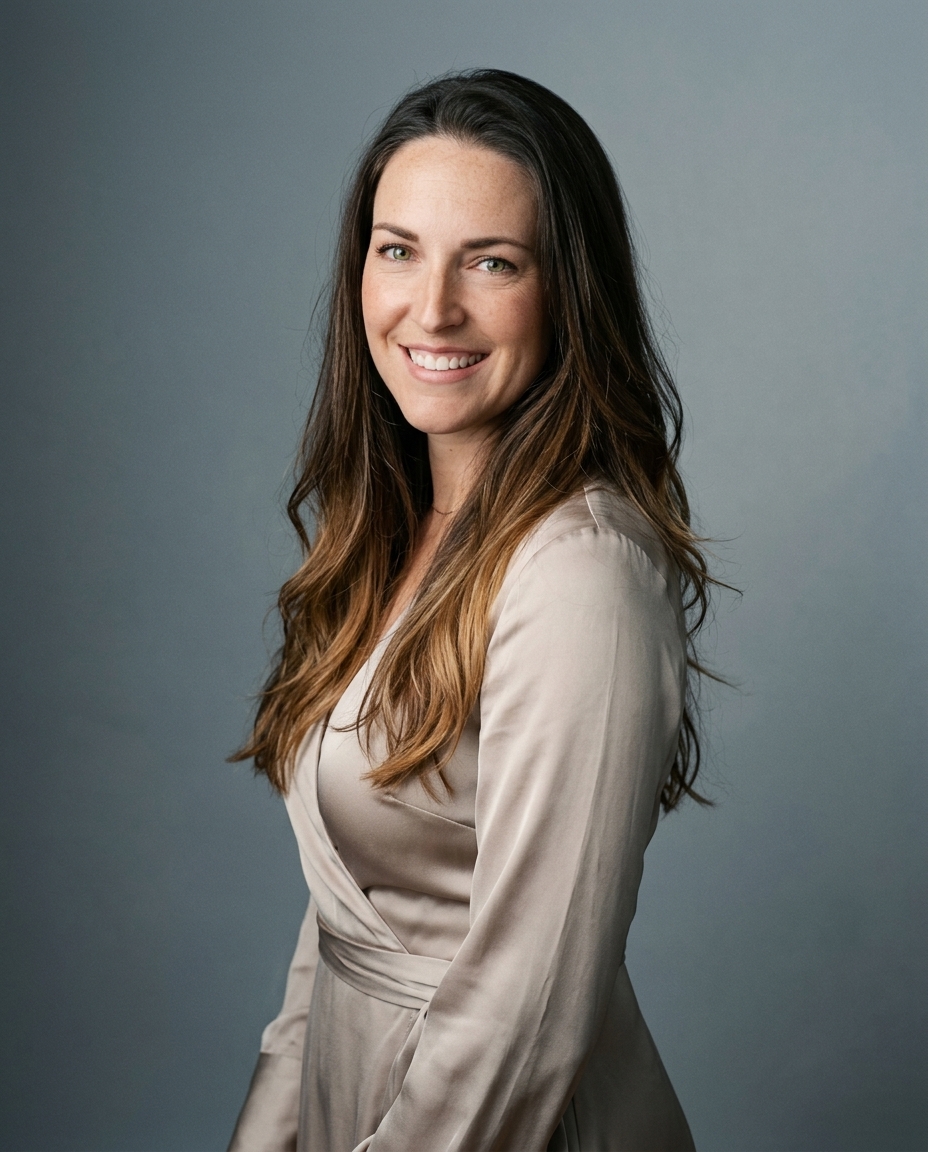

A corporate headshot isn't a vanity photo anymore. It's a trust asset. A widely cited study of 243 participants found that switching from a casual photo to a professional headshot increased perceived competence by 76% and perceived influence by 62%, and industry analysis also notes that professional headshots can drive 14x more LinkedIn profile views (Henry David Photography's state of corporate headshots summary). That's why corporate headshots photography now sits closer to branding and conversion than portraiture for portraiture's sake.
We've seen that shift firsthand at Studio Pod. We started as photographers. We built our standards on real studio sessions, real lighting, real retouching decisions, and real professionals who needed images that looked credible, current, and usable across LinkedIn, team pages, speaker bios, and press materials. That experience is also why our view on AI is different. We didn't arrive from software and then discover headshots later. We came from headshots first.
Table of Contents
- What a corporate headshot actually does in 2026
- Traditional studio, on-location, and AI headshots
- How to prepare for any type of headshot session
- Lighting, backgrounds, and achieving a consistent look
- Where to use your headshot for maximum impact
- The honest math on pricing and value
What a corporate headshot actually does in 2026
A corporate headshot now does far more than make someone look polished. It has to establish trust in seconds, hold up across small digital formats, and still feel like the person a client, candidate, or reporter will meet in real life.
That standard is higher than it was even a few years ago. For many companies, the first contact happens on LinkedIn, a team page, a conference app, a press mention, or a Zoom tile. The image is small, but the judgment is not. If the portrait looks stiff, outdated, or overly retouched, people notice. If it looks credible and current, they move on with less friction.
Trust beats formality
We see this constantly in both studio work at Studio Pod and AI output review at AiHeadshots. The portraits that perform best are rarely the most formal ones. They are the ones that feel clear, competent, and believable.
Older corporate headshots often followed a narrow formula. Same gray background, same rigid posture, same forced smile, same jacket-buttoned stance. It signaled professionalism, but it also stripped out warmth and made teams look interchangeable.
That standard has shifted. Strong corporate headshots photography still looks polished, but the person has to look present.
Practical rule: A headshot should look like your best weekday self, not a version of you that only exists for photo day.
That sounds simple. In practice, it takes judgment. A photographer is watching for tension in the mouth, hesitation in the eyes, posture that reads defensive, and styling choices that look expensive in person but distracting on camera. AI has a different strength. It can help people get to a polished, usable image quickly, but it still has to be guided toward realism and consistency. We know both sides because we work in both.
It also shapes how a company is judged
A headshot works at the individual level, but the operational issue for teams is consistency. One weak portrait on a leadership page is noticeable. Twenty mismatched portraits across different crops, color tones, and lighting setups make the company look disorganized.
That matters because team pages, speaker bios, investor materials, and recruiting profiles all function as trust signals. People use them to judge whether a business feels established, current, and coordinated. A company does not need every image to look identical, but it does need them to look like they belong to the same organization.
An interesting trade-off emerges: traditional photography usually gives the strongest control over expression, lighting, and brand fit. AI can solve speed and scale far better, especially for distributed teams or frequent new hires. Neither option wins every time. The useful question is whether the image supports the job it has to do.
For a clearer view of where style expectations are heading, see our guide to 2026 corporate headshot trends and visual standards.
Traditional studio, on-location, and AI headshots
Pick the workflow based on the job the image has to do. A solo executive portrait for a board page has different requirements than onboarding 80 remote employees in a quarter. We know that from both sides. We spent years shooting headshots at Studio Pod, then built AiHeadshots because too many teams needed faster coverage than a camera schedule could provide.
The category is large because the need is persistent. Analysts at DataIntelo describe corporate use cases such as websites, press releases, and internal directories as a major driver in the professional headshot market (DataIntelo market overview).

Traditional studio
A good studio session still gives the highest level of control. Light stays consistent. Backgrounds stay clean. The photographer can correct chin position, shoulder angle, hand tension, jacket drape, and expression before those small problems become retouching work.
That control matters most for people whose photo has to project authority on first contact. Executives, founders, attorneys, physicians, and client-facing leaders usually benefit from live direction because subtle expression changes make a real difference.
The cost is time and coordination. Someone has to book, travel, shoot, review proofs, and wait for final edits. The result is often stronger than any shortcut, but the process asks more from the subject and the company.
On-location photographer
On-location headshots are usually the smartest traditional option for teams. The photographer brings lights, backdrop, and posing direction to the office, which turns a long scheduling problem into one organized shoot window.
That convenience is real. So are the limitations.
Offices are built for meetings, not portraits. Conference rooms have mixed light, low ceilings, glass walls, and furniture that slows setup. People arrive rushed. Someone always gets pulled into a call. If the photographer does not lock down camera height, light position, lens choice, and crop from the first subject to the last, the set starts to drift.
Pricing also needs honest framing. A day rate can look reasonable on paper, but the actual cost includes employee interruptions, internal coordination, and follow-up for anyone who missed the session.
Later in the process, this video gives a useful visual sense of how different workflows compare in practice.
AI headshots
AI headshots solve a different operational problem. They remove the shoot day entirely, which is why they work well for remote teams, frequent new hires, and professionals who need a usable image fast.
At AiHeadshots, we built the product from photography constraints first. Source image quality, facial consistency, natural skin texture, wardrobe realism, and believable lighting matter more than flashy generation tricks. The input is usually a small set of phone selfies. The output can be good enough for LinkedIn, company bios, speaker profiles, and internal directories at a fraction of the cost of a live session. Our comparison of AI headshots vs a professional photographer explains where each option performs well.
There are limits. AI cannot direct a nervous executive in real time. It cannot fix poor taste, weak posture, or an expression that never looked credible in the source photos. It can also miss on details that photographers notice immediately, such as asymmetrical jacket collars, odd fabric behavior, or hands and hair that look slightly synthetic.
The practical answer is not ideological. Use studio photography when control and executive presence matter most. Use on-location photography when a company needs many people photographed in one coordinated block. Use AI when speed, scale, budget, or geographic spread matter more than the live shooting experience.
Good AI headshots start with photography logic. Bad AI headshots start with software logic.
How to prepare for any type of headshot session
Preparation matters more than generally perceived. The camera records every small decision. Shirt shape. Hair volume. Fabric texture. Chin angle. Sleep. Tension in the mouth. Good preparation makes every workflow better, including selfies for AI.

What to wear
Corporate headshots photography works best when wardrobe supports the face instead of competing with it. Solid colors usually win. Clean necklines win. Fit matters more than trend.
Busy patterns, shiny fabrics, and overly casual tops usually create problems. They pull attention away from the eyes and age the image faster. For most professionals, the safest choice is one structured outfit that matches the tone of the role and one slightly softer option if the session allows variety.
A few wardrobe rules hold up across almost every shoot:
- Choose solid colors first. Mid-tones and deeper tones usually photograph better than loud prints.
- Wear what fits now. Tight collars and pulling buttons look worse on camera than they do in a mirror.
- Match the role. A finance executive, therapist, realtor, and startup founder shouldn't all dress the same.
Grooming and expression
Fresh grooming helps, but overdoing it creates a different problem. A new haircut the day before a shoot can backfire if it doesn't settle naturally. Heavy makeup can turn into texture. Aggressive beard shaping can look too sharp.
The goal is a clean, rested version of how you normally present yourself. If your headshot becomes the most polished you've ever looked, people notice the gap.
A useful test: if a coworker sees the final image and thinks “that looks exactly like you on a very good day,” the photo is doing its job.
Pose and camera choices
Traditional headshot advice still works because faces haven't changed. A slight three-quarter turn usually looks more natural than standing square to camera. Chin forward and slightly down helps define the jawline. Eye-level camera placement tends to feel credible and balanced.
The technical side matters too. Many photographers prefer 85 mm focal length or longer because it reduces facial distortion, and a simple one-key-light setup with reflectors can be enough when the background is controlled digitally (Heroshot Photography guide). Translation: if the lens is too wide and the light is sloppy, even a well-dressed subject looks amateur.
That same logic applies if you're taking input selfies. Don't shoot from below. Don't use a wide front camera at arm's length. Don't stand under green office fluorescents and expect a professional result.
Lighting, backgrounds, and achieving a consistent look
People say a photo looks “professional” when the technical decisions disappear. The lighting feels clean. The background doesn't fight the subject. The skin tone looks believable. Nothing distracts.
That's what separates a usable corporate headshot from a random portrait.

Lighting that flatters without looking fake
Most corporate portraits don't need dramatic lighting. They need forgiving lighting. A key light is the main light shaping the face. Reflectors or fill help control the shadows. That's enough for most business use.
Problems start when people mix light sources. Window light from one side, overhead office fluorescents from above, laptop glow from below. Skin turns uneven fast, and the image gets that muddy color problem people can't name but immediately feel.
A strong headshot should have directional light, soft transitions, and clear eyes. It shouldn't look like it was built from five conflicting light temperatures.
Backgrounds that stay out of the way
Background choice tells the viewer how formal or casual the image should feel. Solid backgrounds are still the cleanest option for most corporate use. Soft environmental backgrounds can work well too, but only if they're simple and intentional.
A cluttered office is rarely helpful. Random bookshelves, exit signs, glass reflections, and conference room chaos don't add credibility. They add excuses.
The background should support the subject's role, not ask for attention of its own.
Consistency is the real team problem
This is the operational issue most headshot advice ignores. A major underserved angle in the category is headshot consistency at scale for distributed teams, because most guidance focuses on one person's pose or outfit rather than how HR or marketing can create a coherent set of portraits across many employees and locations (Red Angle Photography on consistency gaps).
For one person, inconsistency is annoying. For a 40-person team page, it looks disorganized. Different crops, different color temperatures, different backdrops, different expression styles. The brand starts to feel fragmented.
That's why team standards matter. Pick one background family. Pick one crop ratio. Pick one expression range. Pick one retouching standard. Then keep it steady. Here, remote and AI-assisted workflows can be useful, not because they're magical, but because standardization is often more valuable than artistic variation.
Where to use your headshot for maximum impact
A headshot shouldn't live in one place. It should be deployed based on audience, context, and what you need the image to communicate.
The same face can carry different messages depending on where it appears. That's why one headshot is often enough for some people and not enough for others.
LinkedIn and professional profiles
LinkedIn is usually the highest-visibility use case. The image is small, often seen on mobile, and judged quickly. A warm, direct expression tends to work best because it signals credibility without stiffness.
This is also where over-editing does the most damage. Recent guidance around modern portraits highlights a real tension: how much retouching, stylization, or AI enhancement is acceptable before the image stops feeling trustworthy (Studio Pod on modern professional headshots). On LinkedIn, the answer is simple. If the face looks too perfect, too plastic, or too different from how you appear on a video call, trust drops.
Team pages and company bios
A company team page has a different job. It doesn't just present people. It presents the organization through people.
For a law firm, consistency usually matters more than personality extremes. For a startup, a little more warmth and informality often fits. For healthcare, clarity and calm tend to matter most. In each case, the headshot should match the tone of the business.
One mismatched portrait on a team page stands out immediately. So does one portrait with dramatically heavier retouching than the rest.
Speaker profiles and press use
Speaker bios and media kits need a tighter standard. The image usually appears next to credentials, event descriptions, or quotes. It has to reproduce well at different sizes and still look like the same person in real life.
That means clean edges, a reliable crop, and restrained editing. If a conference organizer drops your image onto a dark website header or a printed program, your headshot should still hold up.
A useful rule is simple. Use your most approachable image where people are deciding whether to connect with you. Use your most authoritative image where people are evaluating your expertise.
The honest math on pricing and value
This decision usually comes down to four variables. Money. Time. Coordination. Risk of a bad result.
A traditional photographer still makes sense in plenty of cases. If you need deep direction, multiple setups, very specific branding, or a high-stakes executive portrait, paying for the session is rational. But you should count the full cost, not just the invoice.

Traditional pricing has hidden costs
The visible fee is often the photographer day rate of $300 to $600+. Then come the other costs. Scheduling. Travel. Office interruption. Selection. Retouching. Delivery lag. Reshoots if someone missed the day or hates their expression.
For teams, those costs multiply. For individuals, they mostly show up as time.
There's also a file quality issue people overlook. For digital profiles, LinkedIn recommends a minimum of 400×400 pixels with an 8 MB file-size cap, while professional print workflows commonly target about 300 DPI. The practical lesson is to capture at a higher source resolution than the platform minimum so the image stays clean when resized (Light Committee on headshot file requirements).
AI pricing is blunt, and that's the appeal
The AI route is simpler to price because the scope is simpler. At our entry tier, the cost is $29. You upload 10 to 20 phone selfies. You get 30+ studio-grade headshots in about 30 minutes. There's no studio visit, and no calendar coordination. For many professionals, that's the entire point.
It isn't the right answer for every brand job. It is the right answer for a lot of practical ones.
If you're comparing options seriously, our breakdown of headshot prices covers where the money goes in both traditional and AI workflows.
The best value isn't the cheapest image. It's the workflow that gives you a credible photo with the least wasted time.
Upload 10 selfies, see your first headshot in 30 minutes, and compare plans on AiHeadshots.