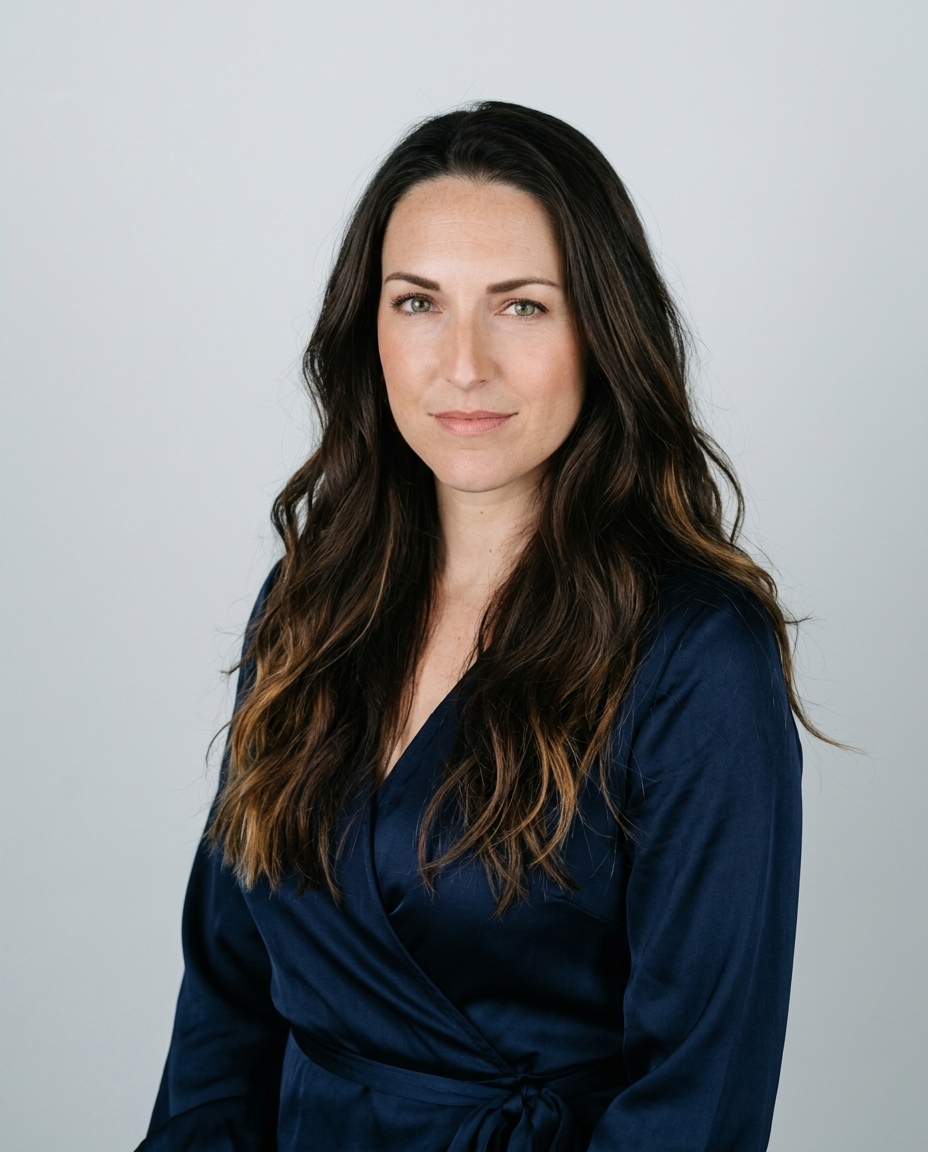
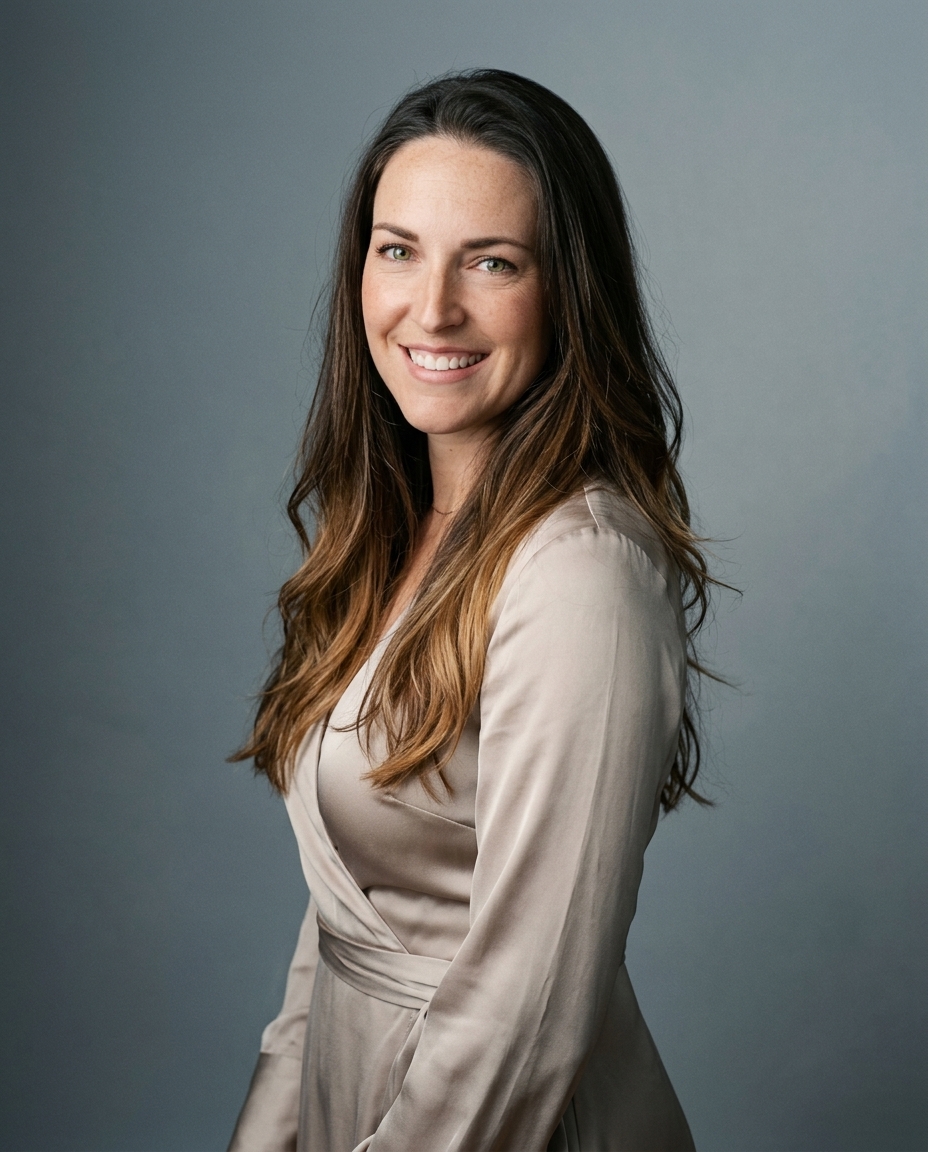

A strong female corporate headshot isn't judged the same way a male one is. That isn't opinion. In the United States, women hold 29.2% of senior-level positions in S&P 500 companies and 8.2% of CEO roles according to Investopedia's reporting on gender representation in corporate leadership. Most executive imagery still shows men. So when women sit for a headshot, the image carries extra pressure. It has to establish competence, authority, warmth, and credibility in a visual culture that still defaults to male leadership.
That's why generic advice fails. “Wear something professional and smile” is not enough. The unwritten rules matter more for women because expression, wardrobe, camera angle, and light are read more aggressively. We've seen that firsthand through Studio Pod's work photographing 10,000+ real professionals since 2019, and that photographer-first experience is exactly why this guide focuses on trade-offs, not platitudes. If you want a deeper look at patterns we've observed behind the camera, our 10,000 headshots study is worth reading.
Table of Contents
- Why corporate headshots for women require a different approach
- Wardrobe and preparation that works on camera
- Posing and expression to balance authority and approachability
- Understanding professional lighting and backgrounds
- The modern choice a traditional photographer vs AiHeadshots
- Your final checklist for a perfect corporate headshot
Why corporate headshots for women require a different approach
Female headshots succeed or fail on subtleties.
A man can get away with a flatter expression, harsher light, or a less intentional outfit and still read as senior. Women usually don't get that margin. The same image choices are interpreted through a different set of assumptions, and the result is that a technically decent portrait can still send the wrong signal.
The image has to carry more than likeness
A corporate headshot isn't just a record of your face. It's a compressed statement about how you occupy space. For women in finance, law, medicine, consulting, and tech, that statement gets read fast. Is she senior. Is she client-facing. Is she warm enough. Is she authoritative enough. Those judgments happen before anyone reads your bio.
That's why the best corporate headshots female professionals use are deliberate. Not stiff. Not overworked. Deliberate.
Practical rule: The goal isn't “pretty.” The goal is accurate authority.
The wrong choices usually come from trying to neutralize risk. People choose a safer smile, a safer outfit, or softer styling because they don't want to look severe. On camera, that often drains presence. A headshot needs structure. It needs shape in the face, clarity in the eyes, and a posture that reads as intentional.
What works better than generic polish
Women are often told to look approachable first. That's incomplete advice. A usable corporate portrait needs both approachability and rank. You don't get there by looking casual. You get there by controlling visual hierarchy.
That means the face must stay dominant in the frame. The clothing can't compete. The pose must create clean lines through the jaw, shoulders, and neckline. The light has to reveal the eyes without deepening under-eye shadow or exaggerating shine.
That's also why a lot of stock-style business portraits miss. They show “professional woman” as a category instead of photographing an actual leader.
Wardrobe and preparation that works on camera
Wardrobe decides whether the viewer reads your face first or your outfit first. In a corporate headshot, the face has to win.
A lot of women arrive with clothes that are stylish, expensive, and wrong for a tight crop. The camera judges differently than a mirror. It flattens depth, exaggerates small folds, and turns busy styling into visual noise.

Start with shape and surface
The best wardrobe choices give the headshot structure. They define the neckline, keep the shoulders clean, and hold their form under light. That usually means structured layers, simple tops, and fabrics with a matte finish.
Benchmark guidance from Headyshot's corporate headshot recommendations also favors restraint for the same reason. Bold patterns, visible logos, and high-contrast details pull the eye away from the expression.
A few choices keep working in real sessions:
- Structured layers: Blazers, fitted knits, and tops with some body photograph better than fabrics that collapse or twist.
- Clean necklines: Soft V-necks, open crew necks, and well-shaped collars frame the jaw without crowding it.
- Solid, controlled color: Navy, charcoal, cream, olive, and muted jewel tones usually hold attention where it belongs.
- Matte texture: Satin, sequins, and shiny synthetics bounce light in patches and make retouching harder.
For a more specific outfit breakdown, see our guide to what to wear for professional headshots.
Fit matters more than brand
Luxury fabric does not save a poor fit. If the shoulder seam drops, the jacket strains at the button, or the sleeve bunches at the wrist, the portrait loses precision.
That matters even more for female corporate headshots because many jackets and blouses are cut for movement and comfort first, not for a still frame. On camera, extra fabric around the waist, bust, or upper arm adds visual width. A slightly sharper fit usually photographs better than the outfit that feels most relaxed.
Wrinkles cause the same problem. They break the line of the torso, catch highlight in the wrong places, and make an otherwise strong portrait look careless. Steam the selected outfit the morning of the shoot, then transport it on a hanger if possible.
Prepare the exact outfit you plan to wear. Do not rely on a backup pulled from the closet at the last minute.
Grooming should survive close inspection
Headshots are unforgiving because the frame is small and the viewer's attention stays on skin, eyes, mouth, and hairline. Good preparation is less about glamour and more about surface control.
Makeup needs enough definition to restore contrast the lens naturally softens. Brows, lashes, and lip color often need slightly more presence than in daily life. Skin should still look like skin. Heavy contour, frosted highlight, and thick powder tend to separate from the rest of the face once light hits them.
Skin prep starts earlier than the shoot day. If texture, dryness, or congestion is an issue, a sensible treatment plan beats aggressive retouching every time. For readers who want pre-shoot skin prep close to the session date, professional facials can be a practical resource.
Hair should have shape at the crown and clean control around the jaw and shoulders. A few flyaways are easy to fix. Flat roots, frizz through the ends, or a style that covers the neckline usually weakens the portrait.
Bring a small kit. Powder or blotting papers, a comb, lipstick, and a lint roller solve half the problems that show up in the first five minutes of a session.
Posing and expression to balance authority and approachability
Expression is where most female corporate headshots are won or lost.
The hard part isn't smiling. The hard part is choosing the right amount of warmth without giving away authority. That tension is real. The smile paradox is well documented in Capturely's guide to professional headshots for women: women are judged more harshly on expression, with non-smiling women seen as less competent in collaborative settings and smiling women seen as less authoritative in leadership roles.
Why the smile paradox matters in real sessions
This is the part generic advice skips. Expression is role-specific.
A founder raising capital, a partner at a law firm, a physician, and a client success executive should not wear the same face in a headshot. A broad smile can work for high-trust, people-facing roles. It often weakens a portrait meant to signal executive gravity. A fully neutral expression can look controlled and sharp, but it can also harden the face if the eyes don't stay engaged.
Your expression should match the job the photo has to do.
That doesn't mean choosing between “friendly” and “serious.” It means separating mouth expression from eye engagement. The strongest portraits often use a restrained mouth with alert eyes. That combination reads confident, present, and accessible without slipping into either stiffness or performance.
Small body changes produce big differences
Posing starts below the face.
A squared shoulder line increases authority, but a fully front-facing stance can look static. Turning the body slightly, then bringing the face back toward camera, usually gives you more shape through the jaw and torso. That shape matters because it creates dimensionality before lighting even does its job.
Hand position matters too, even in a tight crop, because hands affect shoulder tension. If the hands are awkward, the neck and jaw tighten. You see that tension immediately.
Three adjustments work especially well for women in corporate headshots:
- Lean slightly forward from the waist. It creates engagement and sharpens the jawline.
- Drop the chin slightly. This avoids the lifted-chin look that reads detached.
- Lengthen the neck before settling the shoulders. That keeps posture strong without stiffness.
Don't confuse authenticity with passivity
A natural expression is not the same thing as an unshaped one.
People often hear “be yourself” and relax everything. The result is pleasant but vague. Good portrait coaching is more precise. You want intention in the eyes, softness around the mouth, and a posture that looks occupied rather than decorative.
Here's the easiest test. Ask what the image says if someone sees it for one second on LinkedIn or a company bio page. If the answer is only “nice,” the portrait needs more structure. If the answer is “capable and easy to trust,” the balance is right.
Understanding professional lighting and backgrounds
Light controls credibility faster than styling does.
In female corporate headshots, the job is to shape the face clearly, keep the skin natural, and hold attention in the eyes. Soft light helps, but soft alone is not enough. If the source is too broad or too frontal, the face loses structure. If it is too high, under-eye shadow deepens and the expression reads more tired than confident.

What a professional setup is actually controlling
A good setup manages four things at once. Shadow depth, skin sheen, catchlights, and separation from the background.
For women, that balance usually means a key light set slightly above eye level and close enough to stay soft without wrapping so far that the jaw disappears. I also want fill from below or camera-adjacent, often with a reflector, because it opens the eyes and softens shadow under the chin without making the image look flat. Those small adjustments matter more than people realize. The camera exaggerates overhead office light, patchy skin shine, and every uneven transition between cheek, nose, and jaw.
Camera height matters too. A lens placed a little below eye level is often more flattering than one placed above it, especially if the goal is authority without hardness. It reduces eye socket shadow, controls forehead reflection, and keeps the face feeling engaged instead of observed from above. Our article on the best lighting for headshots explains how that changes in studio and office setups.
One more trade-off gets missed in generic advice. Smoother light improves skin, but too much fill can erase bone structure and make the portrait feel less executive. Stronger directional light adds shape, but pushed too far it becomes editorial and less useful for LinkedIn, company bios, and investor-facing materials. Good headshot lighting sits in the middle. Clean, controlled, and specific to the face in front of the camera.
Background and light should support the face, never compete with it.
Background choice changes the message
Neutral backgrounds carry the most range. Gray, off-white, taupe, and other restrained tones reproduce well across company sites, speaking pages, press use, and LinkedIn banners. They also put more pressure on expression and light, which is good. If the portrait only works because the background is interesting, the headshot itself is weak.
Environmental backgrounds can work well for founders, consultants, and executives whose role benefits from context. A blurred office, window line, or architectural element can add relevance. The trade-off is control. Background detail introduces color casts, visual noise, and perspective lines that can pull attention away from the face, especially in a tight crop.
The best background is the one that leaves no doubt about who the image is about. For a corporate headshot, that answer should stay obvious in one second.
The modern choice a traditional photographer vs AiHeadshots
The decision usually comes down to control, time, and cost.
A traditional photographer gives you live direction, custom lighting, and the ability to adjust every variable in real time. That's valuable, especially for high-stakes executive work, media kits, or team shoots where consistency has to be managed on set.

The trade-off is logistics. Traditional photographer day rates commonly land around $300 to $600+, and that's before you factor in scheduling, travel, session time, outfit prep, and edit turnaround. For many professionals, that process is fine. For many others, it's too heavy for what their core need is: a clean, credible headshot fast.
What changes with AiHeadshots
AiHeadshots comes from Studio Pod, an automated headshot studio in Houston built by photographers Joseph West and Chris Bailey. That origin matters. This isn't a software team retrofitting open models. It's photographers building a system from real studio experience, after photographing 10,000+ professionals since 2019.
The workflow is simpler. You upload 10 to 20 phone selfies, no studio visit required. AiHeadshots delivers 30+ studio-grade headshots in about 30 minutes, based on the product details shared in the AiHeadshots press page.
That same source also notes a practical advantage for women: AI headshot tools remove the 15 to 45 minute makeup and styling deficit that often comes with traditional studio sessions.
Where each option fits
A traditional photographer is still the right call if you need live art direction, a very specific brand environment, or a coordinated executive session with on-site styling and shot review. Human feedback in the room still matters in those scenarios.
For speed, budget discipline, and convenience, AiHeadshots fits a different need. The entry tier starts at $29, compared with the cost of a typical photographer booking. There are also clear pricing tiers: Basic $29, Professional $39, Executive $59, and Teams pricing for 10+ seats at $22 to $29 per seat. You can review that structure on the pricing page and judge the fit based on your situation, not hype.
If you want to inspect output quality rather than read claims, the examples gallery is the right place to look.
A quick walkthrough helps show how the process feels in practice.
AiHeadshots also brings some clear operational details that buyers care about: a 100% money-back guarantee within 14 days, 30,000+ customers served, 255,000+ headshots delivered, a 4.9★ rating, and data retention windows of 7 days for inputs, 30 days for outputs, and 90 days for billing retention. If you're buying for a team, the teams page, reviews, and about page are the useful places to compare substance, not slogans.
HeadshotPro, BetterPic, Aragon, Secta, and ProPhotos all sit in the same broader category. The meaningful distinction here is straightforward. AiHeadshots was built by working photographers with a studio track record, and that heritage shows up in how the images are shaped.
Your final checklist for a perfect corporate headshot
A strong headshot is built before retouching. It comes from the right clothing, the right expression, and light that respects the structure of the face.

Use this checklist before you book or upload anything:
- Prepare the clothes: Choose solid colors, avoid logos and busy prints, and steam everything the morning of the shoot.
- Shape the grooming: Keep hair controlled, makeup polished, and skin real. Don't rely on retouching to fix poor prep.
- Pose with intent: Lean slightly forward, drop the chin a touch, and keep the eyes engaged even if the smile is restrained.
- Check the light: Look for even facial illumination, visible irises, and no heavy shadow under the eyes.
- Pick the right background: Use neutral, uncluttered settings for the widest corporate use.
- Choose the process that fits: Traditional photographers offer live control. AiHeadshots offers speed, price clarity, and convenience with photographer-built output.
The best corporate headshots female professionals use don't chase perfection. They communicate rank, presence, and trust without looking overproduced. That balance is the whole job.
AiHeadshots comes from Studio Pod, founded by photographers Joseph West and Chris Bailey. Upload 10 selfies, see your first headshot in 30 minutes. Try it for $29.