



Two headshots, one shirt, one backdrop, one afternoon. In a well-run studio session, the commercial file and the theatrical file come out of the same setup minutes apart, and they book completely different rooms. That's the part many people get backwards: they treat commercial vs theatrical headshots as two shopping decisions, two photographers, two invoices, when the difference is the question each photo answers. A commercial file answers whether a brand would trust this person with its product. A theatrical file answers whether this person can carry a scene. Everything else, the smile, the light, the shirt, the crop, follows from which question you're answering. Get the question right and one session covers both markets. Get it wrong and you pay twice for the same photograph.
Table of Contents
- Commercial and theatrical headshots at a glance
- Why the two casting markets need different images
- Where agents and markets expect each set
- One Headshot or Two? Deciding by Casting Range
- Presentation Details That Shift the Read
- Building a Three-Image Portfolio That Stays Consistent
- Choose your set before you book
Commercial and theatrical headshots at a glance
Commercial and theatrical headshots are two tools built for two casting questions, not two strengths of one portrait. Neither is the better photo. They're built to different specs, the way a portrait lens and a macro lens are built for different distances.
| Element | Commercial headshot | Theatrical headshot |
|---|---|---|
| Primary signal | Approachability and trust | Dramatic potential and range |
| Expression | Genuine smile, open and engaged | Restrained or unsmiling, grounded |
| Lighting | Bright, even, low shadow | Directional, with dimensional shadow |
| Wardrobe and color | Clean, bright, non-distracting | Restrained, muted or earth tones |
| Casting markets | Advertising, branded content, spokesperson work | Film, television drama, episodic and stage |
| Thumbnail read | A trustworthy type at a glance | A specific character at a glance |
Read the table as a list of decisions, not a list of moods. Each row is something a photographer settles before the shutter opens: the expression you're directed into, where the key light sits, the shirt you change into, the frame you're cropped to. That's why one actor can produce either set in a single afternoon without changing their face.
The first two rows do most of the work. A commercial image needs a genuine smile, an open expression, and light that stays bright and even with almost no shadow under the eyes or nose. The theatrical image wants the opposite posture: a grounded or unsmiling expression, directional light that models the cheekbone and jaw, and clothing in muted tones that recede.
The sorting test: if the photo would sit comfortably beside a bank or insurance ad, it reads commercial. If it suggests a person with a history, it reads theatrical. If it does neither, it's a pleasant portrait of nobody in particular.
Run that test on what you're submitting this week. A photo that fails it doesn't need a new photographer. It needs a new session with an actual direction.
Why the two casting markets need different images
Say you're submitted the same week for a regional grocery chain spot and a limited series about a family in foreclosure. Two casting panels, two portals, two thumbnails, one face. The grocery spot needs someone a shopper would trust with their weekly food budget. The drama needs someone who has been through a year they don't talk about. A single portrait that tries to serve both lands as neither: too cool for the advertiser, too produced for the drama.
Commercial casting buys recognition in seconds. Advertising, branded content and spokesperson work need a trustworthy neighbor, parent or service provider that a broad consumer audience accepts immediately. Theatrical casting buys character. Film, television drama, episodic work and stage need a presence that suggests emotional depth and a specific history, not universal product appeal. Backstage's guide to actor headshots treats the standard actor portfolio as at least two contrasting images, one serious theatrical photograph and one smiling commercial photograph, and frames the split as functional rather than aesthetic.
A commercial file is a trust document. It says this person can hold a product, deliver a line about savings, and look like they mean it. A theatrical file is a character document. It says this person has an interior life a director can point a camera at.
That's why the blended portrait fails so reliably. Strip the smile for drama and the advertising brief looks at a stranger who won't connect. Polish it up for advertising and the drama brief sees a stock model.
Name the file for the market before you crop it. Four seconds on a filename beats a wrong-file submission to a casting office that won't ask twice.
Agents label submissions by that split, so your folder should already be organized that way. The decision in front of you isn't which lighting recipe is fashionable this year. It's which of the two questions your upcoming submissions ask.
Where agents and markets expect each set
Representation solves this with labels. Before you argue about style, ask the person who submits you which labels they use, because the answer changes by city.
Backstage reports that the majority of New York agents it consulted generally request both a "general theatrical" and a "general commercial" headshot, and that some also ask for a procedural image for roles such as police officers or detectives, per Backstage's breakdown of New York and Los Angeles headshot expectations. Los Angeles is described as more specific, with representatives frequently seeking several theatrical looks matched to different casting breakdowns.
| Market | Typical requests | Notes |
|---|---|---|
| New York | General theatrical and general commercial headshots | Some agents also request a procedural image for police or detective roles |
| Los Angeles | Several theatrical looks matched to different breakdowns | More specific market; variations target separate dramatic categories while a commercial file still covers advertising |
Treat that table as a submission minimum, not a menu.
The New York package starts with two labeled cores, commercial and theatrical, then adds the procedural file only when police or detective work is coming in. Build it right: same face, grounded and credible, an authority read, no badge, no prop gun, no lab coat that stamps a year on the file.
The Los Angeles package keeps those two cores and adds theatrical variations that still share the same hair, the same age presentation and the same face. A second serious look in a different shirt is enough. A second serious look with a different haircut in different light is a different person, and casting notices.
Some commercial work reaches you through production companies rather than casting offices, and those briefs name the advertiser and the look before they reach your inbox. If you want to understand how those shops frame a job, this list of commercial production companies is a useful read. Check the file specs too, since our guide to actor headshot size requirements covers what portals accept. And check the platform, because some casting platforms require disclosure that a headshot is AI-generated.
One Headshot or Two? Deciding by Casting Range
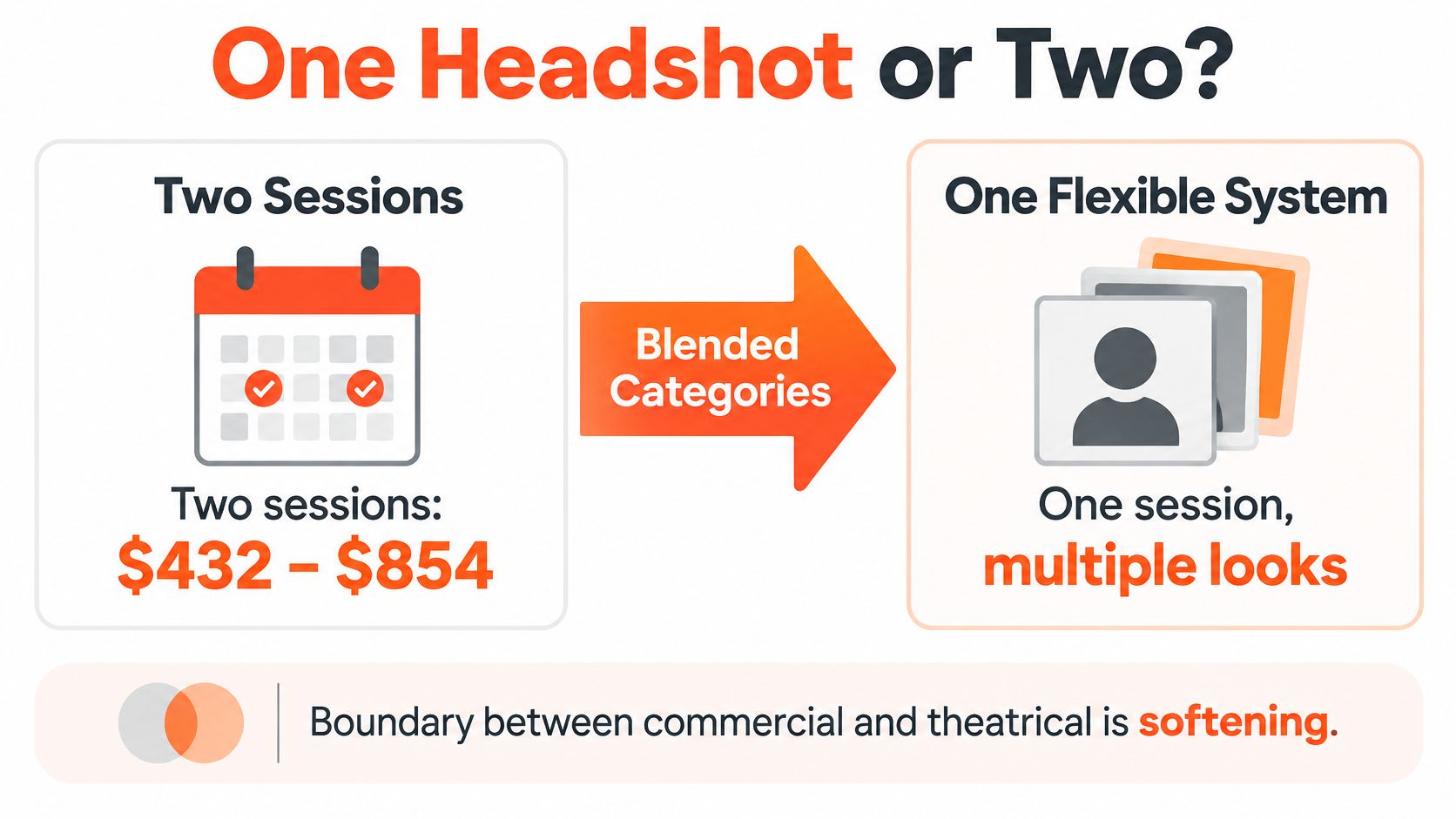
Here's the budget question actors and working professionals ask in the first five minutes: do I pay for two sessions, or build one flexible image system? The honest answer starts with a shift in the guidance itself. The boundary is softening, with natural expressions, softer lighting and cinematic authenticity showing up on both sides of the line, as Casting Networks' comparison of commercial and theatrical headshots points out.
What decides it isn't a styling rule. It's the casting brief in front of you, how the shot reads at thumbnail size, and your credible type.
One adaptable image works when your casting range overlaps and you read clearly small. A warm but measured expression, medium-soft light, a shirt in a neutral that doesn't push either direction. A suburban parent in a one-hour drama is still a suburban parent in a commercial. The person is the same. Only the context changes.
Two sets work when the commercial brand needs overt warmth and the theatrical market expects a clearly dramatic point of view. If the advertising submissions want a full, genuine smile and the drama submissions keep pulling you toward grounded and unsmiling, stop compromising and shoot both.
Run the test before you pay anyone. Reduce each candidate image to the size a casting portal shows it, around 100 pixels wide, and look at it on a phone at arm's length. Put it beside three real breakdowns in your target category. If you can't say what kind of person that is in one second, no amount of full-size retouching saves it.
The trap is neutrality. An expression flattened to offend nobody communicates nothing: not warm enough to sell a product, not specific enough to sell a character. Casting doesn't reject that photo. It forgets it.
If in doubt: start with one adaptable image and add a second set only when a breakdown you keep seeing can't be served by the first. Buy the second look on evidence, not on fear.
Presentation Details That Shift the Read
Four choices decide which set a photo belongs to, and none of them show up in a summary table.
Crop first. Commercial crops keep the face large, centered and open so the smile still registers small. Theatrical crops can carry more shoulder and posture, because stillness in the body is part of what the frame sells. Crop a theatrical shot as tight as a commercial one and you lose the posture that was doing the work.
Retouching. Polish helps commercial work as long as skin still looks like skin. Theatrical casting goes the other way: visible texture, a real laugh line, a mole left alone. Over-retouch either set and both turn interchangeable, the same smooth faces in every folder. If you're picking shirts for the session, our guide to the best outfit for headshots covers fabric, collar and color for both directions.
Backdrop and color. Commercial backgrounds stay simple and tonal so the eye lands on the face, and clothing stays bright without becoming a distraction. Color earns its keep here less as fashion than as attention management: choosing colors that earn compliments is really about keeping a viewer's eyes on your eyes instead of your shirt. Theatrical backgrounds stay quiet too, but they can hold mood, a deeper gray, a warm shadow, as long as nothing in the frame tells a story the breakdown didn't ask for. Backstage's commercial casting guide sums the commercial formula plainly: warm smile, bright but non-distracting clothing, soft low-shadow lighting, clean background.
Eye line. Commercial images hold the lens with warmth, because you're talking to someone. Theatrical images often hold a direct but unresolved gaze, or look a beat off camera, so the viewer feels they walked in on something already happening.
Take the same actor in a bright office setting with a full smile, then in a tighter, dimmer crop with a steady look. Same person. Two casting reads. Three questions settle any photo you already own: is the face large enough to read small, is the skin texture believable, and does the gaze match the set the photo claims to serve.
Building a Three-Image Portfolio That Stays Consistent
Three images cover almost every submission. One identity-defining primary, one commercial alternative, one theatrical alternative, each mapped to a real use.
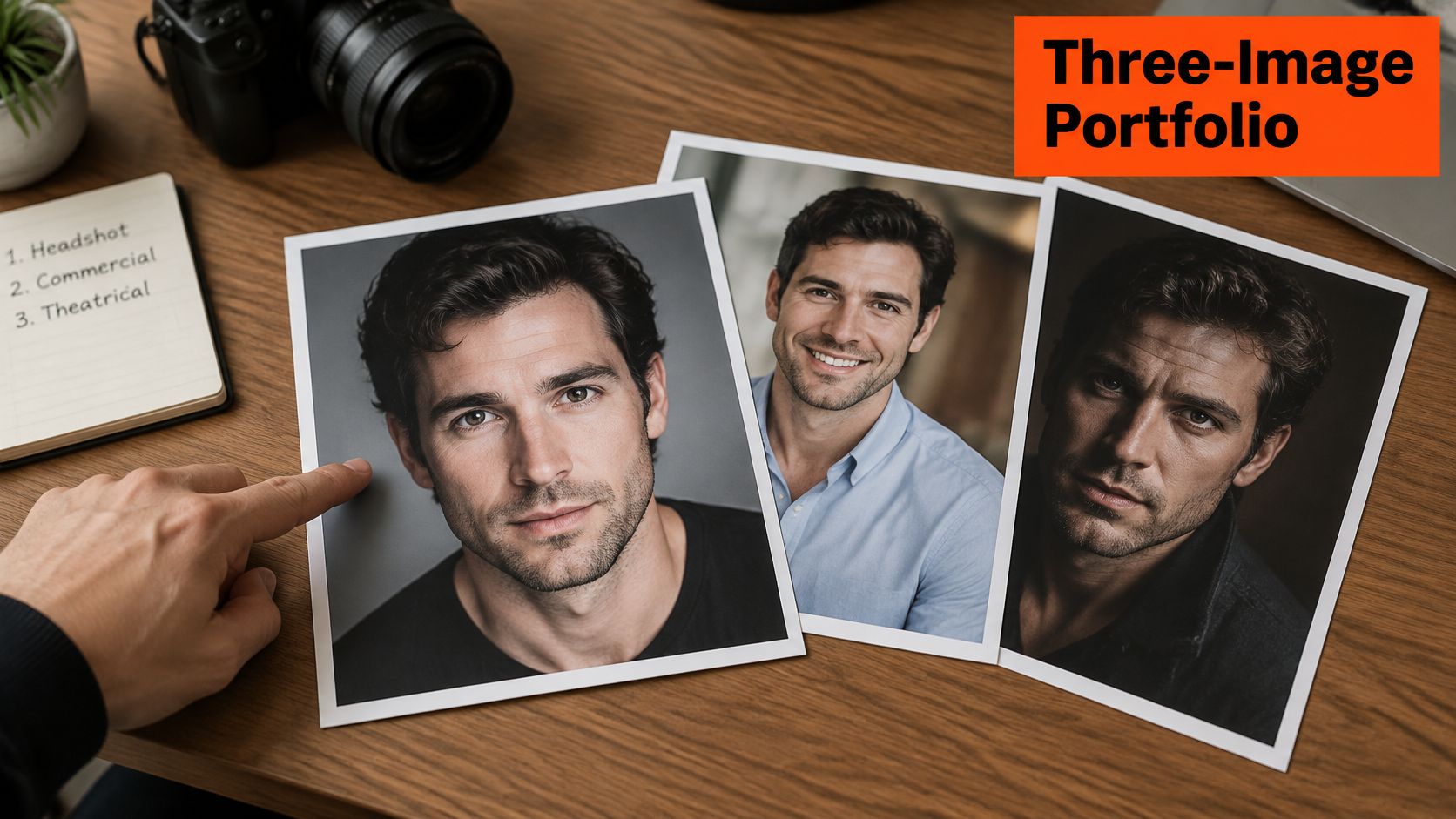
The number isn't arbitrary. Casting Networks' guidance on what commercial casting directors look for recommends a minimum of three to five photos with different emotional feels, and picking the one that matches the specific breakdown as the primary submission. Three is the working minimum. More than five, and actors may stop maintaining the set.
| Image role | Use for | Keep constant | Vary only |
|---|---|---|---|
| Primary identity image | Default submission for any breakdown | Face visibility, hair, natural retouching, age presentation | Mood within a natural range |
| Commercial alternative | Approachable, warm, trustworthy roles | Same identity anchors as the primary | Smile intensity and open, bright expression |
| Theatrical alternative | Grounded, alert or character-driven roles | Same identity anchors as the primary | Expression and directional lighting |
The anchors are the whole trick. Face visibility, recognizable hair, natural retouching and consistent age presentation stay fixed across all three. Only the message changes: open and trustworthy for commercial work, grounded and emotionally specific for theatrical work.
The failure mode is a wardrobe reel. Ten outfits, four backgrounds, six moods, and a casting team that can't tell whether it's looking at one actor or a rep house. Variation should come from expression and light, not from identity.
Work one example through. A primary image with a relaxed half-smile. A commercial alternative with a broader smile in the same shirt color family. A theatrical alternative with a closed-mouth look and directional light. Identical haircut, eyes visible in all three, same apparent age. If your marketing needs these side by side, an electronic press kit puts them on one page for reps and producers. Our actor headshot tips walk through the expression work behind each one.
Then run the last check before uploading. Show any single image to someone who doesn't know you. If they can describe the person in one sentence, the set works.
Choose your set before you book
A headshot that reads clearly at full size can fail at thumbnail size. Test each candidate against real casting breakdowns at the size an agent or casting team will see it. If the commercial image reads warm and open while the theatrical image reads grounded and specific, one set may not cover both markets.
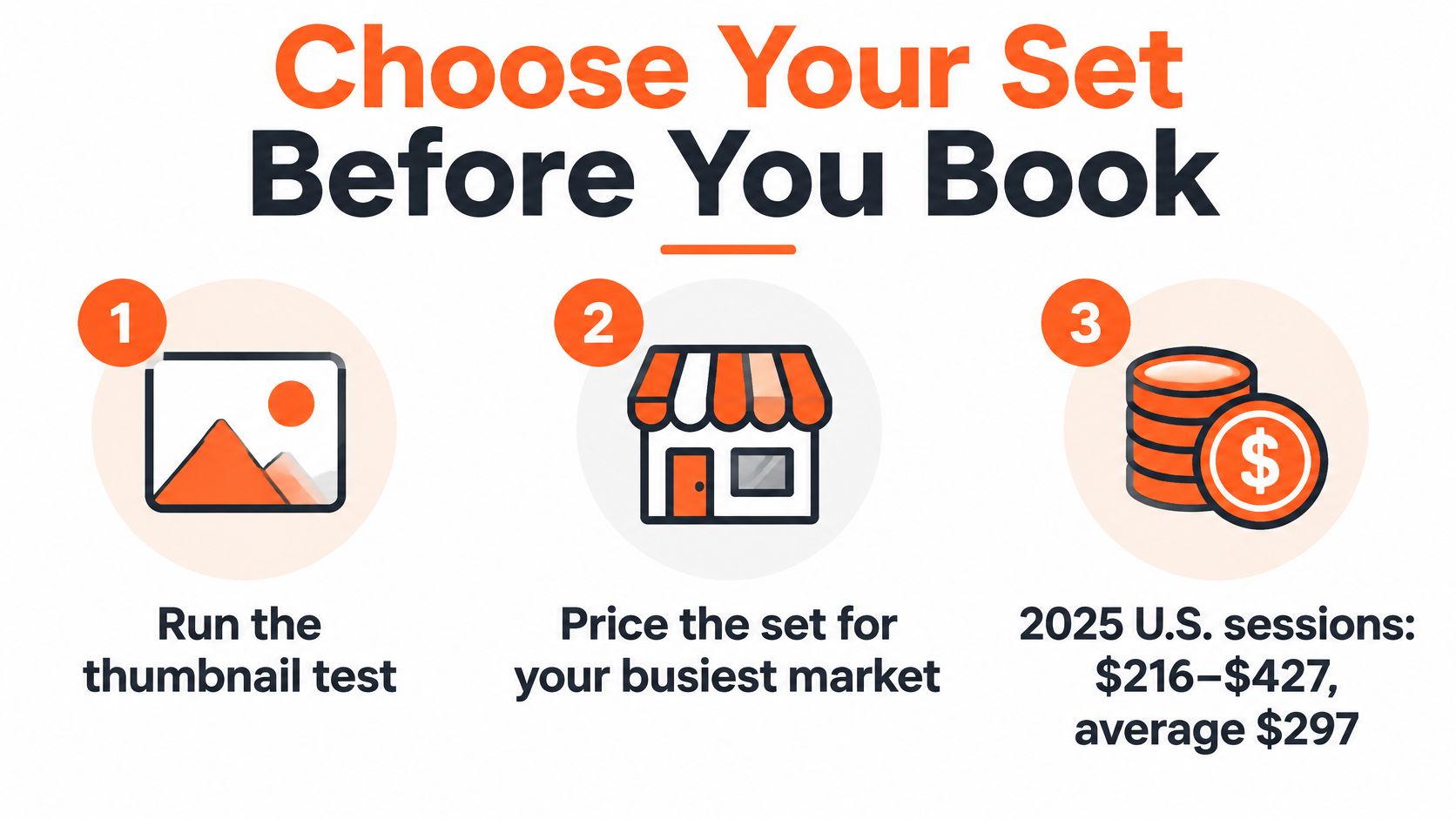
Traditional sessions carry a real cost. Thumbtack pricing data for 2025 puts U.S. headshot sessions at $216 to $427, with an average of $304, as reported in Lifehacked AI's guide to what makes a good acting headshot. Booking separate sessions for both markets can add up quickly, especially if you need extra looks or a reshoot.
AiHeadshots is built by the photographers behind Studio Pod. Its $39 Professional plan includes 50 finished AI headshots in five style looks, plus an outfit and up to four backgrounds. It is a one-time payment, with no subscription. The images are high-resolution and designed to match professional studio photography, with no scheduling or rigs needed.
Choose your set based on the roles you submit for:
- Advertising dominates your submissions. Lead with the commercial expression: bright, open, and easy to read. Keep a theatrical option only if you also submit for those roles.
- Film, television, or stage dominates. Lead with a grounded, specific expression. Use a warmer image when a commercial breakdown calls for it.
- Your agent asks for both labels. Prepare commercial and theatrical options. Name the files clearly, then compare each at thumbnail size against actual breakdowns.
The right choice is the image that communicates the role quickly. If one photograph reads well across both markets at submission size, use it. If the commercial image feels too polished for a dramatic role, or the theatrical image reads too stern for an advertisement, build two sets.
AiHeadshots offers professional headshots for actors in multiple style looks. The $39 Professional plan includes 50 finished images, five styles, an outfit, and up to four backgrounds. Choose your style and review the results at thumbnail size before sending them to an agent or casting platform.