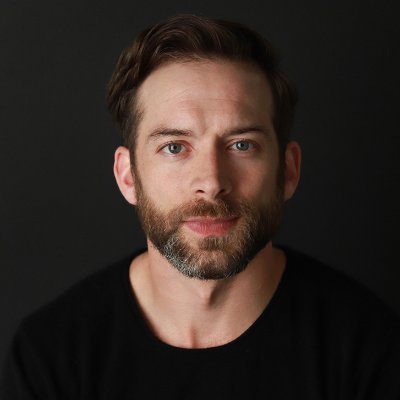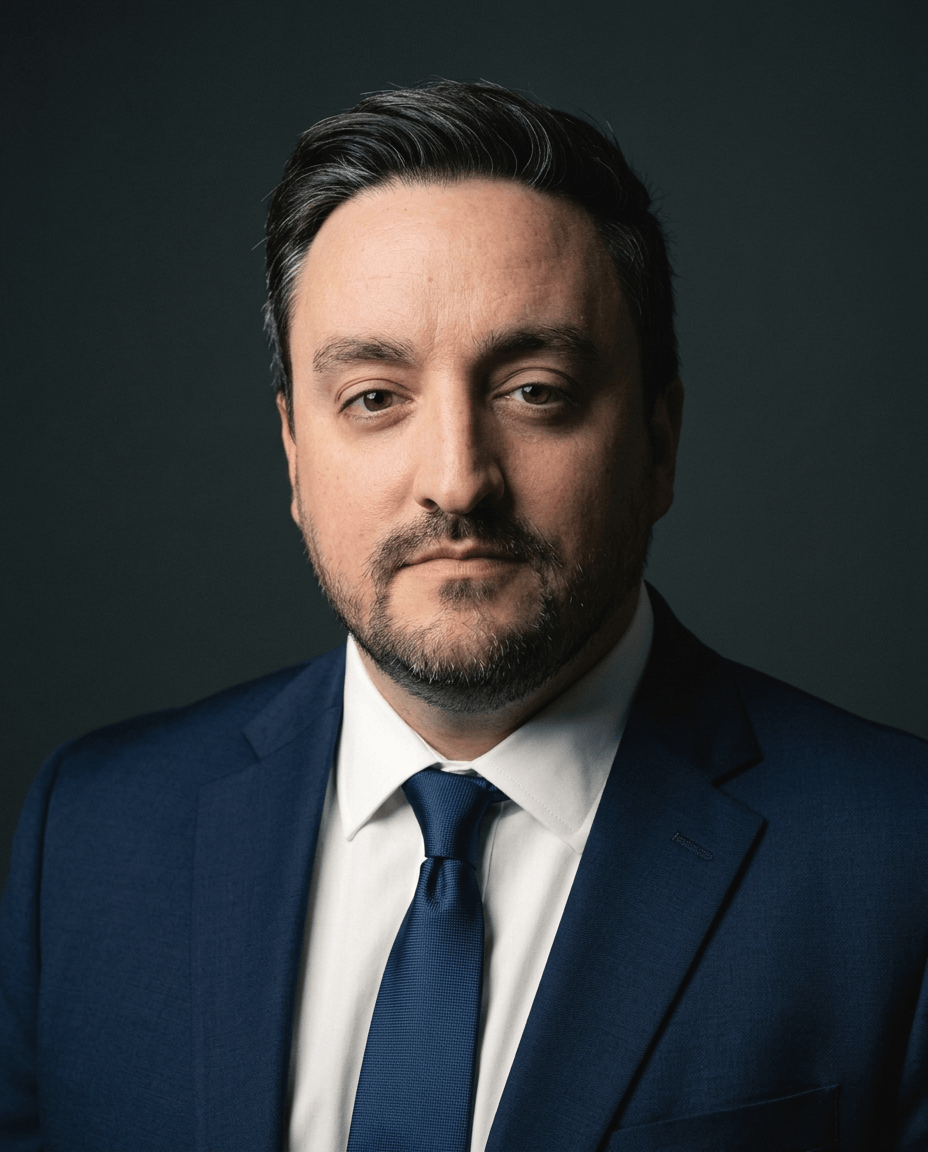
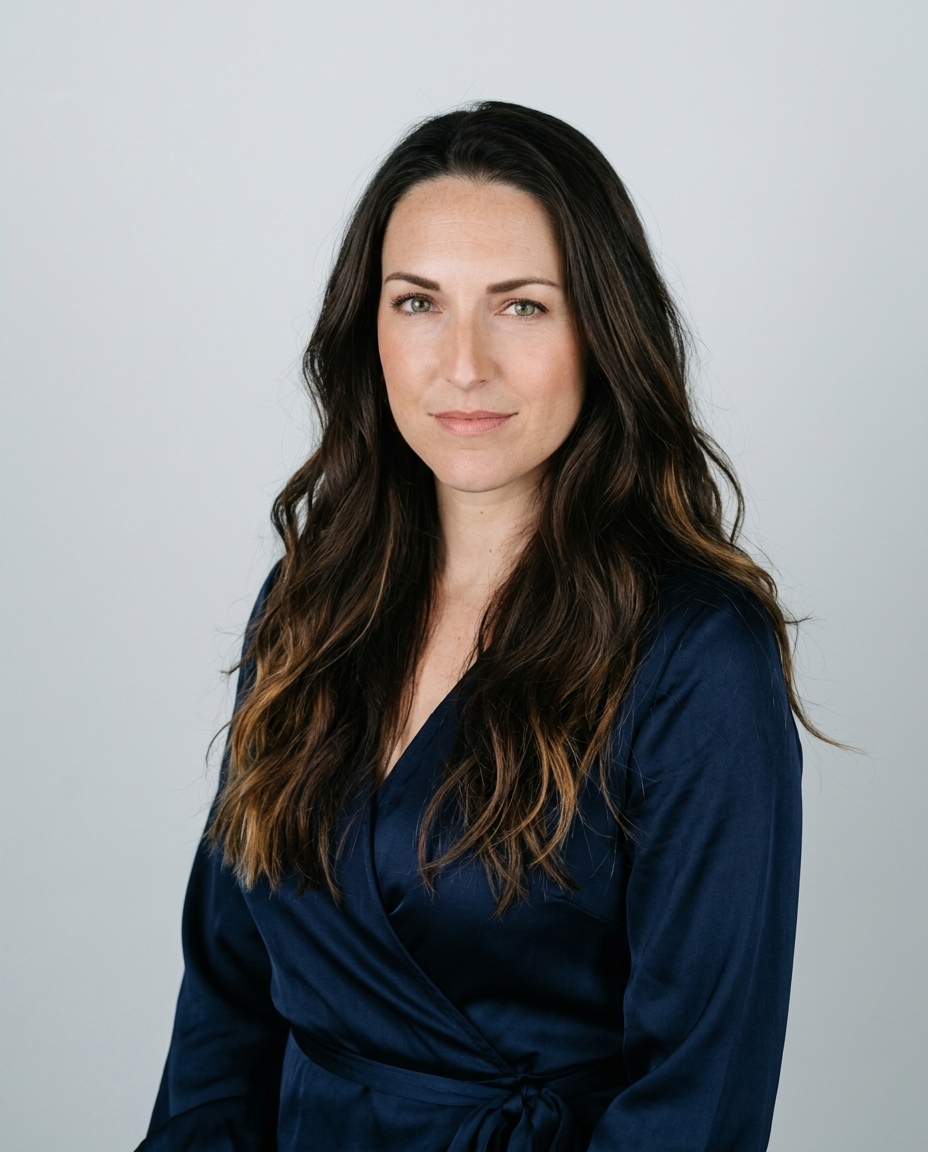
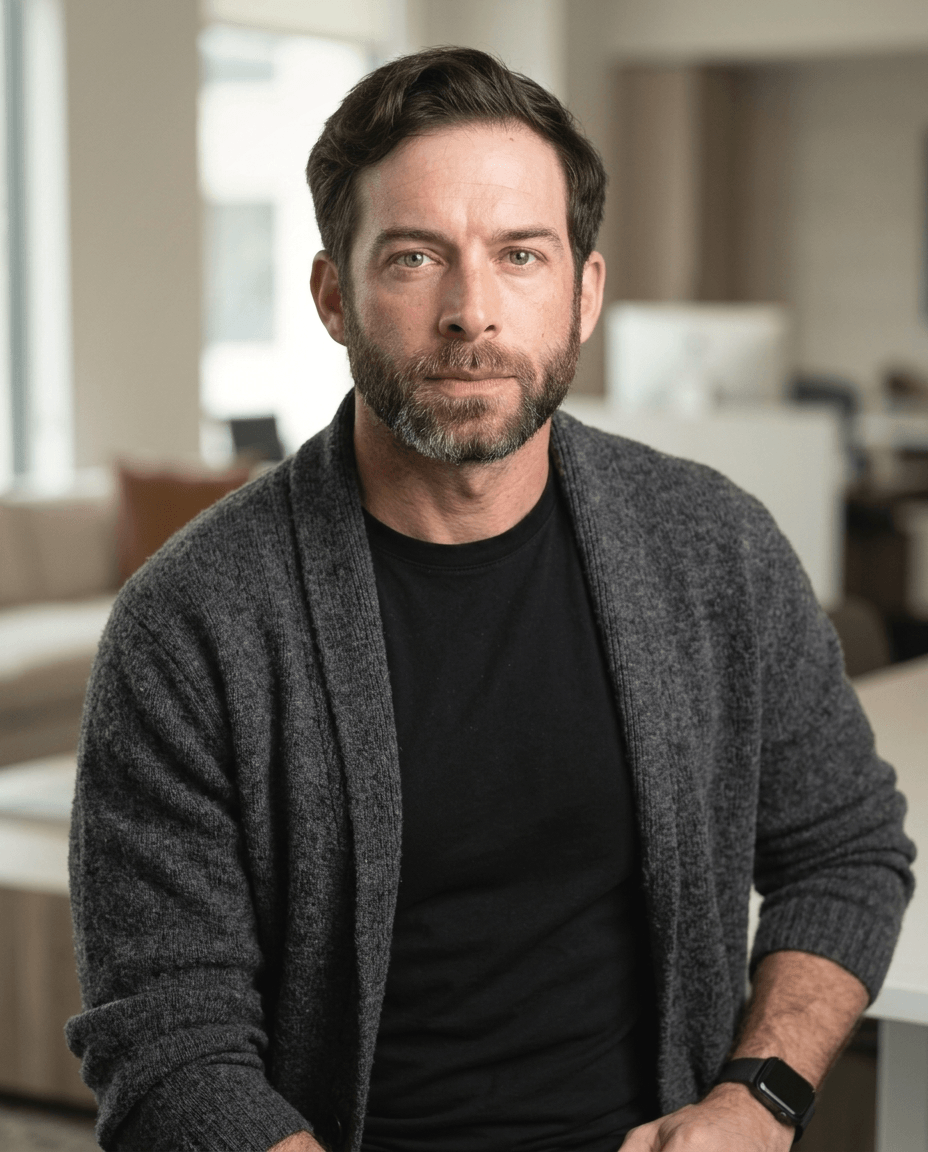
A headshot outfit matters more than many think because the clothing often takes up about 60% of the frame, leaving roughly 40% for the face in many compositions, which is why fit, neckline, and color change the final image so much according to this headshot guidance. That's the part most wardrobe advice misses. The camera isn't judging your outfit the way a mirror does. It's judging shape, contrast, reflectivity, and distraction.
After 10,000+ real professional shoots at Studio Pod since 2019, we've seen the same pattern hold up again and again. The best outfit for headshots is rarely the most stylish thing in your closet. It's the one that keeps attention on your face, reads clean in a tight crop, and survives lighting without creating problems. That photographer-first approach is also why AiHeadshots exists. Joseph West and Chris Bailey built it from real studio practice, not from a software team retrofitting open models.
Table of Contents
- The one-line answer that actually works on camera
- Color choice and what the camera sees
- Fabric, pattern, and fit on a working set
- Necklines, layers, and accessories that frame the face
- The contrast strategy most guides skip
- Outfit templates by role and brand
- The pre-shoot test, grooming, and final checklist
The one-line answer that actually works on camera
Across the shoots we see every week, one outfit formula beats the rest: a solid, medium-to-dark, matte top with a clean neckline and shoulders that fit properly.
That recommendation comes from volume and repeatability. After more than 10,000 real sessions at Studio Pod, the same pattern keeps separating the images that hold up from the ones that fight for attention. The strongest headshot outfit usually looks a little quieter than what you might choose for an event. That trade-off is worth it. In a tight crop, calm clothing gives your expression room to do the work.
Why this combination keeps winning
Solid color keeps the eye from wandering. Small prints, wide stripes, visible logos, and graphic details may look fine in person, then turn busy once the image is cropped down for LinkedIn, an About page, or a speaker bio.
Medium-to-dark value usually frames the face better than the extremes. Very light tops can pull attention to the chest and collar. Very dark tops can erase edge detail and make the neckline sink into shadow. The safer middle ground is what we reach for most often.
Matte fabric is easier to light and easier to retouch. Shine creates hot spots, uneven folds, and bright patches near the collarbone and shoulders. Fabrics with a softer finish, including cotton, merino, brushed knits, and textured wool blends, tend to stay controlled under studio light, as noted in this executive headshot wardrobe guide.
A simple test helps. If the fabric catches your room light before you even step in front of a camera, it will probably catch ours harder.
Fit decides whether the outfit looks polished
Shoulder fit matters more than many people expect. If the seam drops too low, your frame looks wider and less defined. If the collar collapses, twists, or gaps, the camera picks that up fast.
The goal is structure without stiffness. You want clean lines around the neck and shoulders, enough shape to read clearly, and nothing that needs constant adjustment between frames.
This is the part many wardrobe guides flatten into generic advice. On set, the rule is simpler. Choose the top that keeps attention on your face, holds its shape under light, and does not create a problem the camera has to solve.
Color choice and what the camera sees
Color is a camera problem before it's a style problem. Sensors and lights don't see your favorite shirt the way you do in a bedroom mirror. They see brightness, saturation, contrast, and reflected color.
Mid-saturation wins more often
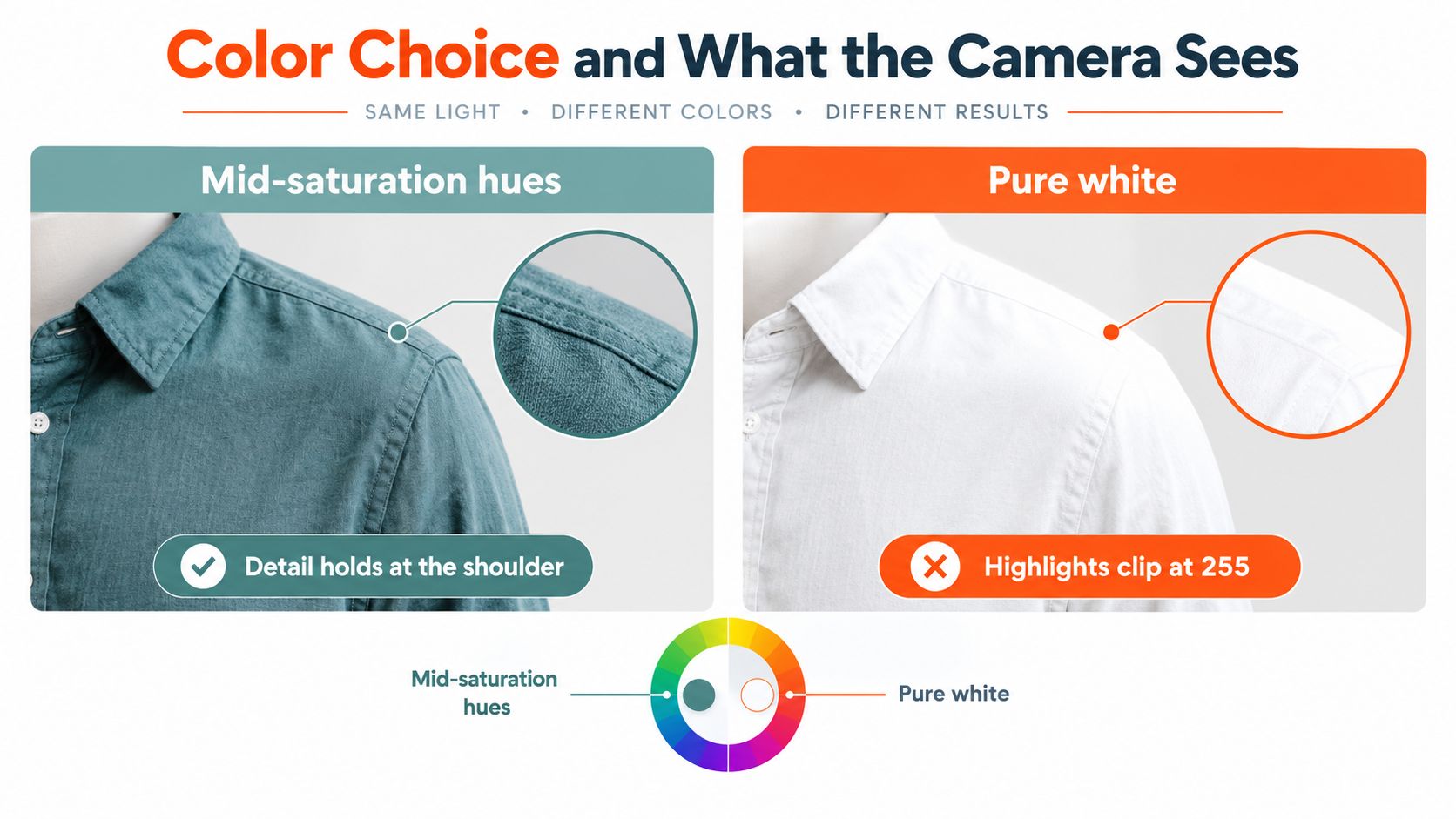
Navy, charcoal, deep teal, forest, and burgundy are dependable because they hold detail under studio light and still separate from the skin. They also stay readable when the image gets cropped small.
Pure white is a problem for a different reason than pure black. White tends to lose detail at the shoulder seam and collar edge. Black can swallow shape and make the neckline disappear, especially on darker sets.
If you want a deeper breakdown, our guide on the best colors for headshots shows how those tones behave in actual portrait use.
Warm colors can work, but they need discipline
Rust, mustard, terracotta, and other warmer tones can look excellent for expressive roles, personal brands, and less formal portraits. They bring energy. They also go bad faster if the background or skin undertone is too close.
Bright red, neon tones, and high-chroma orange are where things start getting messy. They reflect color into the jaw and neck, shift skin in post, and create more correction work than they're worth. If the shirt announces itself before the face does, it's the wrong shirt.
Mid-tone and darker colors give you room. They hold shape, preserve texture, and don't force the lighting to fight the wardrobe.
A simple way to choose
Pick the two darkest shades you like wearing. Then test both. Don't guess from the hanger.
One usually looks stronger the second a camera sees it. That's the one you wear first.
Fabric, pattern, and fit on a working set
Fabric, pattern, and fit decide whether an outfit survives contact with a camera. They don't get much attention in generic wardrobe advice because they sound less exciting than color. On set, they matter just as much.
Fabric needs to absorb light, not throw it back
Matte fabrics are safer because they keep the face as the brightest, most important thing in frame. Cotton, wool, brushed knits, and textured weaves usually behave well. They show form without creating hotspots.
Shiny surfaces do the opposite. Satin, silk, slick performance blends, and thin clingy jersey catch light in random places. The result is a glowing shoulder, a bright wrinkle across the chest, or a collar that looks wet under strobes.
Pattern fails fast
Fine patterns and tight stripes are one of the easiest ways to ruin an otherwise good wardrobe choice. They can create moiré, the shimmer that appears when repeating lines are too tight for the camera to sample cleanly. Guidance for executive headshot wardrobe notes that anything narrower than about a quarter-inch is risky, and recommends woven texture like oxford cloth or herringbone instead of printed micro-patterns in this explanation of moiré and texture.
That means houndstooth, thin pinstripes, and tiny checks usually aren't worth the gamble. Large-scale pattern can work better than tiny pattern, but in most business headshots a small solid still wins.
| Variable | Do this | Avoid this |
|---|---|---|
| Fabric | Matte cotton, wool, brushed knit, textured weave | Satin, silk, shiny blends, clingy thin jersey |
| Pattern | Solid color, subtle woven texture | Tight stripes, micro-checks, houndstooth, tiny prints |
| Fit | Clean shoulder seam, smooth collar, tailored chest and waist | Dropped shoulders, pulling buttons, loose collars, extra bulk |
Fit is what makes a photo look expensive
Fit is not a finishing detail. It's the structure of the image. Headshot style guides consistently stress that clothing should be well-fitted, without pulling, bunching, or extra bulk, and recommend trying multiple options in advance because small differences change how polished the portrait looks as covered in this attire guide.
A snug shoulder seam sharpens your outline. A collar that sits flat keeps the neck clean. A shirt that's too loose makes the torso look wider than it is. A shirt that's too tight creates stress lines across the chest and neck.
Wrinkles, lint, pet hair, and collapsed collars all read louder on camera than they do in person.
Press the shirt. Lint-roll the jacket. Check the collar in a mirror and again on your phone. Fit problems don't get fixed in retouching. They get prevented in the dressing room.
Necklines, layers, and accessories that frame the face
The best headshot styling choices don't decorate the frame. They direct it. Neckline, jacket structure, glasses, and jewelry all either push the eye toward your face or drag it away.
Start with the neckline
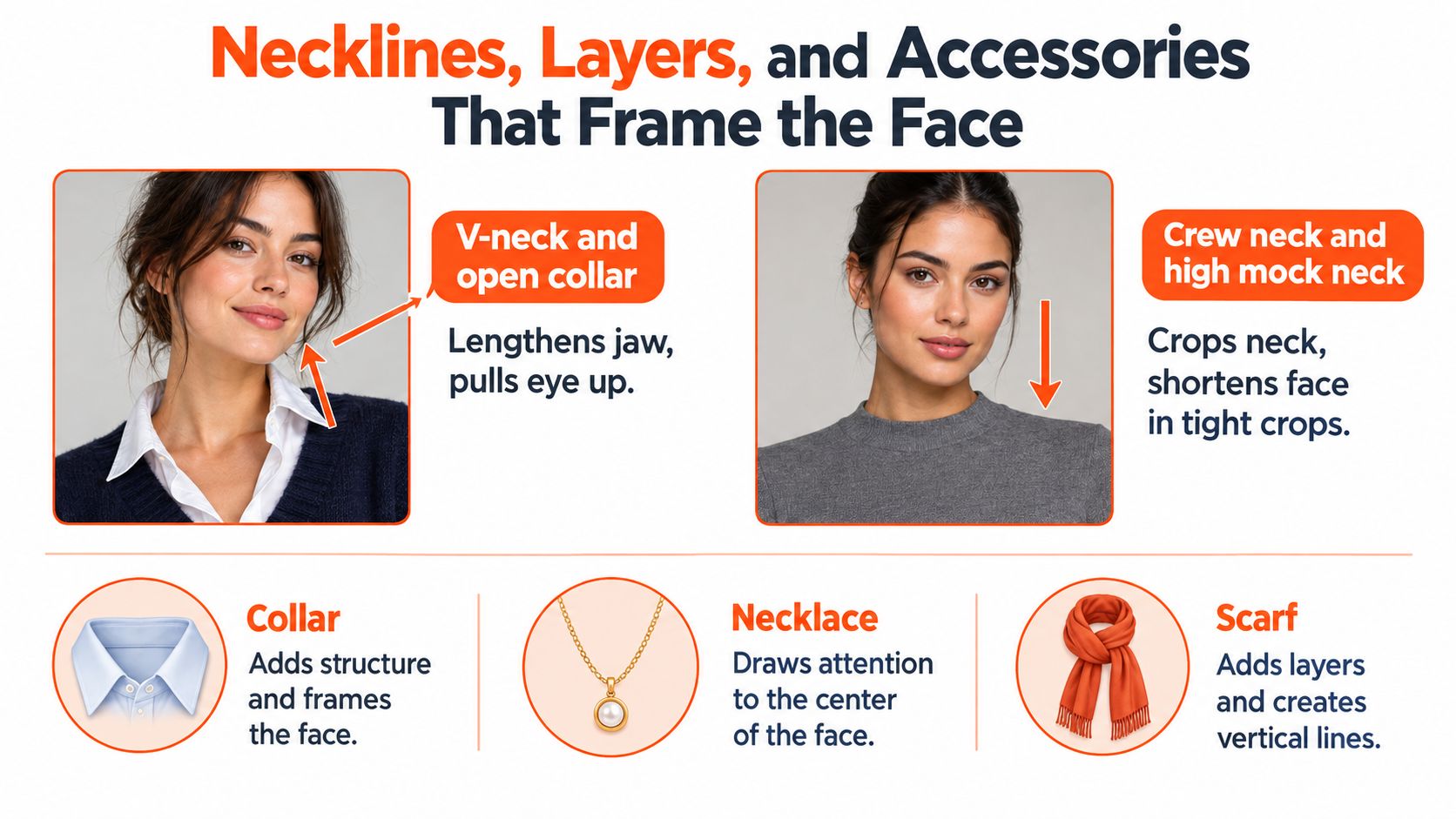
Necklines that point upward tend to photograph better in a headshot crop. Guidance on flattering necklines recommends V-necks, scoop necks, and open-collar styles because they frame the jawline and elongate the neck, while warning that plunging shapes and collars that pull can photograph poorly in this neckline guide.
A crew neck isn't automatically wrong. It just gives you less vertical line. In a tight crop, that can make the face read shorter and the neck read heavier. High mock necks do this even more.
Then decide how much structure you want
A blazer adds authority fast. It broadens the shoulder line and gives the frame a clear edge. That works well for executives, attorneys, consultants, and corporate leadership pages.
No jacket softens the read. That's often better for creatives, therapists, actors, and general LinkedIn use where approachability matters as much as authority. If you do wear a jacket, make sure the lapel width matches your frame. Wide lapels can overpower narrow shoulders. Narrow lapels can look undersized on a broader build.
A jacket changes the message faster than almost any accessory. Use it on purpose.
Accessories should finish the frame quietly
Ties are optional. They help if your role is formal. Otherwise they can make the image feel more rigid than you intend. Jewelry should stay restrained. Small studs, a thin chain, or one simple ring keeps the portrait about the person.
Glasses usually photograph cleanest in matte black, tortoise, or thin metal. Novelty frames and oversized shapes become the story too quickly.
The contrast strategy most guides skip
Most headshot wardrobe guides stop at “wear navy” and call it a day. That's incomplete. A good portrait is built on three separate tones. Your skin. Your clothing. Your background. If any two match too closely, the image flattens.
Think in three values, not one outfit
Multiple headshot guides say your skin, clothing, and backdrop should all contrast because matching your backdrop or wearing shades too close to your complexion makes you blend in as explained in this color-contrast guide. That's strategy.
A pale subject in a white shirt on a white background loses shoulder definition. A dark blazer on a charcoal backdrop can erase the jawline on a darker setup. A tan shirt on tan skin can make the whole crop look low-energy, even if the fit is perfect.
For a useful reference on separation and tonal clarity, see our piece on contrast enhancement.
Use contrast by setting, not by rule
On gray, beige, or white studio backgrounds, jewel tones and matte neutrals usually separate cleanly. On darker backdrops, lighter mid-tones often work better than very dark blazers. On location, match against the environment too. Brick walls fight with rust and terracotta. Green hedges fight with olive and khaki.
Some combinations consistently read well in practice. Olive skin often looks strong in navy or burgundy. Cool pink skin can warm up nicely in teal or rust. Deep skin tones often carry cream, ochre, cobalt, and burgundy beautifully because the separation stays clear.
| Skin tone | Best on gray/white sweep | Best on dark backdrop | Avoid |
|---|---|---|---|
| Fair to light | Navy, forest, burgundy, deep teal | Muted cream, slate, medium blue | White near the face, pale beige |
| Medium or olive | Navy, burgundy, charcoal, teal | Soft blue, muted rust, lighter gray | Olive on green settings, tan close to skin |
| Deep | Cobalt, burgundy, cream, ochre, deep green | Mid-gray, rich blue, warm earth tones | Black on charcoal, muddy browns close to backdrop |
The right outfit isn't a universal uniform. It's a contrast decision.
Outfit templates by role and brand
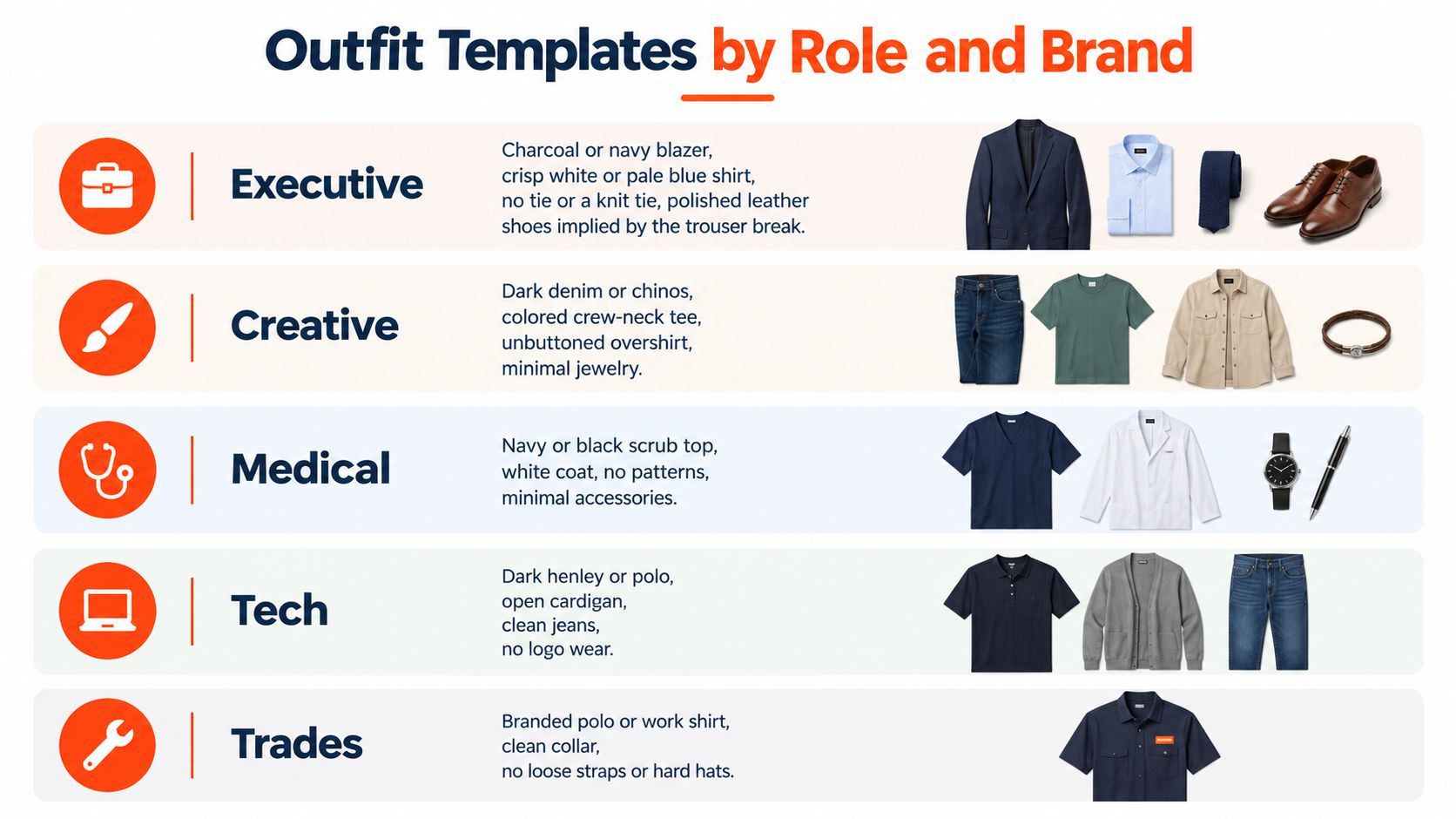
Across 10,000-plus Studio Pod shoots, a small number of wardrobe formulas kept winning on camera. Not because they are stylish in theory. Because they crop well, hold shape under lights, and match the level of authority your role needs.
Executive
Start with a navy or charcoal blazer and a white, pale blue, or soft stripe shirt. Add a tie only if your clients or firm expect one. A knit or lightly textured tie usually reads more current than a glossy formal tie.
This template works because it gives the face a clean frame and keeps the shoulders defined in a tight crop. It also holds up across a company site, investor deck, speaker page, and press use. That range matters. If you dress too casually, the image can feel underpowered in formal settings.
LinkedIn generalist
A fitted knit top, blouse, or fine-gauge sweater in a mid-to-dark tone usually does the job. No jacket needed if the shoulder line is clean and the neckline sits flat.
This is the safest all-purpose option for people who need one headshot to cover hiring, networking, and client-facing use. LinkedIn's own guidance on profile photos has long pointed to stronger engagement when members use a clear, professional image, which is why this middle-ground formula tends to outperform trendier choices on profile pages.
Creative
Use one relaxed piece with intent. An unstructured jacket over a solid tee works. A textured overshirt can work too. Keep the base simple, then add one signature detail at most, such as distinctive glasses or a minimal chain.
The trade-off is straightforward. Too polished can flatten personality. Too styled can date fast and pull attention off your face. We usually get the best result when the outfit suggests taste, not performance.
Actor
Keep the wardrobe open enough to cast broadly. A simple crew, scoop, or open collar in a flattering solid color gives casting directors more room to see you, not the styling. Hair should stay clear of the eyes. Jewelry should stay quiet.
Actors often show up dressed for a type they want to play. That narrows the image too early. Cleaner headshots usually travel further because they let expression, bone structure, and age range do the work.
Corporate team
Teams need repeatability more than individuality. Set one formula and keep it consistent across the group. Navy or charcoal layers, light shirts, simple necklines, matte fabrics, no distracting accessories.
That consistency pays off on company pages and sales materials because the team looks organized without feeling uniformed. For larger groups, the format of the shoot matters too. Some companies still book a traditional photographer at $300 to $600+ per day. Others use systems built for consistent output across many employees. AiHeadshots is one of those options. It comes from Studio Pod's photography background and produces 30+ studio-grade headshots in about 30 minutes from 10 to 20 phone selfies, with tiers at Basic $29, Professional $39, Executive $59, and Teams at $22 to $29 per seat for 10+ seats, plus a 100% money-back guarantee within 14 days. You can compare examples, consistency, and output style on our pricing, examples, reviews, teams, 10,000-headshots study, and about page.
The pre-shoot test, grooming, and final checklist
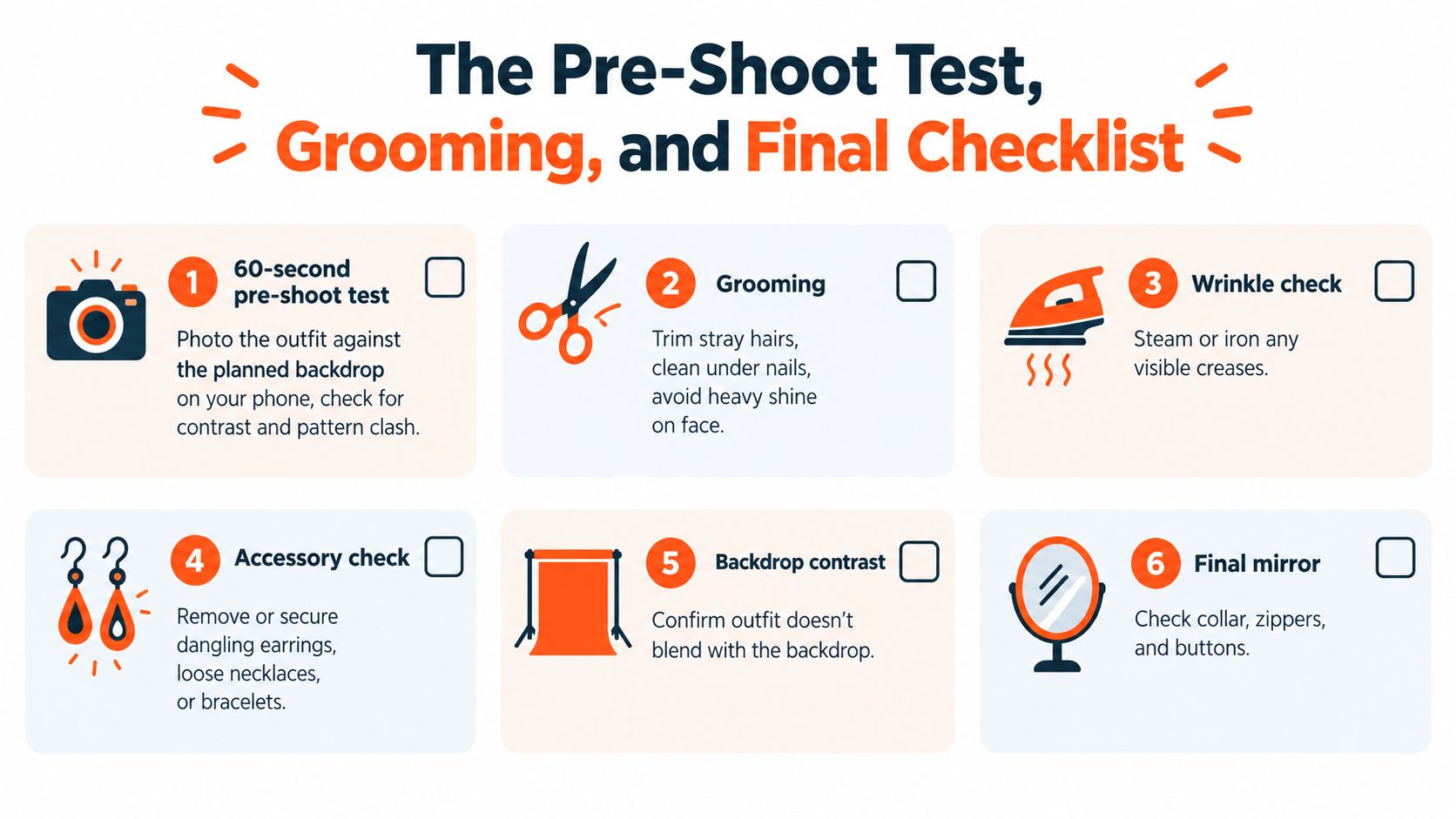
Half of wardrobe mistakes do not show up in the mirror. They show up on camera. That is why we always test the outfit before the session starts.
Run a fast camera check
Put on your first-choice outfit and shoot a quick phone photo from chest-up against a plain background. Use window light if you can. Then zoom in.
Check for shine on the fabric, collar lift, pulling across the buttons, sleeve bulk under a jacket, stray threads, and whether your top disappears into the background. We have seen plenty of outfits look fine in person and fall apart the second a lens compresses them.
Bring two or three options if you have them. Start with the one that fits your role best, then keep one safer backup and one slightly stronger alternative. On real shoots, the winner is often obvious in ten seconds on screen.
Grooming changes the finish
Wardrobe sets the frame. Grooming decides whether the frame looks finished.
Hair should look controlled, not stiff. Glasses need clean lenses and simple frames that do not dominate the face. Facial hair reads best with a clean edge. Skin shine matters more than heavy makeup, especially under lights. If you want a more specific breakdown, our guide to natural makeup for headshots explains what reads polished without looking overdone.
A pressed collar and matte skin usually improve the final image more than a trend-driven outfit.
- Photograph the outfit before the shoot. A phone camera catches glare, bunching, and contrast problems fast.
- Lay out backups. Keep one primary option and one or two alternates that fit the same role and brand tone.
- Inspect the small stuff. Lint, wrinkles, loose threads, deodorant marks, and dusty glasses all show up.
- Check grooming at the same distance as the headshot. Flyaways, beard lines, lipstick edges, and under-eye shine matter more close up.
- Confirm separation. Your face, clothing, and background should read as distinct tones in the test photo.
- Pack for the set. Bring a lint roller, blotting paper or powder, a comb, and the backup top on a hanger.
The best pre-shoot checklist is the one that catches problems early enough to fix them. That is the pattern we saw across thousands of Studio Pod sessions. The people who tested on camera first almost always looked more settled in the final frame.
Upload 10 selfies, choose the look that fits your role, and see your first results fast with AiHeadshots. We deliver 30+ studio-grade headshots in about 30 minutes, with pricing that starts at $29 and a workflow built by photographers who've worked with 10,000+ real professionals.