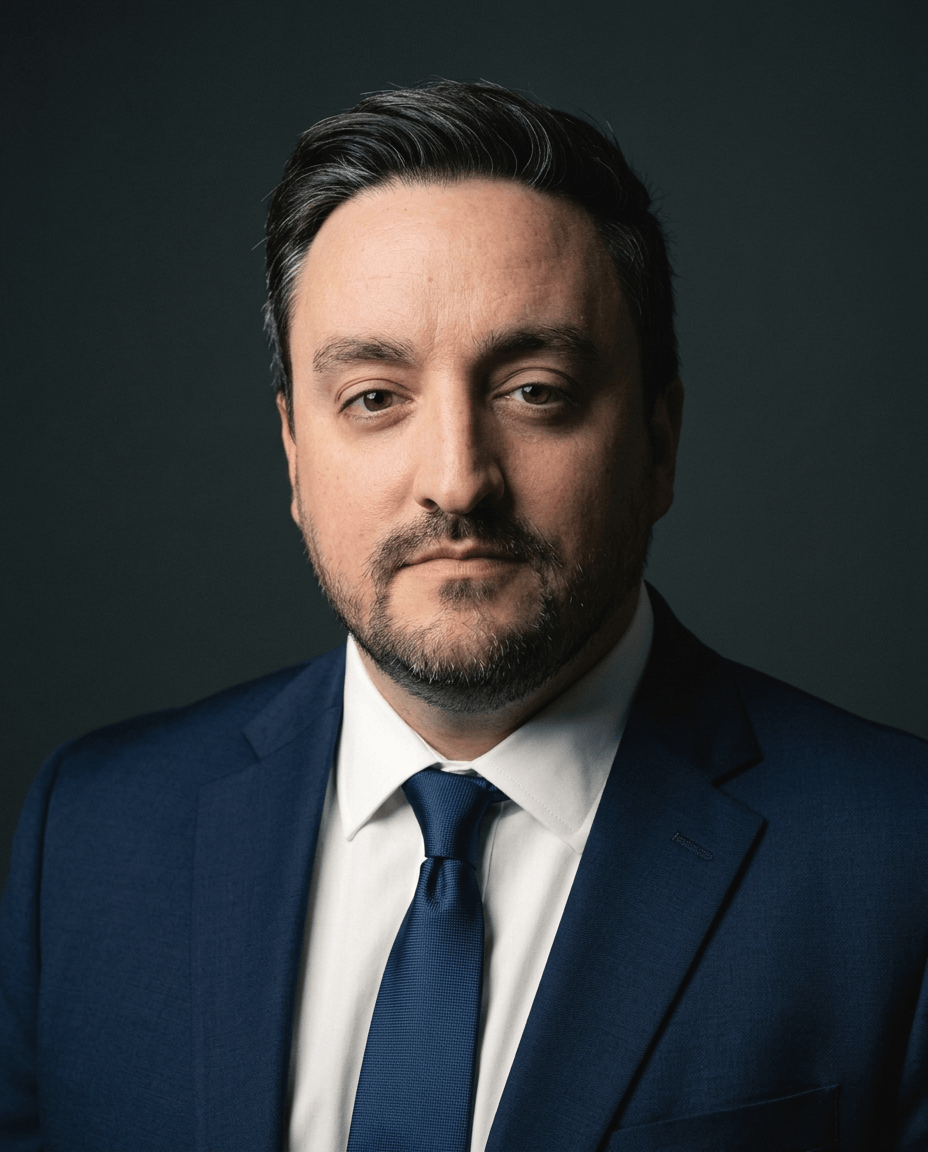
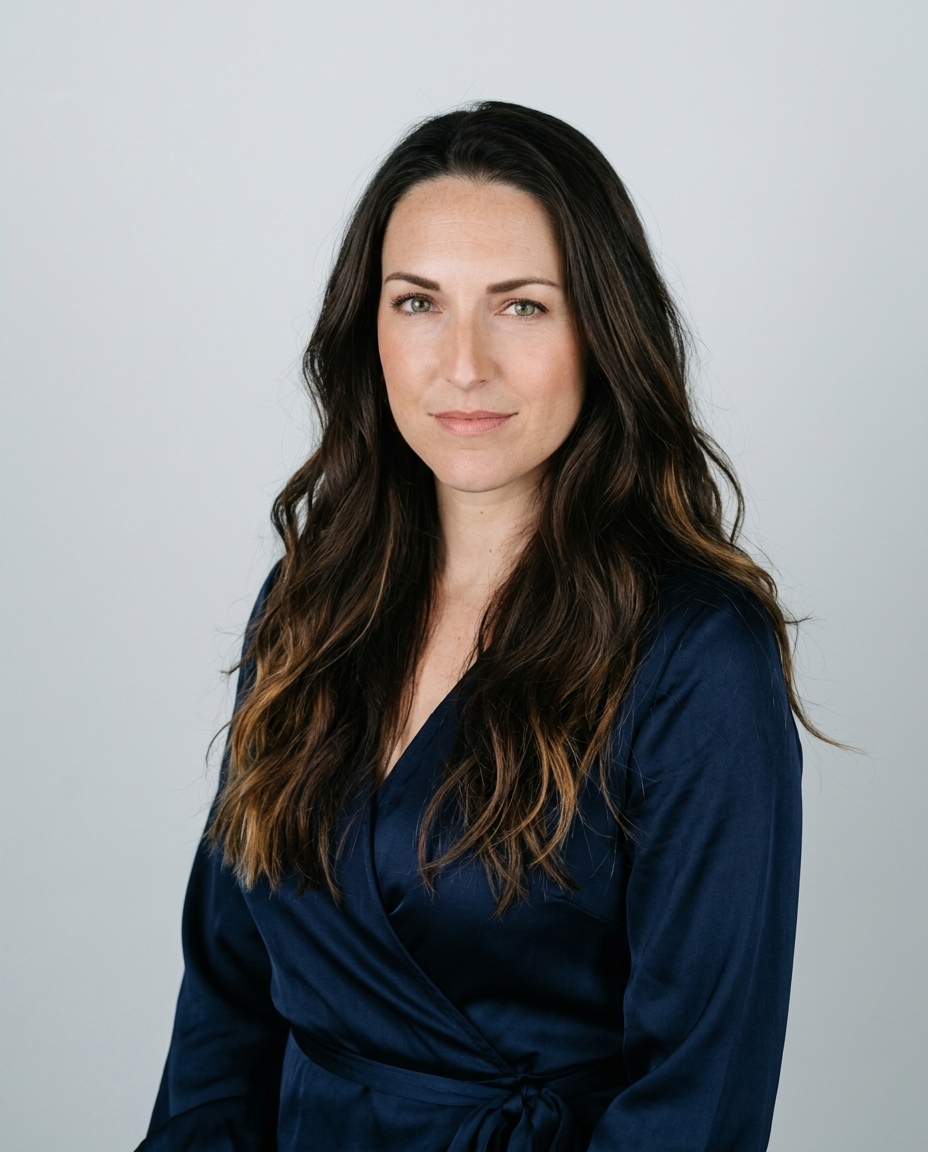
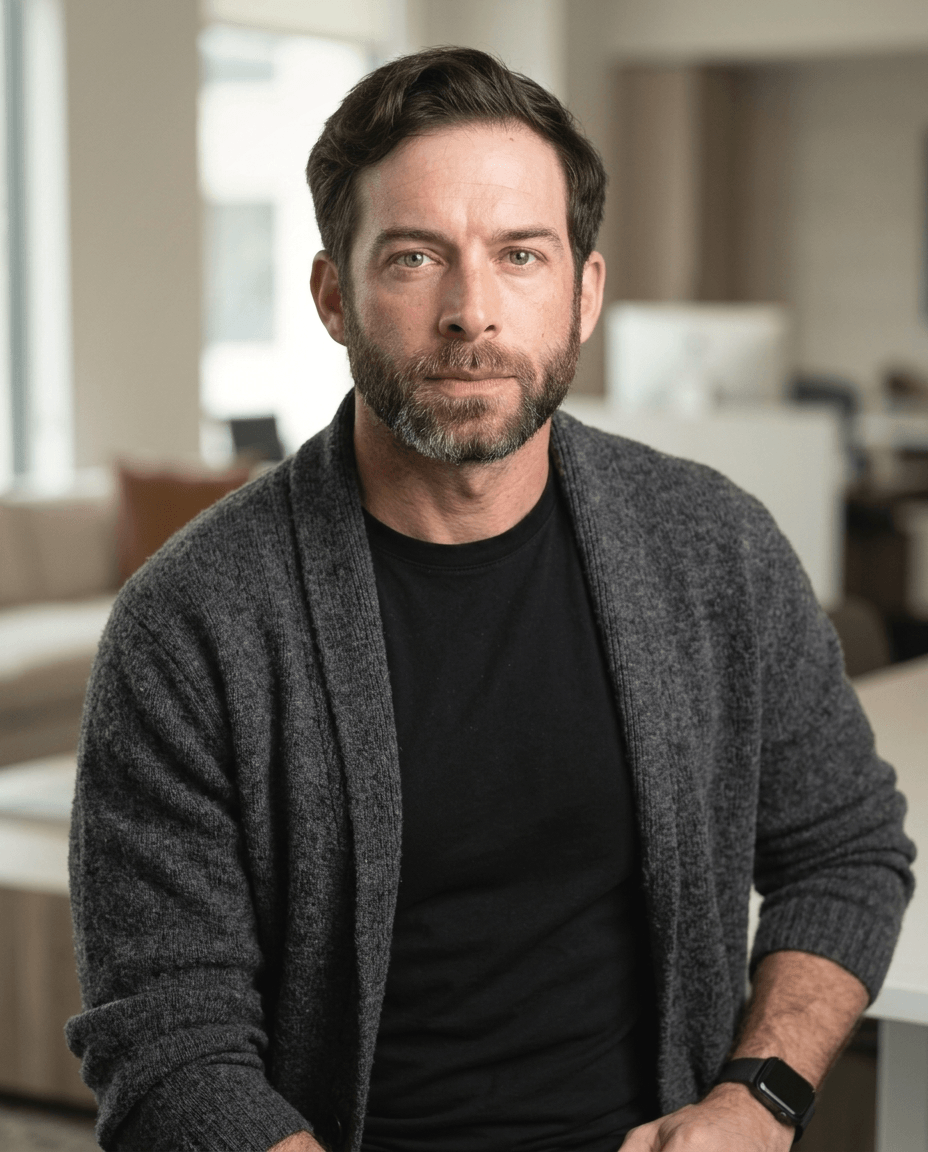
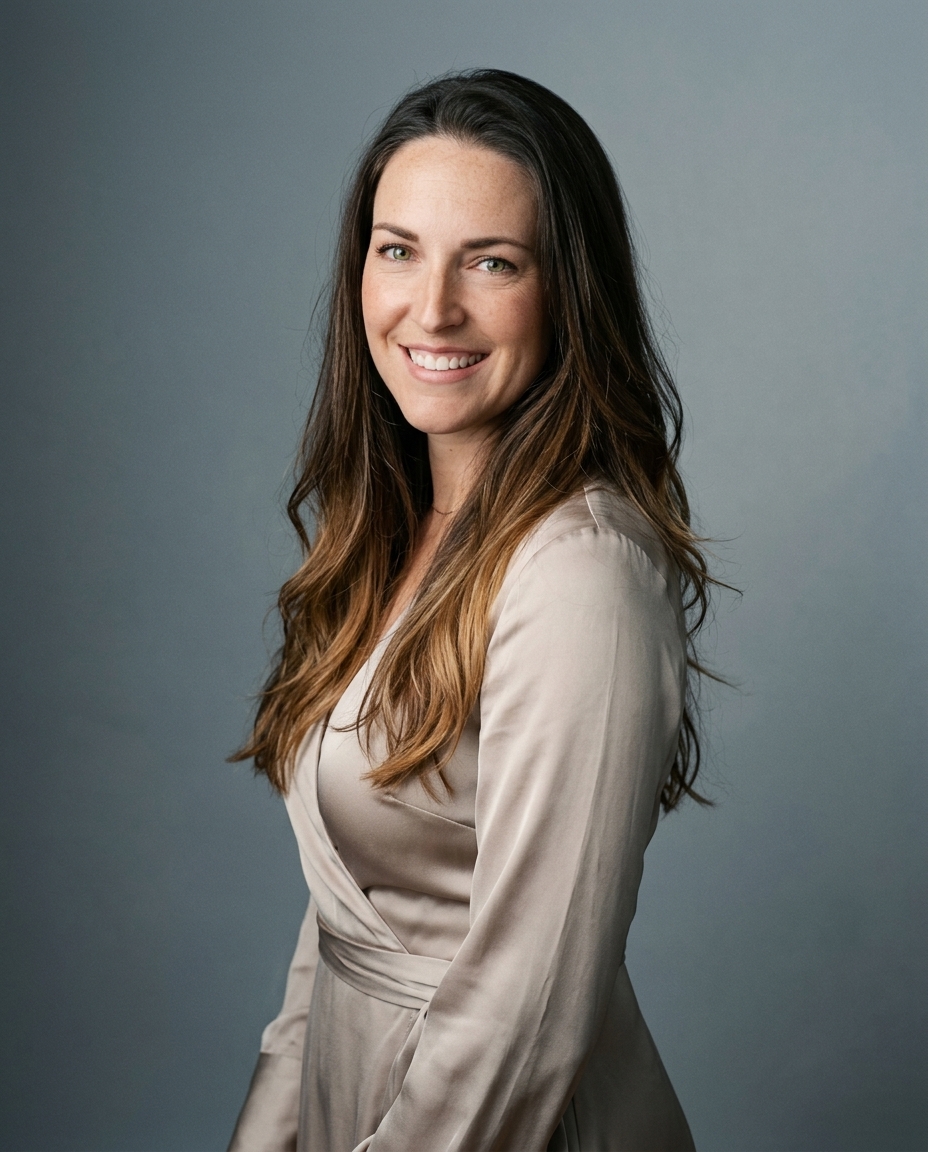

A YouTube channel photo fails most often because people treat it like a decorative avatar. It isn't. It's the smallest piece of branding on the platform, and YouTube treats channel branding as part of a channel's public identity inside YouTube Studio and Analytics, where creators track views, watch time, subscribers, estimated revenue, and average view duration as connected parts of the same presence YouTube help. If the image reads poorly at a glance, the channel reads as less deliberate.
That's the same mistake we see when people bring us selfies shot for social media and expect them to work as a profile picture. As photographers, we've shot 10,000+ real professionals at Studio Pod in Houston since 2019, and the pattern is consistent. The images that work are simple, centered, and unmistakable. The images that fail are clever, busy, or too small to survive the crop.
For people building a personal brand, the best reference point is often a face-first identity, not a graphic one. If you want a useful parallel on audience building, the logic behind AI-powered Instagram growth strategies is the same one that applies here, visibility starts with recognition.
Table of Contents
- Your channel photo is your first handshake
- The technical rules you cannot break
- How to compose for a tiny circle
- Choosing your image headshot vs logo
- How to upload and preview your photo
- The most common mistakes and how to fix them
Your channel photo is your first handshake
A channel photo is the first handshake before a viewer hears your voice, reads your title, or sees your thumbnail. On YouTube, that image sits beside your comments, your channel page, and your uploads, so it has to carry trust on its own. That's why a weak photo feels expensive in the wrong way. It costs credibility.
We see this constantly in portrait work. When someone chooses a photo that looks casual but not intentional, the channel feels casual but not intentional too. That's fine if that's the brand. It's a problem if you want to look established, clear, and worth remembering. Our studio experience, and the system we built into AiHeadshots, comes from that exact standard, a portrait has to read instantly at small size and still feel like a real person.
Practical rule: if the image doesn't read in a glance, it doesn't work as a channel identity.
That same logic shows up across visual branding, including creator and growth content outside YouTube. A useful comparison is a strong profile image on other platforms, where the face or logo has to do the work of instant recognition. That's why a thoughtful channel photo matters more than people think, and why it should be treated like a brand asset, not a decoration.
The technical rules you cannot break
YouTube's upload target for a channel photo is 800 × 800 px in a 1:1 square format, but the platform displays it as a circle. That means the corners are dead space, and anything important placed there gets lost Google help. Google also notes a minimum visible size of 98 × 98 px, which explains why tiny details fail. If the face, glasses, logo mark, or type can't survive that small, the image is wrong.

File type and compression matter
The upload file has to stay clean. Guides aimed at YouTube profile setup routinely warn against oversized or poorly optimized files, and they recommend PNG for logos and JPG for photos so the image keeps its edges and tone under compression profile guide. That advice lines up with studio practice. Logos need crisp edges. Portraits need natural skin tone and predictable compression behavior.
A second rule is color consistency. Save in sRGB if you want the image to behave normally across devices. Then test the file at small size, because the image that looks polished on a desktop monitor can fall apart in a comment thread. A clean headshot is no use if the mouth disappears and the eyes blur into the background.
The simplest way to think about the file is this. Square first. Circle second. Small last. If the image passes all three, it's ready.
How to compose for a tiny circle
A YouTube channel photo is not a LinkedIn crop, and it's definitely not a wide portrait. The circular frame changes the whole composition. Your subject has to sit dead center, with enough space around the head that the crop doesn't clip hair, hats, or logos. That's why recognition beats drama here.
For readers who want a visual approach to audience-first composition, the guide to audience-driven YouTube visuals is a good companion piece. The principle is the same, clarity wins before style does.
A small frame rewards contrast. Light face against darker background. Dark logo against light field. Simple clothing against simple backdrop. Busy environments turn to mush once the image gets reduced to comment size. Faces do too, especially if the subject stands too far from the camera. The expression has to be readable without zooming.
Here's the practical order I use when judging a channel photo:
- Center the subject: Put the face or logo in the middle so the circular crop doesn't erase the subject.
- Clear the background: Use a plain backdrop or shallow separation so the image doesn't turn noisy at small scale.
- Keep the expression direct: Eyes forward, posture settled, no awkward half-turn that breaks recognition.
- Test at small size: Check the image where it resembles the actual UI, not just at full resolution.
Keep the crop simple enough that a stranger can identify you in a glance.
The upload process matters too. If you're resizing a similar headshot for another platform, the logic of tight crops and centered framing applies there as well, which is why a resource like https://www.aiheadshots.ai/blog/linkedin-photo-resizer is useful for comparing sizing decisions across profiles. The photo shouldn't rely on detail in the corners. The circle will take that away.
Choosing your image headshot vs logo
This is a branding decision, not a style preference. YouTube treats channel branding as part of a channel's public identity, and it ties that identity to channel-level performance in YouTube Studio YouTube help. That means the choice between a face and a logo should match the role of the channel. Personal brands usually need a face. Product brands and corporate channels often need a logo.
A face builds instant human recognition. A logo builds consistency across a product ecosystem. A consultant, creator, or speaker benefits from being seen as a person. A company tutorial channel benefits from being seen as a brand system. Those are different jobs, and the image should reflect the job.
| Attribute | Professional Headshot | Brand Logo |
|---|---|---|
| Primary signal | Human trust | Brand consistency |
| Best fit | Creators, consultants, executives | Products, companies, media brands |
| Small-size behavior | Works well if centered and simple | Works well if symbol is bold and uncluttered |
| Weak point | Bad retouching looks artificial | Wordy or detailed logos collapse in small sizes |
| Practical use | Personal identity and comments | Unified brand presence across assets |
For founders deciding between a symbol and a wordmark, the essential logo style guide for founders is a useful way to think through simplicity versus readability. The same trade-off applies here. If your logo needs explanation, it's too complex for a channel photo.
For a professional headshot, AiHeadshots is one option. It's the AI-headshot product from Studio Pod, the Houston studio founded by photographers Joseph West and Chris Bailey, and it delivers 30+ studio-grade headshots in ~30 minutes from 10–20 phone selfies without a studio visit. Pricing starts at $29 for Basic, which sits far below the $300–$600+ day rate many photographers quote for traditional portrait work. If you want a DIY path instead, compare it with the practical notes in our do-it-yourself headshots guide.
How to upload and preview your photo
The upload itself is simple. In YouTube Studio, go to your channel customization area, replace the profile image, and save. The mistake is stopping there. A channel photo has to work in the places people see it, not just in the upload preview.

Google's help materials make the point clearly, but the practical test is visual. Check the image on your channel page, beside your videos, and in a comment thread where the circle is tiny. That's where crop mistakes, fuzzy edges, and overdesigned faces show up fast. The same kind of small-size checking is why profile-image guides recommend looking at the photo around 20 × 20 px to 40 × 40 px, because that's close to how it appears in comments and mobile UI profile guide.
If you're comparing tools or preview workflows, a dedicated tester like https://www.aiheadshots.ai/blog/profile-picture-tester helps you inspect how a portrait behaves before you commit to it. That matters more than people admit. Once the image is live, every bad crop becomes part of your channel identity.
Preview in the smallest context first. If it survives there, it survives everywhere else.
The most common mistakes and how to fix them
The worst channel photos usually fail for boring reasons. The background is busy. The face is too small. The image is soft. Or the crop was chosen for the full-size file instead of the circle. Those are all fixable, but only if you catch them before upload.
A second mistake is brand drift. The YouTube photo looks one way, the website bio photo looks another, and the LinkedIn image looks like a different person altogether. That weakens recognition. A viewer should be able to connect the same face or logo across platforms without guessing.
The third problem is over-designed personality. People try to be clever with angles, props, or extreme styling. That rarely helps at avatar size. A channel photo needs clarity first, character second.
If the image needs context to make sense, it's the wrong image.
Keep the fix simple. Use a centered crop. Remove background clutter. Choose a file that stays sharp when reduced. Then keep the same visual identity everywhere you publish. If you want a faster route to a clean, studio-quality portrait, AiHeadshots turns phone selfies into a usable profile image set in about 30 minutes, with a 100% money-back guarantee within 14 days and retention windows of 7 days for inputs, 30 days for outputs, and 90 days for billing data.
Upload 10 selfies, see your first headshot in 30 minutes, $29. Visit AiHeadshots for a clean YouTube channel photo that reads clearly in the circle, survives small-size viewing, and matches the way you want your channel to be seen.