
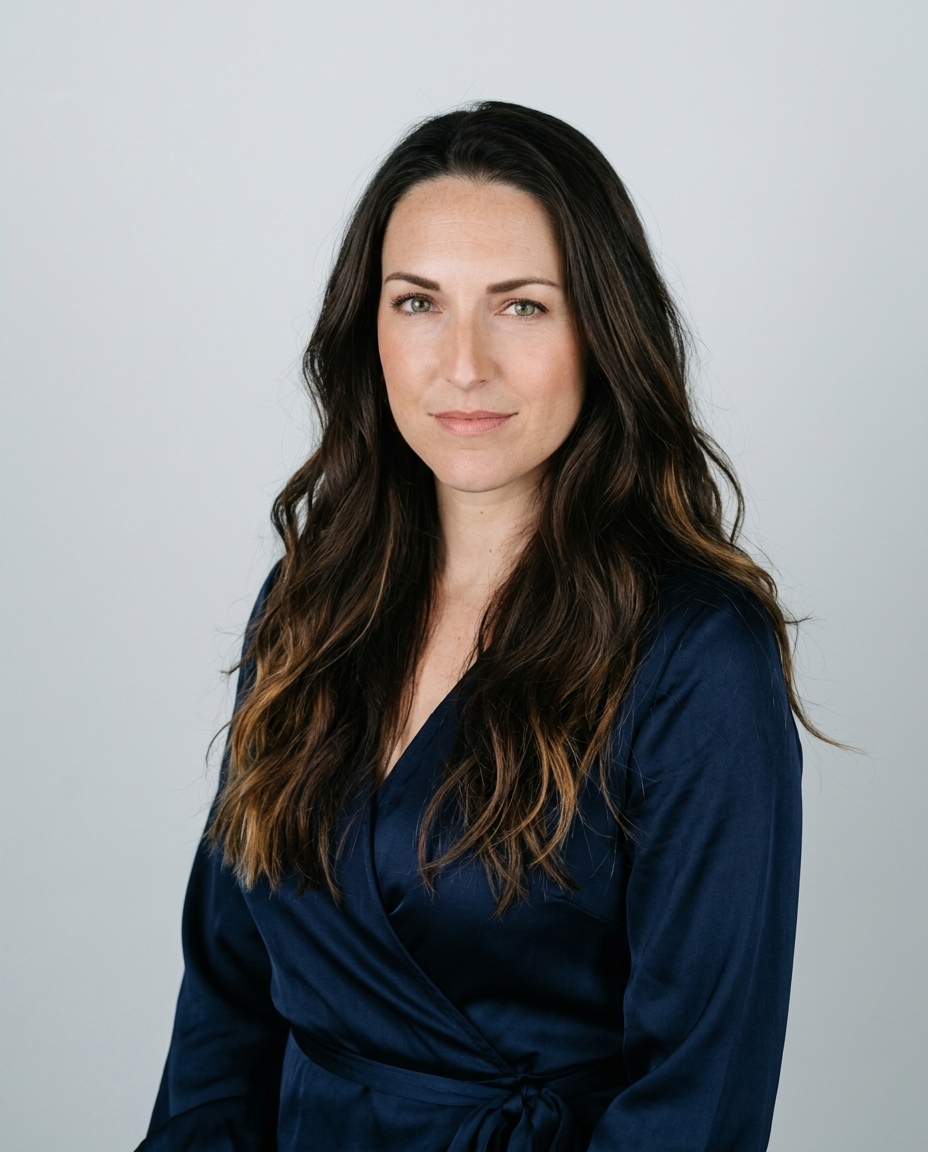

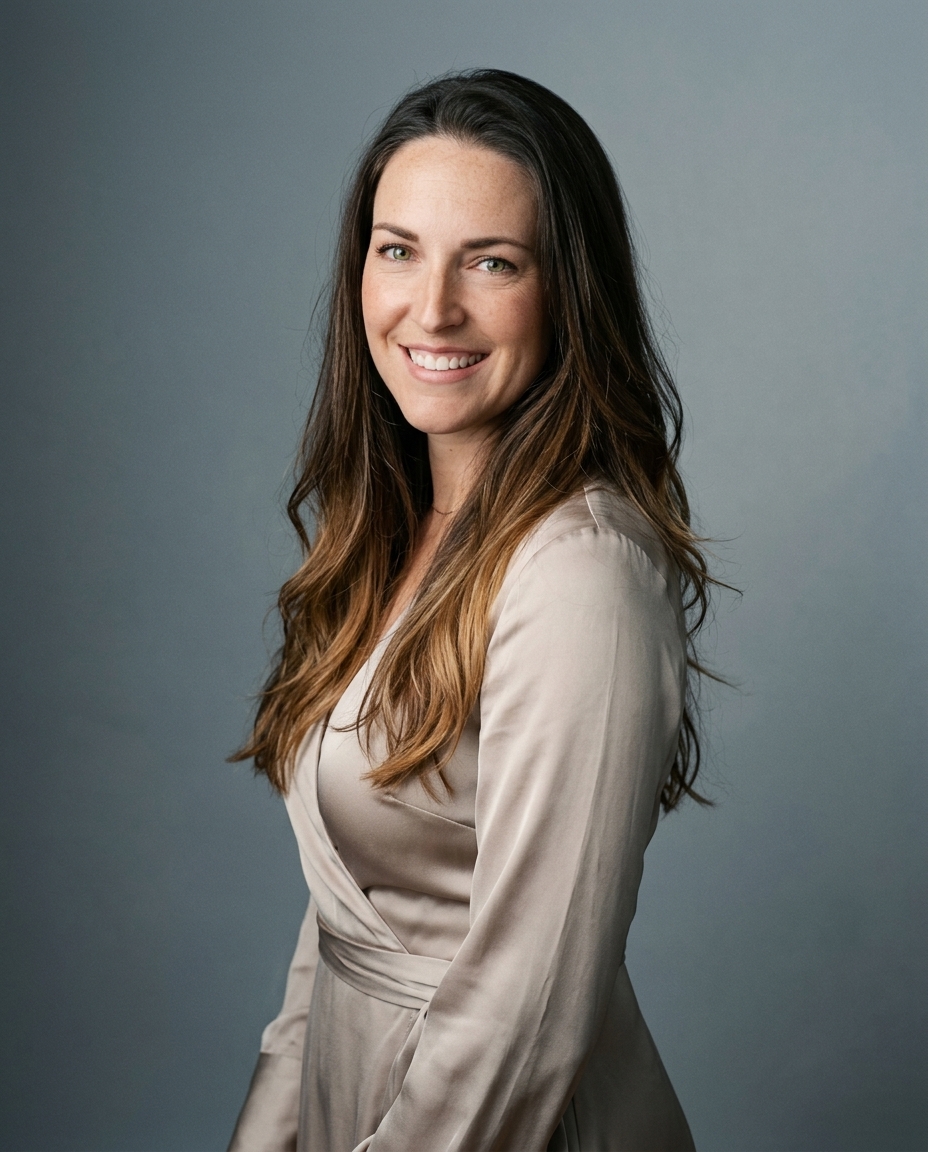

Most advice about a white background maker is built for products, not people. That's the mistake. A coffee mug can survive a hard cutout. A professional headshot can't. If the background is technically white but the face loses depth, the hair breaks apart at the edges, or the shoulders look pasted in, the image reads amateur immediately.
The right standard for a white background headshot isn't “background removed.” It's “looks like it was lit in studio.” That's a very different job.
Table of Contents
- Why headshot backgrounds are harder than product photos
- Shooting selfies that guarantee a flawless background swap
- The professional workflow for an AI white background
- Batch processing for team-wide brand consistency
- Retouching and quality checks a photographer would make
- Export formats for LinkedIn and corporate specs
Why headshot backgrounds are harder than product photos
A white background maker gets oversimplified because product photography trained people to think the job ends at clean extraction. It doesn't. In e-commerce, that logic makes sense. Guides on product photography tips for eCommerce focus on isolation, compliance, and speed because a seller needs a clean object on white, not a portrait with presence.
Headshots work on different visual rules. A face needs shape. Hair needs believable edges. A jacket needs a natural falloff into the background. If you force pure white behind a person without preserving that depth, the result looks like a cutout from a slide deck.
That gap is real. Existing white background maker content overwhelmingly focuses on e-commerce product photography, leaving a critical gap in guidance for professional headshots where pure white (#FFFFFF) backgrounds can create haloing, flatten depth, and produce an unprofessional cut-out look on LinkedIn and corporate profiles, as noted by Designerbox's discussion of plain white backgrounds.
What studio-white actually means
A professional white headshot doesn't look harsh. It looks controlled. The background is bright, but the subject still has contour in the cheeks, jawline, and clothing. The edge around the hair stays soft where it should stay soft.
A believable white background is a lighting result first and a masking result second.
That's why the strongest systems in this category aren't built by people who only know extraction. They're built around how portraits are supposed to look after extraction. The technical removal matters. The visual judgment matters more.
For headshots, the key question isn't “Can the tool make the background white?” Almost any tool can do that. The question is whether it preserves the signals that make a portrait feel credible to another human being.
Shooting selfies that guarantee a flawless background swap
The final result is set by the source images. If your selfies are flat, dim, cluttered, or shot too close to a wall, any white background maker has to guess. Guessing is where edges break.

Start with separation, not software
The best input setup is simple. Face a window or another broad soft light source. Keep the phone at eye level. Stand away from the wall.
That last point matters more than is commonly understood. For professional headshots, experts say success rates can exceed 95% when the subject stays 8 to 12 inches from the backdrop and controls light spill before digital masking, according to Upuply's white background guidance. That distance reduces color spill and gives the edge around your hair and shoulders room to read cleanly.
Practical rule: Don't stand flush against a wall. Give your profile a little air so the background and subject don't blend together.
A plain wall is fine. An off-white wall is fine. What you want is calm, not perfection. Busy décor, strong shadows, and colored light bouncing off painted surfaces create cleanup problems that show up later as halos or muddy edges.
Use phone photos like a photographer would
A studio visit is often unnecessary. What's needed is discipline. Upload 10 to 20 phone selfies, but make them deliberate. Use slight changes in angle, expression, and wardrobe. Keep the lighting consistent from frame to frame.
Here's the short checklist we give people before they upload to the selfie upload guide:
- Use soft front light. Face the light source so your eyes are clear and your skin tone stays even.
- Keep your camera at eye level. Low angles distort the jaw. High angles shrink the shoulders.
- Step off the wall. That separation makes masking cleaner, especially around dark hair.
- Wear solid, structured clothing. Sharp collars and clean necklines survive background swaps better than messy layers.
- Avoid heavy filters and portrait blur. A white background maker needs real detail, not synthetic blur.
The point isn't to create finished portraits on your phone. The point is to give the system enough honest detail to build from. Sharp input makes believable output.
The professional workflow for an AI white background
The useful comparison here isn't old software versus new software. It's photography judgment versus generic automation. A white background headshot only looks right when the system understands portrait lighting, facial structure, clothing edges, and how professionals expect a studio image to read.

What a photographer-built workflow does differently
Studio Pod, the Houston automated headshot studio founded in 2019 by photographers Joseph West and Chris Bailey, has physically photographed over 10,000 real professionals, which is the photographic foundation behind AiHeadshots rather than a software team retrofitting open models, as described on the AiHeadshots press page.
That matters because the workflow starts with portrait standards, not just background removal. A photographer-built system knows a white background has to stay clean without erasing the transition at the hairline or flattening the shape of the face. It also knows that a corporate portrait should look polished, not synthetic.
A lot of people compare options like HeadshotPro, BetterPic, Aragon, Secta, and ProPhotos by style galleries alone. That's useful, but it misses the operational side. Delivery time, price, and portrait heritage change the buying decision fast. A traditional photographer's day rate often lands around $300 to $600+. The Basic plan here is $29, with 30+ studio-grade headshots delivered in about 30 minutes from 10 to 20 phone selfies. That changes what's practical for an individual professional.
What the process actually looks like
The strongest workflow is straightforward. You choose clean source selfies. You pick a white background style. Then you review a broad enough set of outputs that you can select the one where expression, posture, wardrobe rendering, and edge quality all align.
If you're gathering source files from different people or devices first, even a simple utility such as Upload photos on Saucial can help centralize collection before you move into a headshot workflow. Once the files are ready, a dedicated tool like the background remover gives you a clean starting point for white-background output.
A quick walkthrough helps:
The value isn't only lower cost. It's the ability to repeat the process without booking, rescheduling, traveling, or rebuilding a lighting setup. For executives, recruiters, and small teams, that's the difference between “we should update our headshots” and “we already did.”
Batch processing for team-wide brand consistency
A single white background headshot solves a profile problem. A full set of matching employee headshots solves a brand problem. Marketing teams, HR leads, and operations managers care less about one standout image than about a page of portraits that feel like they belong to the same company.

Consistency is the real asset
The hard part with team photography isn't image capture. It's coordination. Different offices, different phones, different availability, different wardrobe choices. A white background maker becomes useful at team scale when it can absorb those differences and still produce a unified look.
That's where a batch workflow helps. Team plans start at 10+ seats with volume pricing at $22 to $29 per seat, which gives companies a way to standardize portraits without booking individual studio sessions. The practical path is simple. Collect source images, process them in one system, review for brand fit, then hand off the approved files to web, HR, and internal comms through the team workflow documentation.
Standardized headshots do more than clean up an About page. They make the company look managed.
White backgrounds work especially well for firms that want neutral presentation across LinkedIn, bios, proposal decks, and speaker pages. Law firms, clinics, consultancies, and real estate teams benefit from that consistency because the photos need to feel formal without becoming stiff.
Retouching and quality checks a photographer would make
A polished result isn't about endless retouching. It's about knowing what to reject. The fastest way to judge a white background headshot is to inspect the problem areas first, not the smile.

Check the edges first
Hair tells the truth. If the hairline looks crunchy, foggy, or strangely shaved away, the image is out. This is the weak point for a lot of tools. A frequently asked question in this category is whether white background makers preserve fine hair detail, and Product Photo Help notes that 30 to 40% of AI background removal tools struggle with semi-transparent hair strands, leading to halos or lost detail in portraits.
That failure is easy to spot once you know what to look for.
| Area | What good looks like | What bad looks like |
|---|---|---|
| Hairline | Soft but defined strands | White glow or missing strands |
| Shoulders | Clean outline with natural falloff | Jagged cutout edge |
| Ears and jaw | Clear separation from background | Smeared transition |
| Clothing edge | Solid shape, no tearing | Blotchy patches or clipped fabric |
If the edge looks “too perfect,” it often isn't perfect. It's over-cut.
Then check the face and clothing
After the edges, inspect skin texture and light direction. The face should still have pores and tonal variation. If the skin looks waxy, the retouching went too far. If one side of the face has light that doesn't match the rest of the portrait, the image won't feel grounded even if the background is technically correct.
Also inspect collars, lapels, and glasses. These details reveal sloppy processing faster than people expect. A white background headshot works because it feels quiet and effortless. The minute you notice digital cleanup, the illusion is gone.
That's why a larger output set matters. With 30+ options to review, you're not asking one image to be perfect. You're selecting the one where the details hold together.
Export formats for LinkedIn and corporate specs
A white background maker can produce a strong image and still lose on export. The right file format depends on where the portrait will live, how large it will display, and how much compression the platform applies after upload.
Choose the format for the destination
For most professional uses, a high-quality JPG is the right export. It keeps file size manageable and handles photographic detail better than people assume. PNG makes sense if a design team needs extra editing headroom, but for profile photos on LinkedIn, company staff pages, and email signatures, JPG is usually the cleaner practical choice.
Use a version that stays sharp when cropped small and still holds up in a bio page or speaker listing. If the image is going on LinkedIn, corporate websites, and team directories, save a master high-resolution file and then create platform-specific copies from that master. That avoids repeated compression.
For profile polish beyond the photo itself, this guide on how to maximize your LinkedIn profile is a useful companion to the image side of the work.
A few practical checks before export:
- LinkedIn profile photo: Use a clean crop around head and shoulders, with enough margin that the circular crop doesn't clip hair or jacket edges.
- Corporate bio page: Keep the white background neutral and the crop consistent across the team so the page doesn't look uneven.
- Email signature: Export a smaller JPG version so it loads fast and still reads clearly in inbox previews.
If you want the simplest path, review pricing, compare examples, scan reviews, read about Studio Pod, or go straight to the 10,000 headshots study for the photography background behind the system.
Upload 10 selfies, see your first headshot in 30 minutes, from $29 with AiHeadshots.