Most "best AI headshot generator" roundups are affiliate pages that call every tool excellent. This one names what each tool gets wrong, quotes the binding terms rather than the marketing copy, and says plainly where our own product loses.
One disclosure first: we make AiHeadshots. We rank it first below on one specific axis, and we name the four axes where competitors beat us.
The quick answer
- AiHeadshots — best for likeness that survives scrutiny. Built by photographers who run a physical studio; 30+ shots in about 30 minutes from $29. Ties for the smallest top-tier pack here.
- HeadshotPro — best for teams and rolling refreshes. The only vendor here with real admin tooling (SCIM, sub-teams, non-expiring credits). From $29 solo, $19.50 per person at volume.
- Aragon AI — best for style range with audited compliance. 100 headshots and the full style library at $75, plus the only SOC 2 attestation here that names its auditor. Entry tier buys one outfit.
- BetterPic — best for trying before you pay. Up to 10 free 4K headshots, no card required. Paid tiers $35 to $79.
- Dreamwave — best for enterprise rollouts. HRIS integrations and published Walmart and State of Hawaii case studies. Terms state all sales are final.
- Secta Labs — best for maximum photos per dollar. 200+ photos across 90+ styles for one $49 payment. Weakest third-party review record here.
How we picked
Criteria. Verified current price, photos delivered, turnaround, minimum photos required, refund policy as written in the binding terms, published security posture, and third-party review data with sample sizes stated.
Sources. Every price was read from the vendor's own live pricing page on 26 August 2026, rendered in a browser where the page was JavaScript-gated. Refund, ownership and retention claims were checked against each vendor's terms of service and help centre rather than their marketing pages — which, as you will see, is where several of the findings below came from. Review data is from Trustpilot, read directly.
We did not cite competitor-authored comparison blogs as evidence for any vendor. Several tools in this category publish "reviews" of their rivals that rank well in search; those are marketing.
Author. Joseph West, photographer and co-founder of Studio Pod, an automated headshot studio in Houston that has photographed more than 10,000 professionals since 2019. About the author.
Disclosure. AiHeadshots is our product. We rank it first on likeness and name where competitors beat us: free trials, photo volume, published security certification, and upload friction.
Three caveats on the numbers. Several vendors were running promotions on the day we checked, so a struck-through "regular" price may be what you actually see. Trustpilot sample sizes here span three orders of magnitude, from 11 reviews to 6,687 — we state the count every time, because a 2.9 from 11 reviews and a 4.8 from 6,687 are not the same kind of evidence. And G2 is not a usable axis for this category: the two largest vendors have exactly one G2 review each.
The six tools compared
| Tool | Best for | Strength | Limit | Photos needed | Pricing (26 Aug 2026) |
|---|---|---|---|---|---|
| AiHeadshots | Likeness | Trained on real studio sessions, not scraped photos | 70-photo top tier ties lowest here | 10–20 | $29 / $39 / $59 one-time |
| HeadshotPro | Teams | Real admin tooling; 250,000+ customers | One prior refund bars you from all future refunds | 1–3 | $29 / $39 / $59; teams from $19.50 |
| Aragon AI | Style range | SOC 2 Type II, auditor named | Entry tier = 1 outfit, 1 background, 896×1088px | 6 | $35 / $45 / $75 (promo; list $44/$56/$94) |
| BetterPic | Trying free | Only genuine free tier: 10 free 4K headshots | Free tier waits 1–3 months; guarantee is not full money-back | 8 | Free; $35 / $39 / $79 |
| Dreamwave | Enterprise | HRIS integrations; named case studies | Terms: all purchases final sale, no refund ever | 1 | $35 / $45 / $99; teams quoted |
| Secta Labs | Volume | 200+ photos, 90+ styles, one payment | Advertised guarantee absent from its own terms | 20+ | $49 one-time |
AiHeadshots: best for likeness that survives scrutiny
Best for: Anyone whose headshot will be seen by people who already know what they look like.
Features: 30 headshots for $29, 50 for $39, 70 for $59 — one-time, no subscription. About 30 minutes from upload to download. Teams from $29 per user with volume discounts to 50%. Built by the team behind Studio Pod, a physical automated headshot studio in Houston with more than 10,000 sessions since 2019; the AI was designed around that studio work rather than scraped internet photographs.
Limits:
- Our top tier delivers 70 photos — tied with HeadshotPro for the smallest here, against 100 at Aragon and Dreamwave, 120 at BetterPic Expert, and 200+ at Secta. If raw volume is what you are buying, we are the wrong pick.
- No free tier. BetterPic gives up to 10 free 4K headshots; we ask for $29 before you see anything.
- No published SOC 2 certification. Aragon publishes one and names its auditor. If your employer's security review requires an attestation, that is a real gap on our side.
- We ask for 10 to 20 varied selfies. HeadshotPro accepts 1 to 3 and Dreamwave takes a single photo. Our upload is more work, and that is a genuine cost to you.
Pricing: $29 / $39 / $59 one-time. 14-day money-back guarantee. Uploaded selfies deleted after 7 days, generated headshots after 30. We do not train our base model on customer photos.
Choose it if the failure you most want to avoid is a headshot that does not quite look like you.
HeadshotPro: best for teams and rolling refreshes
Best for: Companies onboarding people continuously rather than running one big photo day.
Features: $29 Basic (30 headshots, ~2h), $39 Professional (50 headshots, ~30 min), $59 Executive (70 headshots, ~15 min, 4K). Teams list at $39 per person with automatic volume discounts to 50%, floor around $19.50, on credits that never expire. The admin tooling is genuinely built out: CSV export, sub-teams, SCIM provisioning, audit logs, renewal scheduling. Needs only 1–3 photos, or a guided phone capture via QR code. Operated by Headshot Pro Photography Pte. Ltd., Singapore.
Limits:
- One refund bars you from every future refund. Their terms: customers who have previously received a refund "acknowledge and agree that any subsequent purchases of the Service are final and non-refundable … regardless of the device, user account, or payment method used for the later transaction."
- Team refunds are at-cost, not full, once 10 or more models have been created — processing costs are deducted from what you get back.
- You must attempt a retry before you may request a refund, per their refund documentation, and refunds require that you have downloaded nothing.
- 4K is Executive-only, and is not available on Team or Enterprise at all. Otherwise upscaling costs a photo credit.
- The $29 tier has no style choice and no free redo — backdrops and outfits are preselected, and redos are Pro and Executive only, within 14 days. Basic ships 6 photo credits against 26 and 46; every edit spends one.
- SSO is a paid add-on even on Teams, and audit logs and SCIM are Enterprise add-ons.
- Recurring Trustpilot theme across 8+ reviewers: outputs that alter facial structure, skin tone or apparent weight, or add moles and tattoos that were not in the source photos.
Pricing: $29 / $39 / $59; teams from $19.50 per person. Trustpilot 4.7 from 3,538 reviews. SOC 2 Type II report available via their trust centre, though no audit firm is named. G2 shows 0.0 from a single review, which is not a usable signal either way.
Choose it if you are managing headshots for a group and need provisioning and audit trails rather than a consumer checkout.
Aragon AI: best for style range with audited compliance
Best for: Individuals at security-conscious employers who also want the deepest style library.
Features: $35 Basic (40 headshots, 45 min), $45 Standard (60 headshots, 30 min), $75 Executive (100 headshots, 15 min, every attire and background). Needs 6 photos. New subscription tiers run $15 to $249 per month for broader AI image and video tooling. SOC 2 Type II audited by Prescient Security via Vanta — the only vendor here that names its auditor. AES-256 encryption. Named customers include Nationwide, Lenovo and Texas A&M.
Limits:
- The entry tier is style-starved. $35 buys exactly one attire and one background; the "30+ outfits, 40+ backgrounds" marketing applies at $75.
- Basic and Standard output 896 × 1088 pixels — under one megapixel, not print-grade. 1792 × 2176 is Executive-only.
- Downloading voids your refund, and team accounts get "only partial refunds for unused credits." Refunds can also be denied if they judge that you did not follow the upload instructions.
- There is no live support on Fridays or Saturdays — agents are available "5 days Sunday through Thursday."
- Subscription credits expire monthly and do not roll over, and your trained characters expire 30 days after cancellation.
- Team pricing is not published anywhere on the site.
- Recurring Trustpilot theme among critical reviewers: a "plastic" AI look, and paying credits to fix photos you already paid for.
- Their own figures disagree across pages — 2,700,000 versus 2.5M professionals, and 46,313,000+ versus "over 40M" headshots.
- Prices shown were promotional. We saw $35 / $45 / $75 under a "20% off — limited time only" banner; list is $44 / $56 / $94.
Pricing: $35 / $45 / $75 promo, list $44 / $56 / $94. Trustpilot 4.8 from 6,687 reviews — the largest sample here by a wide margin.
Choose it if you want maximum styling range and your employer's security review needs a named, audited attestation.
BetterPic: best for trying before you pay
Best for: Anyone who wants to see this category's output quality before spending anything — provided they are not in a hurry.
Features: A genuine free tier: 10 free 4K headshots, no card required. Paid tiers are $35 Basic (20 headshots, 1 style), $39 Pro (60 headshots, 3 styles), $79 Expert (120 headshots, 6 styles, 1 free redo, unlimited human edits on one photo). Teams from $49 per seat. 4K on every tier, including free. Needs 8 photos. Operated by BetterGroup, with a completed SOC 2 Type II and GDPR report monitored via Vanta.
Limits:
- The free tier is a queue with a stated 1 to 3 month wait, and they "request permission to use these headshots for our marketing purposes." It is genuinely free; it is not genuinely fast, and it is not entirely private.
- The advertised "100% money-back guarantee" is not one. The actual policy pays in full only within 7 days and before any model is trained; after training it deducts a 10% non-refundable fee; and "if you have downloaded any images generated by our AI model, you will not be eligible for a refund." Credits are non-refundable "under any circumstances."
- The $35 Basic tier is a decoy. 20 shots in a single style, when $4 more triples both volume and styles.
- Edits are metered and expensive outside the top tier. AI edits are capped at 2 / 4 / 8 by tier; beyond that, manual edits cost $8 each and a redo costs $10.
- Recurring theme among critical reviewers: features "drastically altered", one describing the result as "a cartoon version of me"; distorted proportions; and upload failures after being charged. That said, this is 3% of their reviews.
Pricing: Free tier, then $35 / $39 / $79. Trustpilot 4.7 from 1,027 reviews — and notably, they have replied to 93% of negative reviews, the best support-responsiveness signal in this comparison.
Choose it if you want to test output quality at zero cost and can wait a month or more — or if you want 4K at the lowest paid price.
Dreamwave: best for enterprise rollouts
Best for: HR-led, whole-company deployments where procurement and integrations matter more than unit price.
Features: Individual tiers are now public — $35 Starter (40 photos), $45 Standard (60 photos, 1 redo), $99 Premium (100 photos, 2 redos, unlimited human touchups). Company plans quoted around $49–$59 per person through sales. HRIS integrations with Workday, ADP and Rippling. Published case studies with Walmart, the State of Hawaii and six others. Needs a single selfie — the lowest upload burden here.
Limits:
- The terms of service are absolute no-refund: "All purchases are final sale, and you will not be able to receive a refund of your payment or subscription fee at any time." Their customer-facing FAQ is noticeably softer than the binding document.
- Redos are time-boxed and explicitly not guaranteed — within 30 days and "subject to the terms of your package."
- The $35 Starter includes no redos and no human touchups. With a one-photo input, a likeness miss means buying again.
- Subscription cancellation is email-only, which matches several reports of surprise renewal charges.
- Read the SOC 2 claim carefully. Their trust page says "Built on SOC 2 Type II Certified Infrastructure (AWS + GCP)" — that certifies Amazon and Google, not Dreamwave. No auditor, report or date is named.
- Their own pages disagree on photo counts — 40/60/100 on the pricing page versus "150 photos per person" on the team pages.
- The free generator is a daily capacity lottery, not a free tier: "a few spots each day, but they fill fast."
Pricing: $35 / $45 / $99; company plans quoted. Trustpilot shows 2.9 — but from only 11 reviews, and one of those appears to be about an unrelated product entirely. That is too thin to treat as a pattern; weigh the named case studies more heavily than the score.
Choose it if you are rolling out headshots across a large organisation and need HRIS integration and a security review your IT team will sign off.
Secta Labs: best for maximum photos per dollar
Best for: People who want the largest possible pile of variations from a single payment.
Features: $49 one-time, anchored against a struck-through $99, for 200+ HD photos across 90+ styles, delivered in under two hours. A current editing suite covering remix, recolour, pose change and upscale. The best raw photos-per-dollar here.
Limits:
- The advertised guarantee has no policy behind it. Secta markets a "30-day money back guarantee, no questions asked," but there is no refund clause in its terms of use and no refund article among its 34 help-centre articles. Subscriptions are explicitly excluded: "you can cancel such but there is no refund."
- Its own public numbers contradict each other. The same page shows "196,212 customers" at the top and "Trusted by 40,000+ customers" in the footer; elsewhere "200+ HD Photos" versus "100+", and "90+ styles" versus "130+".
- Unresponsive support is the most repeated complaint, across at least five distinct reviewers over ten months. Trustpilot also records that the company has never replied to a negative review.
- Specific, repeated likeness defects — reviewers independently describe heads rendered 1.5–2× too large, two people's faces blended together, and persistent trouble with eyes and teeth.
- Requires at least 20 uploaded images, the highest upload burden here.
- No security certification of any kind is claimed anywhere on the site, and there is no trust or security page.
Pricing: $49 one-time. Trustpilot 2.3 from 24 reviews — a small sample, but 63% are one-star, and only one review has been left in the trailing twelve months.
On company health: Secta is operating, not shut down — its blog posted today and its help centre documents current features. But it is an unfunded team of roughly six whose social and review channels went quiet about a year ago. We looked for evidence of a price collapse from an older $79–$189 ladder and could not verify it, so we are not repeating that claim.
Choose it if volume and style count are what you are buying, and you have read the refund caveat above.
Which one should you choose?
- Choose AiHeadshots if the headshot needs to look unmistakably like you — a company bio, a speaker page, anywhere people who know you will see it.
- Choose HeadshotPro if you are provisioning for a team and need SCIM, sub-teams and audit logs rather than a consumer checkout.
- Choose Aragon AI if you want the widest styling range, or your security review requires an attestation with a named auditor.
- Choose BetterPic if you are not ready to spend anything yet. It is the only genuine free tier here.
- Choose Dreamwave if you are deploying across a large organisation and need HRIS integration — and you are comfortable with a strict no-refund term.
- Choose Secta Labs if you want the most photos per dollar and you have read the refund caveat.
- Avoid every tool here if you need a guaranteed specific outcome on a deadline. This whole category, ours included, is probabilistic. If the shot absolutely must exist by Friday, book a photographer.
- Avoid the cheapest tier of any vendor if a bad batch would be a real problem. Entry tiers are consistently where redos, touchups, style choice and print resolution get stripped out.
Three tools we looked at and left out
We shortlisted nine and published six. Naming the three we cut, and why, is more useful than quietly dropping them.
PicStudio ($29.99 / $39.99 / $59.99, 8 photos minimum) publishes a clear refund policy, and it is no refunds — "we're unable to provide refunds due to the high costs associated with generating AI portraits." The only remedy offered is paying $14.99 to retrain. More significantly, its terms of service state that "PicStudio.AI owns all the generated content," while its FAQ says "they're all yours … you retain complete ownership." Those cannot both be true, and the terms are the binding document. It also has only 2 Trustpilot reviews against 86,000+ claimed customers, which is too little to judge either way.
ProPhotos.ai ($39 / $49 / $59) auto-deletes your trained model after 30 days, states no refund policy anywhere, and its terms — last updated in December 2022 — contain no ownership or commercial-use clause for the images you buy. Its homepage counters ("12,623,897 Headshots Generated", "50,382 Customers") are byte-identical in archived snapshots from February 2024, November 2025 and today, so they are static strings rather than live metrics. Trustpilot shows 1.8 from 15 reviews, all one-star, with no vendor replies and nothing newer than February 2025.
Try It On AI (from $35; teams from $26 per person) was in our draft as the low-friction pick, and we removed it late. Its terms of service state: "We do not offer refunds once you made a payment. By making a payment, you therefore agree not to request a refund." Those terms are governed by Hong Kong law and Hong Kong courts, despite a Miami dateline on their press material — a meaningful combination for a US or EU buyer with no refund route. Its own comparison page simultaneously lists "Refunds" as a feature it offers. The site claims "3,000,000+ professionals" on the homepage and "800,000+ professionals served" in the FAQ; markets "portraits from a single selfie" in the hero while step one of How It Works says "upload 10+ casual photos"; and states its turnaround four irreconcilable ways (2 minutes, 30 minutes, under 2 hours, 1–2 hours). Its pricing page also embeds a self-declared rating of 4.8 from 3,000 reviews in its structured data — a figure that matches no visible review source and exceeds its Trustpilot count sevenfold. Trustpilot shows 4.7 from 411 reviews, but with 12% one-star against BetterPic's 3%. We could not substantiate its "Voted Top AI Tool by WSJ" claim: no such article surfaced, and their own press page offers logos with no article links.
None of these three is a scam and all are taking orders. We left them out because we would not send a reader to any of them without more caveats than a recommendation can carry.
What actually determines whether it looks like you
The tool matters less than most roundups imply. Two things predict output quality more reliably than brand:
Upload count and variety. The spread here is enormous — Dreamwave takes 1 selfie, HeadshotPro 1 to 3, Aragon 6, BetterPic and PicStudio 8, AiHeadshots 10 to 20, Secta at least 20. More varied source photos, across different angles, expressions and lighting, consistently produce better likeness. A single selfie gives the model almost nothing to triangulate from. Low upload requirements are a real convenience, but they are a trade, not a free win.
Whether the model over-retouches by default. The most common documented complaints across every vendor's reviews are the same three: skin smoothed into plastic, facial proportions altered, and features or accessories appearing that were never in the source photographs. That is a property of what a model learned from, and it is the specific reason we built ours around real studio sessions.
FAQ
What is the best AI headshot generator in 2026?
It depends what you are optimising for. For likeness that holds up to scrutiny, we would point you at AiHeadshots (we make it). For team rollouts, HeadshotPro has the most complete admin tooling. For style variety with an audited security attestation, Aragon AI. For trying before paying, BetterPic is the only tool here with a genuine free tier.
How much do AI headshots cost?
Entry pricing across the six tools we checked runs $29 to $49 for a one-time pack, with mid tiers at $39 to $59 and premium tiers up to $99. BetterPic offers up to 10 free 4K headshots. Team pricing starts around $19.50 per person at HeadshotPro. All figures were read from live vendor pages on 26 August 2026.
How many selfies do AI headshot tools need?
It varies enormously. HeadshotPro asks for 1 to 3 photos and Dreamwave for a single selfie; Aragon AI wants 6, BetterPic and PicStudio 8, AiHeadshots recommends 10 to 20, and Secta Labs requires at least 20. Fewer photos means less friction but gives the model less to work with, and source-photo variety is the strongest predictor of whether the result looks like you.
Do AI headshots actually look like you?
This is the category's weakest point and the most common complaint in third-party reviews. Recurring documented failure modes include over-smoothed skin, altered facial proportions, and accessories or features that were never in the source photos. Upload count and source-photo variety matter more than which tool you pick.
Can I get a refund if I do not like my AI headshots?
Check the binding terms rather than the marketing copy, because they routinely differ. AiHeadshots offers 14 days. Dreamwave's terms state all purchases are final sale. Secta Labs advertises a 30-day guarantee that appears nowhere in its terms of use or help centre. BetterPic markets a 100 percent money-back guarantee, but the policy pays out in full only within 7 days and before any model is trained, deducts 10 percent after training, and pays nothing once you download. HeadshotPro permanently bars refunds for anyone refunded once before. Downloading an image voids the refund at most vendors here.
Is there an AI headshot app for iPhone or Android?
Mostly no, and it matters less than it sounds. Every tool compared here is web-based: you open the site in your phone's browser, upload from your camera roll, and download the results the same way. HeadshotPro additionally offers a QR-code flow that walks you through capturing photos on your phone. In practice the phrases headshot app and headshot generator describe the same category, and you do not need to install anything to use any of them.
Which AI headshot tools are SOC 2 certified?
Three of the six have one. Aragon AI publishes a SOC 2 Type II attestation and names its auditor, Prescient Security via Vanta. BetterPic reports a completed SOC 2 Type II and GDPR report through its parent company trust centre, monitored via Vanta, with ISO 27001 still in progress. HeadshotPro says a SOC 2 Type II report is available through its trust centre but does not name an audit firm. Dreamwave states it is built on SOC 2 certified infrastructure, which certifies AWS and GCP rather than Dreamwave itself. Secta Labs claims no security certification at all.
Method, and what we could not check
Pricing was read from live vendor pages on 26 August 2026 and reflects promotions running that day. Refund, ownership and security claims were checked against terms of service and help centres rather than marketing pages. Trustpilot figures were read directly, with sample sizes stated throughout because they range from 11 reviews to 6,687.
We could not access Reddit during this research, so no community discussion is included. We could not verify vendors' historical pricing in every case — which is why we do not repeat the widely-circulated claim that Secta Labs cut its price from a $79–$189 ladder. We also found that the "15 selfies" requirement still cited for HeadshotPro across many third-party guides traces to a helpdesk page that is now dead; their current documentation says 1 to 3.
If any figure here is out of date, tell us and we will correct it. This page is reviewed quarterly.
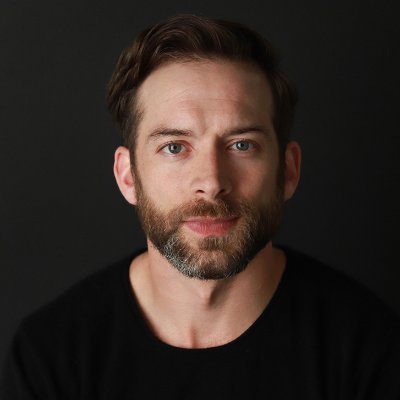
Joseph West
Founder of AI Headshots and Studio Pod — the automated headshot studio in Houston, Texas. Photographer first, AI engineer second.