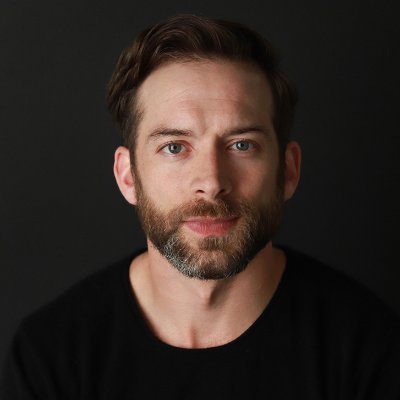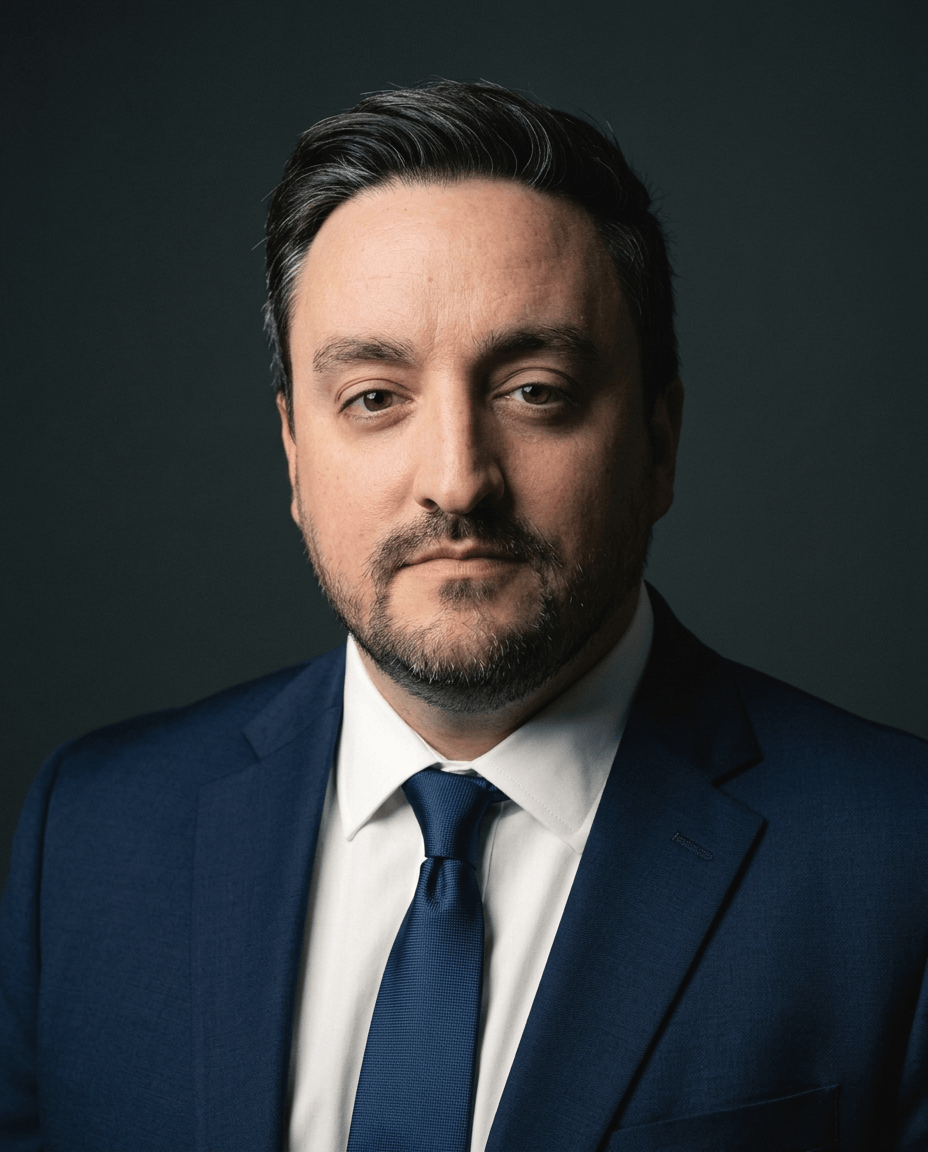
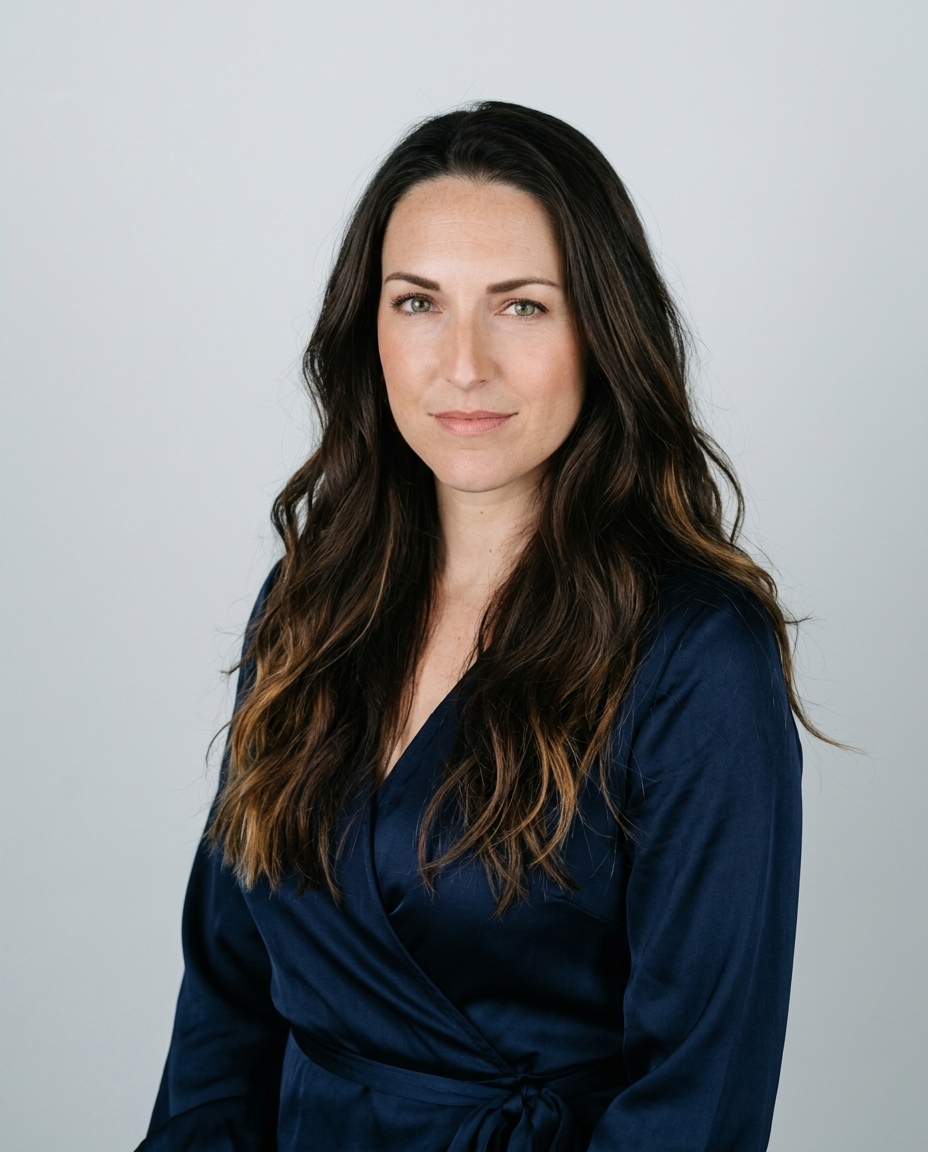
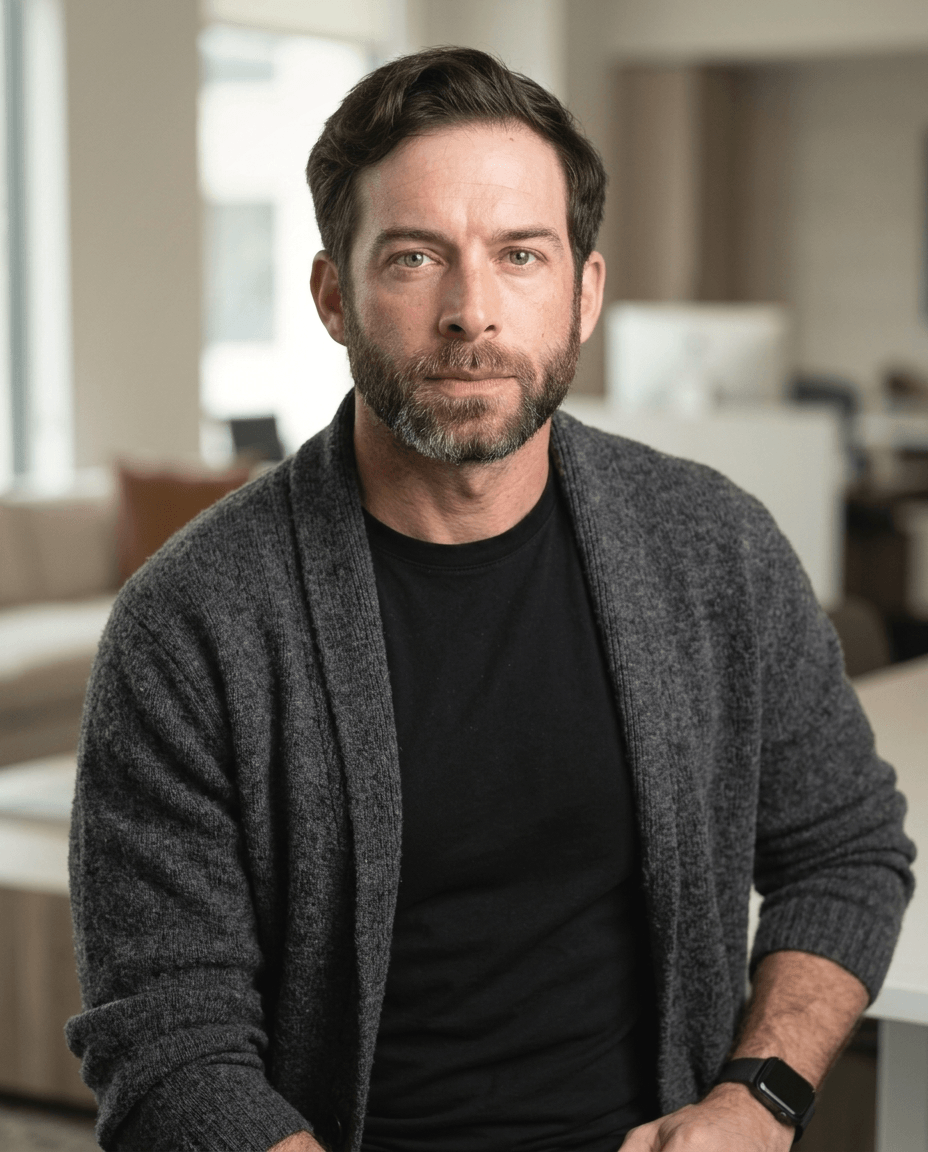
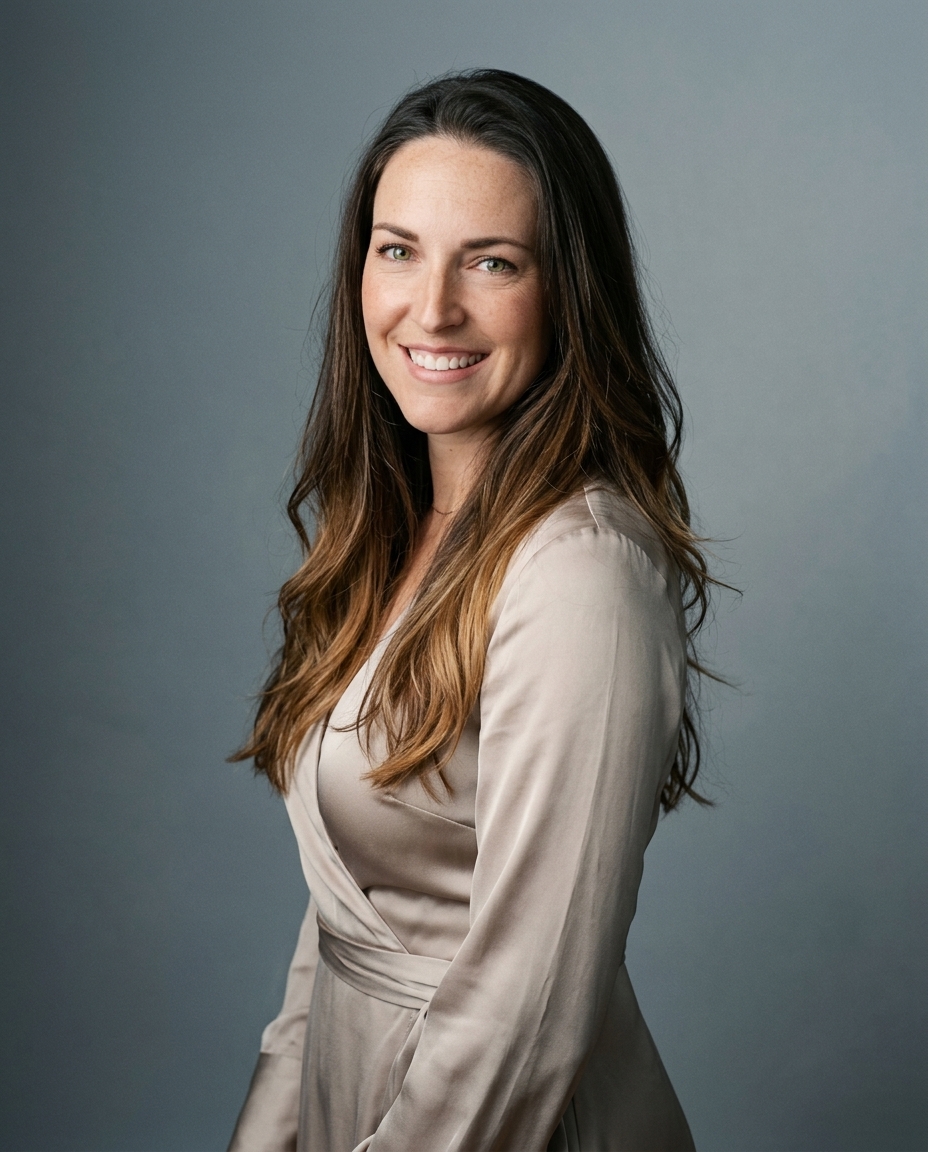
Business headshot AI uses 10–20 phone selfies and Studio Pod-trained technology to deliver 30+ professional photos in approximately 30 minutes, starting at $29. That's a fraction of a traditional photographer's cost, with no studio visit required.
The practical question isn't whether AI can produce a polished portrait. It can. The central question is whether the image looks like you, fits your professional context, and earns trust from the people who see it. For distributed teams, there's another concern: can one process create consistent headshots across employees, locations, roles, and backgrounds without turning everyone into the same generic corporate face?
AiHeadshots comes from Studio Pod, an automated headshot studio in Houston founded by photographers Joseph West and Chris Bailey. Studio Pod has photographed over 10,000 professionals since 2019. That background shapes the product. We're photographers who built an AI for professional portraiture, not a software team retrofitting open models.
Table of Contents
- Why professional headshots matter more than ever
- How business headshot AI actually works
- Cost and time comparison with traditional photography
- Quality expectations and research findings
- Privacy, consent, and data retention you should know
- When to choose AI headshots and how to implement them
Why professional headshots matter more than ever
LinkedIn profiles with a professional photo can receive up to 21 times more views and 9 times more connection requests than profiles without one, according to LinkedIn-focused headshot research. Those figures don't mean a portrait guarantees a job, sale, or introduction. They show that your profile image affects whether people stop, recognize you, and decide to engage.
Profile-photo maintenance has also become more common. The share of LinkedIn users who updated their photo rose from 22% in 2022 to 34% in 2025, while AI-processed headshots on LinkedIn increased by 38% between 2023 and 2025, as reported in the same research. The change reflects a broader shift in professional identity. Your online image now represents you during interviews, sales conversations, recruiting outreach, conference networking, and remote meetings.
A headshot is part of your positioning
A good business headshot doesn't need to look theatrical. It needs to communicate the right level of approachability, competence, and consistency for your role. A lawyer, recruiter, physician, consultant, and startup founder can all use a polished portrait, but they shouldn't necessarily use the same lighting, crop, wardrobe treatment, or background.
That connection between imagery and business identity is why guidance on positioning and visual identity is useful alongside headshot advice. The photo is one part of a larger presentation that includes your website, profile copy, color choices, and public-facing brand.
For companies, inconsistency creates a practical problem. One employee has a bright studio background, another has a dim webcam crop, and a third uses a holiday selfie. The team may work well together, but the company presents itself as fragmented. A shared headshot standard gives distributed employees a common visual starting point without requiring everyone to travel to the same studio.
How business headshot AI actually works
The process starts with the material you provide. You upload 10–20 phone selfies that show your face from useful angles and in reasonably clear lighting. The system needs enough visual information to preserve your identity while creating portraits with controlled framing, lighting, retouching, and background treatment.
AiHeadshots then generates 30+ studio-grade headshots in approximately 30 minutes. You don't book a session, travel to Houston, coordinate a photographer, or wait for a conventional gallery. The output includes different portrait options, so you can select an image that suits LinkedIn, a company biography, a speaker page, or another professional setting.
Why photographer heritage changes the result
Generic image generators are built to create pictures from prompts. A business headshot system has a narrower job. It must preserve facial identity, maintain believable eyes and teeth, create natural skin texture, place the subject correctly in the frame, and produce lighting that resembles a controlled portrait session.
Studio Pod's experience photographing over 10,000 professionals since 2019 informs those decisions. Joseph West and Chris Bailey built AiHeadshots around the visual standards they use as photographers. That doesn't remove the need for quality control. It gives the system a photography-first target rather than treating a corporate portrait as just another generated image.
The distinction matters in the details. A useful headshot has believable posture, clean separation from the background, appropriate retouching, and a crop that leaves enough space for the platform where you'll use it. A technically sharp image can still fail if it changes your face, makes your expression artificial, or places you in a setting that conflicts with your role.
You can review the workflow on the AiHeadshots how it works page. For broader context on evaluating a cost-effective AI visuals guide, focus on image control and use case fit, not just how many images a service promises.
Cost and time comparison with traditional photography
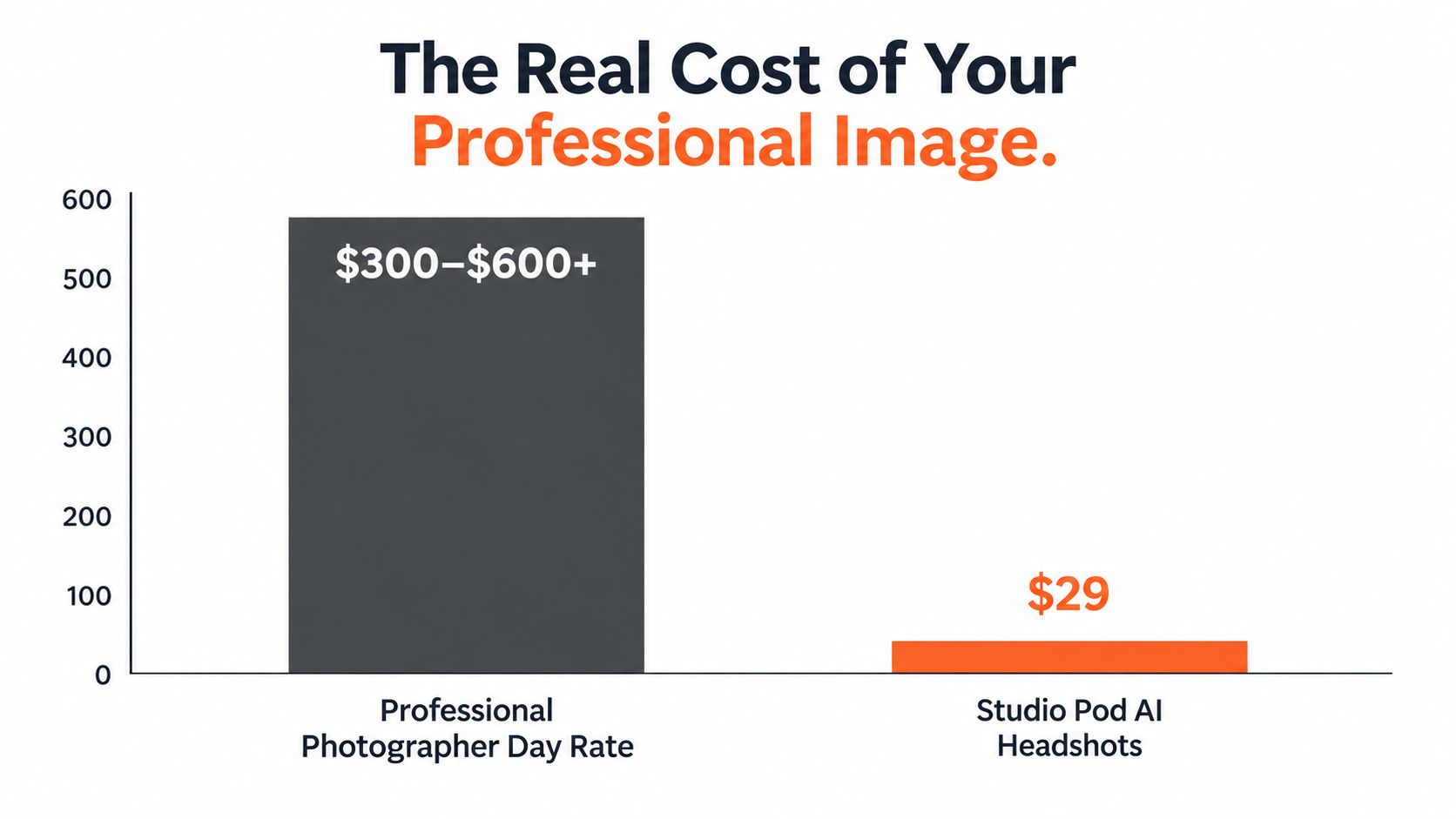
The price gap is clear, but the comparison needs to stay grounded. A traditional photographer's day rate can run $300–$600+, while AiHeadshots starts at $29. Traditional photography also involves scheduling, travel, the shoot itself, selection, retouching, and delivery. AI removes much of that coordination, but it doesn't make every photographic situation interchangeable.
| Factor | Traditional Photographer | AiHeadshots |
|---|---|---|
| Starting cost | Photographer day rates can run $300–$600+ | Basic $29 |
| Delivery | Requires a scheduled session and post-production | 30+ headshots in approximately 30 minutes |
| Participation | You attend a studio or arranged shoot | Upload 10–20 phone selfies |
| Location | Requires photographer coordination | No studio visit required |
| Higher-touch options | Direct photographer direction and custom art direction | Professional $39, Executive $59 |
| Team use | Requires coordinated scheduling across employees | Teams pricing is $22–$29 per seat for 10+ seats |
The AiHeadshots tiers are straightforward. Basic costs $29, Professional costs $39, and Executive costs $59. Teams receive volume pricing at 10+ seats, from $22–$29 per seat. The cost of one professional headshot depends on the service, photographer involvement, retouching, and number of final images, so compare the complete workflow rather than the session fee alone.
Where the comparison stops being simple
Traditional photography wins when the photographer needs to direct expression in real time, coordinate a location, create a campaign-specific visual concept, or photograph leadership for a high-stakes brand project. A photographer can respond to posture, mood, wardrobe, and team dynamics as they happen.
AI wins operationally for repeatable volume. A company with employees spread across cities or countries can give everyone the same upload instructions, style requirements, and approval process. That makes the decision less about replacing photography entirely and more about assigning the right production method to the right business need.
Quality expectations and research findings
A 2026 profile-image study found that AI-generated images received higher quality ratings than professional photographs of the same subjects, with b = 0.206, SE = 0.073, and p = .005 in the study's reported result (study details). That finding supports what many buyers notice first. Controlled lighting, polished skin texture, and consistent composition can make a generated portrait look more finished than an ordinary professional photo.
The same study found a serious qualification. When viewers were told that an image was AI-generated, perceived quality declined. The technical output and the social interpretation were not the same thing.
Quality has two audiences
You evaluate a headshot by looking at it closely. Other people evaluate it through context. A recruiter asks whether it looks credible. A client asks whether it matches the person they'll meet. A colleague notices whether the image still resembles you. An executive team asks whether every portrait follows the same visual standard.
That creates a disclosure and trust gap. A portrait can look excellent in isolation while creating discomfort if the audience believes it presents a real studio session that never happened. There isn't one universal disclosure rule for every LinkedIn profile, company directory, or marketing page. Your employer's policy, industry expectations, and the image's purpose should guide the decision.
Practical rule: Use AI to improve presentation, not to create a different identity.
Check the output for identity drift before publishing. Compare the eyes, jawline, smile, hairline, skin tone, and normal expression with a recent real photo. Reject images that make you look noticeably younger, thinner, more angular, or more formal than you are. A business headshot should be flattering, but it still needs to be recognizably you.
Privacy, consent, and data retention you should know
A polished portrait isn't worth uploading blindly. AI headshot services use different retention policies for source selfies, generated images, billing records, and backups. Independent privacy guidance recommends checking each window separately, including whether the provider offers a specific deletion process for both inputs and outputs (AI headshot privacy guidance).
One documented service model deletes uploaded selfies within 7 days while retaining generated headshots for 30 days after delivery (retention policy analysis). Another provider's policy states that customer content can be deleted from active systems within 90 days after termination or written request, while backup media can remain on a rotation schedule of up to 12 months (provider data agreement). These examples show why “we delete your data” isn't specific enough. Ask what gets deleted, when, and from which systems.
Some providers also reuse customer photos to train general models unless their policy says otherwise. Independent coverage recommends looking for explicit no-training language and short deletion windows (AI headshot safety review).
AiHeadshots lists 7-day input retention, 30-day output retention, and 90-day billing retention. For the full operational details, review the AiHeadshots data management and retention information.
Consent becomes more complex for teams. Employees should know why their images are collected, where the portraits will appear, who approves them, and how long the source material remains available. A central workflow is useful only when people understand the rules. Don't upload an employee's selfies without permission, and don't assume a company purchase replaces individual consent.
When to choose AI headshots and how to implement them
A 2025 U.S. Harris Poll found that 44% of adults would consider using AI to create a professional headshot, with convenience, quality, editing flexibility, and cost savings among the leading reasons (survey findings). That interest makes sense for individual professionals, but team adoption needs more than enthusiasm. It needs a standard.
Start with a shared brief. Define the preferred crop, background family, wardrobe expectations, expression, and acceptable use cases. Ask employees to submit clear selfies that show their usual appearance, then route the generated portraits through a simple approval step. That catches identity mismatches before the images reach company websites, proposals, or staff directories.
AI headshots fit especially well when:
- Teams are distributed: Employees can participate without traveling to one location.
- The deadline is short: A company can produce portraits without waiting for a coordinated shoot.
- The volume is high: Consistent instructions and style reduce scheduling overhead across many employees.
- Budgets are constrained: A low entry price makes professional imagery accessible to individuals and small businesses.
Traditional photography remains the stronger choice for executive campaigns, custom brand storytelling, regulated client-facing work, and situations where live direction is central to the result. The recruiter trust gap also deserves attention. A recruiter survey found that 76.5% preferred AI headshots when they didn't know the images were AI-generated, while 88% said candidates should disclose AI use and two-thirds said they would be put off if they knew a headshot was AI-made (recruiter survey coverage). Those figures make disclosure a business decision, not a footnote.
AiHeadshots has served 30,000+ customers, delivered 255,000+ headshots, and holds a 4.9-star rating. It offers a 100% money-back guarantee within 14 days, alongside individual tiers and team pricing. Review your employer's policy, confirm your intended use, and choose the production method that matches the trust requirements of your audience.
Upload 10 selfies, receive 30+ professional headshots in approximately 30 minutes, and review the $29 Basic option at AiHeadshots. For distributed teams, use the same process to create consistent portraits without scheduling a studio visit for every employee.